GI Produce of India — 03
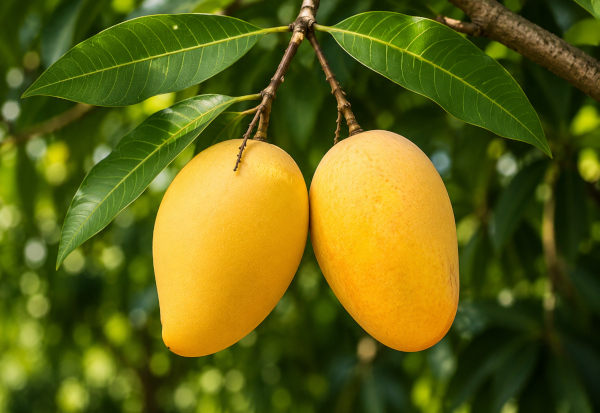
Few mangoes announce their ripeness as elegantly as the Banaganapalle. The fruit gradually exchanges its green skin for an almost luminous golden yellow, while beneath the smooth peel develops firm, sweet flesh with remarkably little fibre. Large, elongated and immediately recognisable on a summer fruit stall, it has become one of the defining mangoes of southern India.
Yet Banaganapalle is more than a familiar market variety.
Its story belongs to the dry landscapes of the Deccan, to orchards around the historic town from which it takes its name, to generations of grafting and selection, and eventually to mango-growing districts extending across what are today Andhra Pradesh and Telangana.
The connection between fruit and geography became legally recognised when Banaganapalle Mangoes received Geographical Indication registration on 3 May 2017.
Unlike many Indian agricultural GIs confined within a single state, the official geographical area recorded for Banaganapalle Mangoes spans Telangana and Andhra Pradesh, reflecting a mango-growing geography older than the present administrative boundary between the two states.
A Mango With Many Names
One complication appears almost immediately when telling the Banaganapalle story: its name changes depending on where the fruit is being sold.
The Geographical Indications Registry officially records the protected product as “Banaganapalle Mangoes.”
In horticultural literature and markets, however, the variety is frequently written as Banganapalli, Banganapalle or Banginapalli. It is also widely known as Benishan, Baneshan or Beneshan, while consumers in parts of northern India often encounter similar fruit under the market name Safeda.
These are not necessarily different mangoes. They reflect the remarkable geographical journey of a cultivar that became popular far beyond the place where its strongest historical identity developed.
The National Horticulture Board lists Banganapalli, also known as Baneshan and Safeda, among India’s important commercial mango varieties. It describes the fruit as large, obliquely oval, golden yellow and well suited to relatively dry regions.
APEDA gives perhaps the most concise description of its appeal: an oblique to obliquely oval mango with shining golden-yellow colour and sweet, meaty, fibreless flesh, accompanied by a pleasant flavour.
That combination explains why the fruit works particularly well as a table mango. A ripe Banaganapalle can be sliced cleanly, the flesh retaining sufficient firmness to hold its shape without the mass of coarse fibres that characterises some other cultivars.
Its character is different from the intensely perfumed, sweet-acid complexity associated with Alphonso. Banaganapalle’s attraction is gentler: clean sweetness, generous flesh, smooth texture, substantial size and an uncomplicated golden appearance.
The Mango That Took the Name of a Town
The centre of the story lies at Banaganapalle, historically part of Kurnool district and now located in Nandyal district of Andhra Pradesh.
The town was once the capital of the princely State of Banganapalle. Historical material submitted during the geographical-indication proceedings connected the area’s mango tradition with the period of princely rule and the development of orchards under royal patronage.
Banaganapalle State existed as a princely entity until its integration into independent India, and the mango gradually became so closely identified with the surrounding landscape that the place itself provided the cultivar’s most enduring name.
The GI proceedings identified the old Kurnool region—including Banaganapalle, Panyam and Nandyal—as the primary centre associated with the fruit. Other parts of Rayalaseema and coastal Andhra developed as important cultivation areas, while mango-growing districts in what later became Telangana formed another part of its established geographical landscape.
This is one reason the official GI eventually crossed the modern state boundary.
Banaganapalle mango culture evolved before Andhra Pradesh was divided in 2014. Orchards, planting material, agricultural knowledge and commercial networks had already spread through the Telugu-speaking Deccan. A political boundary could divide administration, but it could not neatly divide a horticultural tradition that had developed over generations.
When Benishan Met the Dry Deccan
Banaganapalle is particularly well adapted to comparatively dry mango-growing environments.
The mango tree itself is tropical, but good fruit production requires much more than continuous heat. The annual rhythm of moisture and dryness matters enormously.
A relatively dry period before and during flowering helps induce and protect blossom development. Excessive rain or humidity at the wrong time can interfere with flowering, pollination and fruit set and can increase pressure from fungal diseases. Moisture becomes important later as the developing fruit expands.
Large parts of Rayalaseema experience precisely this strong seasonal contrast.
Summers are hot. Rainfall is markedly seasonal. Soils and water availability vary considerably between locations, and mango orchards have traditionally been managed around these limitations.
Banaganapalle adapted particularly successfully to these conditions.
This does not mean that climate alone creates the variety. The genetic identity of the cultivar remains fundamental. But genetics expresses itself through environment. Temperature, soil, water availability, sunlight, flowering conditions and orchard management influence fruit size, colour development, sweetness, texture and harvest timing.
The geography behind Banaganapalle is therefore not an ornamental addition to the story.
It is part of the fruit itself.
Golden Skin and a Remarkably Small Fibre Burden
The visual identity of a good Banaganapalle is striking.
The fruit is usually large and elongated, moving from an oblique oval towards an oblong form. As it ripens, the peel develops a clear golden-yellow colour. The skin is relatively smooth, sometimes showing very light spotting.
Inside is the feature that helped establish the cultivar’s reputation: a large proportion of usable flesh surrounding a comparatively thin stone.
The pulp is yellow, firm and meaty rather than watery. Fibre is sparse and soft, giving the flesh a smooth mouthfeel. The seed is relatively thin for a mango of this size, allowing a substantial portion of the fruit to be eaten.
This favourable pulp-to-stone relationship has economic consequences as well as culinary ones.
For a consumer, it means more mango in every fruit.
For processors, it means a useful quantity of pulp.
For traders, the firmness and relatively good keeping characteristics provide advantages during handling and transportation.
The National Horticulture Board has consequently identified Banganapalli as a variety with good keeping quality and suitability for canning in addition to fresh consumption.
An Orchard Cannot Be Reproduced From a Mango Stone
As with Alphonso and most important commercial mango cultivars, maintaining a genuine Banaganapalle orchard depends upon vegetative propagation.
Planting the seed from an excellent mango does not guarantee that the resulting tree will produce identical fruit. Mango seedlings can display considerable genetic variation.
Growers therefore reproduce selected trees through grafting.
A scion taken from a desirable mother plant is joined to a suitable rootstock, preserving the essential characteristics of the cultivar while benefiting from the vigour and adaptability of the root system.
This seemingly simple horticultural technique is one of the foundations of India’s extraordinary mango diversity.
Without grafting, famous cultivars could gradually lose their identity through seedling variation. With grafting, growers can reproduce desirable characteristics orchard after orchard and generation after generation.
The practice also gives enormous importance to healthy mother trees and reliable nurseries.
A mislabeled graft may not reveal the mistake for years. Mango trees require patience before commercial production begins, meaning authenticity of planting material is fundamental to the long-term economics of an orchard.
Banaganapalle therefore survives not merely because consumers like its flavour, but because generations of horticulturists have repeatedly selected, propagated and maintained the trees capable of producing that fruit.
Waiting for the Deccan Summer
Banaganapalle belongs to the great seasonal rhythm of the Indian mango year.
APEDA identifies April and May as the principal harvesting period for mangoes in Andhra Pradesh and Telangana, although actual timing varies according to location, weather and orchard conditions.
Flowering generally develops during the cooler and drier months. Tiny fruits then begin the long transformation towards harvest as temperatures rise.
By late spring, markets across southern India begin changing colour.
Green mangoes appear first. Then the great table varieties arrive in quantity. Banaganapalle gradually turns yellow as it ripens, becoming one of the most visible mangoes in markets across Hyderabad, Vijayawada, Visakhapatnam, Bengaluru, Chennai and many other cities.
Fruit intended for transport is normally harvested at physiological maturity rather than being allowed to become completely soft on the tree.
The distinction is crucial.
Harvest an immature mango too early and it may soften without ever developing satisfactory flavour or sweetness. Harvest too late and the fruit becomes much more vulnerable to damage during sorting, packing and transport.
Growers and experienced traders therefore judge maturity through a combination of fruit shape, shoulder development, skin characteristics, harvest age and other practical indicators.
What consumers finally encounter as a perfectly yellow mango represents the final stage of a much longer biological and commercial process.
Andhra Pradesh and Telangana — One GI Geography
The official geographical coverage of Banaganapalle Mangoes makes this GI particularly interesting.
The registry does not describe the protected area simply as Andhra Pradesh.
It records the geographical area as:
India — Telangana & Andhra Pradesh.
Historically, the primary centre was associated with the Banaganapalle-Panyam-Nandyal belt. Rayalaseema and parts of coastal Andhra formed additional cultivation zones, while established growing areas also existed in Telangana.
Documentation surrounding the GI proceedings identified districts including Khammam, Mahabubnagar, Rangareddy, Medak and Adilabad among the Telangana areas historically associated with cultivation.
Modern district boundaries have subsequently changed as both states reorganised their administrative maps. The agricultural landscape, however, remains continuous with the older horticultural history recognised during the GI process.
APEDA today lists Banaganapalle among the important commercial mango varieties of both Andhra Pradesh and Telangana.
This makes the fruit a particularly good example of why geographical indications cannot always be understood simply through present-day political maps.
Agricultural geography often has deeper roots.
The Road to GI Recognition
The formal journey towards geographical protection began well before the certificate was issued.
An application for Banaganapalle Mangoes was filed with India’s Geographical Indications Registry on 7 September 2011 by the Horticulture Development Agency, represented by the Commissioner of Horticulture, Government of Andhra Pradesh.
The application was assigned GI Application No. 241 under Class 31 for horticultural products.
Detailed documentation accompanied the application, including historical evidence, district gazetteers, agricultural records, descriptions of the product and material intended to establish the connection between the mango and its recognised geographical area.
The application eventually appeared in Geographical Indications Journal No. 94, made available on 30 December 2016.
Registration followed on 3 May 2017, when Certificate No. 295 was issued.
The registration has since been renewed and is currently valid until 6 September 2031.
GI Details at a Glance
Geographical Indication: Banaganapalle Mangoes
States: Andhra Pradesh & Telangana
Product: Horticultural Products
Class: 31
Application Number: 241
Date of Filing: 7 September 2011
GI Journal: No. 94
Journal Availability Date: 30 December 2016
Certificate Number: 295
GI Certificate Date: 3 May 2017
Registered Proprietor: Horticulture Development Agency, represented by the Commissioner of Horticulture, Government of Andhra Pradesh
Registered Geographical Area: India — Telangana & Andhra Pradesh
Registration Valid Until: 6 September 2031
What the GI Protects — and What It Does Not
Banaganapalle raises an interesting question because Banganapalli-type mangoes are cultivated beyond the protected geographical area.
The cultivar itself has spread widely.
The National Horticulture Board records Banganapalli cultivation not only in Andhra Pradesh but also in Tamil Nadu, while related agricultural records show the variety growing in Karnataka and other parts of southern India. Consumers may also encounter fruit sold under names such as Safeda and Benishan far beyond its historic centre.
This illustrates the difference between a cultivar and a Geographical Indication.
A cultivar is biological material. Graftwood can travel. A tree can be planted elsewhere if climatic conditions permit.
A GI protects a geographical identity.
The purpose of geographical indication protection is therefore not to claim that a mango tree becomes physically incapable of growing beyond a border. It is to protect the commercial reputation attached to fruit produced within the officially recognised region under the geographical identity covered by the registration.
For consumers and growers, that distinction becomes important when famous names acquire premium market value.
The Problem of Banaganapalle, Banganapalli and Safeda
The many names attached to the cultivar also create a traceability problem.
A customer may see one seller offering Banganapalli, another advertising Benishan and a third selling Safeda. Fruit cultivated outside the GI area may belong to essentially the same cultivar.
What, then, is actually being purchased?
There are again two different questions.
The first is: What cultivar is this mango?
The second is: Where was it grown?
For an ordinary fruit purchase the distinction may seem unimportant. For a GI-labelled premium product, it becomes fundamental.
Geographical indications exist precisely because reputation can become detached from genuine origin as products become famous. Once consumers associate a name with quality, there is an incentive for fruit from elsewhere to use that reputation.
Traceability therefore protects both sides of the market.
The consumer receives greater confidence about origin.
The genuine producer gains protection for the reputation created by generations of growers.
A Mango at the Centre of a Rural Economy
Behind every box of Banaganapalle mangoes lies a far larger network than the orchard alone.
Nurseries supply grafts. Labourers prune trees and maintain orchards. Workers assist during flowering management, pest control and harvesting. Fruit pickers move through orchards during the intense harvest period.
The mangoes then enter another chain.
They are sorted by size and quality, graded, packed, transported to wholesale markets, moved through commission agents and traders, ripened, retailed or redirected towards processing and export.
Packaging suppliers, truck operators, cold stores, pack houses, wholesalers and exporters all participate in the seasonal economy.
The concentration of activity into a relatively short harvest period makes mango agriculture particularly distinctive.
A year’s biological work reaches the market within weeks.
Weather during flowering can therefore affect not only farmers but an entire rural and commercial ecosystem months later.
Banaganapalle Enters a New Export Era
Banaganapalle has long possessed characteristics attractive to exporters: large fruit, attractive colour, fibreless flesh, good eating quality and useful keeping characteristics.
In June 2026, however, the variety entered an especially important new chapter.
APEDA, working with the ICAR-Central Institute for Subtropical Horticulture, facilitated the first commercial sea shipment of premium Banganapalle mangoes from India to Singapore.
Five metric tonnes of fruit left India on 11 June 2026 and arrived in Singapore on 24 June, successfully completing a journey of nearly two weeks by sea.
The importance of the shipment went far beyond one container of mangoes.
Fresh premium mango exports have traditionally depended heavily on air freight because ripe fruit has limited shelf life. Air transport is fast but expensive, making Indian mangoes significantly more costly when they reach overseas consumers.
Scientific sea transport could change that equation.
The 2026 shipment used controlled post-harvest handling, cold-chain management and a sea-export protocol developed by ICAR-CISH and APEDA. A related government account said the system could extend mango shelf life towards 30 days under appropriate conditions.
The fruit came from Good Agricultural Practices-compliant orchards
You may also like
-
India and Nepal Move to Expand Market Access as Trade, Customs and Cross-Border Connectivity Talks Advance
-
India and Thailand Push to Remove Trade Barriers as Bilateral Commerce Reaches Record High
-
L&T Semiconductor and Tata Electronics Join Forces to Manufacture India-Designed Chips at Scale
-
Tata Electronics and Sumitomo Chemical Move to Localise High-Purity Semiconductor Materials for Dholera Fab
-
India’s Data Centre Expansion Set to Add 3.86 GW by 2030
