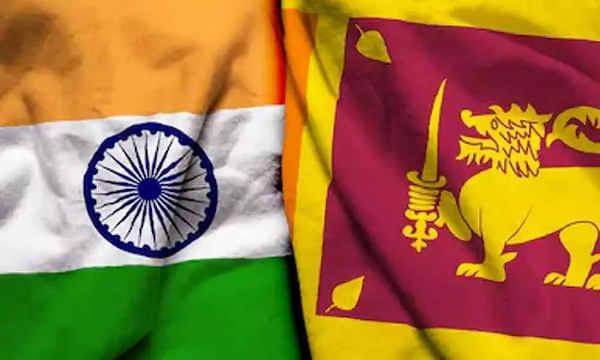
The United Nations has welcomed Sri Lanka’s decision to simplify procedures for the voluntary return of Sri Lankan refugees living in India, a move that could remove a significant administrative obstacle for thousands of people displaced during the island nation’s prolonged civil conflict.
The new arrangements are particularly intended to help Sri Lankan citizens who fled to India during the war without valid passports or without leaving through authorised ports. Such circumstances have created legal and immigration complications for some refugees seeking to return decades later, even when they are able to establish their Sri Lankan nationality.
UN Resident Coordinator in Sri Lanka Marc-André Franche welcomed the Cabinet decision, describing it as an important step towards enabling people displaced for many years to return safely and with dignity.
The United Nations High Commissioner for Refugees will continue supporting voluntary repatriation and the reintegration of Sri Lankan refugees who decide to return.
Sri Lanka Moves to Remove a Long-Standing Immigration Barrier
Sri Lanka’s Cabinet has approved special arrangements covering citizens who left the country for India during periods of conflict without the travel documentation normally required under immigration law.
The issue had become particularly important because some refugees who wanted to return faced the possibility of immigration proceedings after arriving in Sri Lanka because of the manner in which they had originally left the country.
Under the new framework, eligible refugees will undergo verification of their nationality and security clearance before returning.
Public Security Minister Ananda Wijepala told Sri Lanka’s Parliament on August 19 that the Cabinet had decided to permit their return subject to security clearance. Those wishing to use the arrangement have been advised to contact the Sri Lankan diplomatic mission in Chennai.
The process is therefore designed to distinguish refugees seeking a genuine voluntary return from cases involving unresolved serious criminal or national-security matters.
A Refugee Population Created by Decades of Conflict
The presence of a large Sri Lankan Tamil refugee population in India dates primarily to the ethnic violence that engulfed Sri Lanka in 1983 and the subsequent escalation of fighting between government forces and the Liberation Tigers of Tamil Eelam.
Successive waves of civilians crossed the Palk Strait as the conflict intensified, with Tamil Nadu becoming the principal destination because of its geographical proximity and deep linguistic and cultural connections with Sri Lanka’s Tamil population.
The armed conflict eventually ended in May 2009, but displacement did not disappear with the end of fighting.
Thousands of families had by then established lives in India. Some refugees had spent several decades in Tamil Nadu, while many children were born and educated there and had never lived in Sri Lanka.
This has made the question of return substantially more complicated than simply arranging transportation across the Palk Strait.
Nearly 90,000 Sri Lankan Refugees Remain in Tamil Nadu
India continues to host a substantial Sri Lankan refugee population.
According to the Indian Ministry of Home Affairs, 57,118 Sri Lankan refugees were living in 105 camps in Tamil Nadu as of June 1, 2025, while another 32,772 were registered outside the camps with Tamil Nadu authorities.
Together, these figures place the registered Sri Lankan refugee population in the state at almost 90,000 people.
India has provided shelter and humanitarian assistance to refugee families for decades, including accommodation, financial assistance, subsidised food, healthcare and educational support.
At the same time, the long duration of displacement has created increasingly complicated questions about citizenship, employment, documentation and the future of younger generations born in India.
For some families, returning to Sri Lanka remains the preferred long-term solution. Others have developed such extensive social, educational and economic ties with India that their circumstances are considerably different from those of the original generation that fled the war.
The new Sri Lankan initiative specifically concerns those who voluntarily choose to return rather than requiring refugees to leave India.
UNHCR Has Supported Returns for More Than Two Decades
Voluntary repatriation from India to Sri Lanka is not a new process.
UNHCR says that more than 17,900 Sri Lankan refugees have voluntarily returned with its assistance since 2002.
The organisation continues to facilitate voluntary repatriation and provides assistance to vulnerable returnees after they reach Sri Lanka. This can include support for accessing legal advice concerning housing, land and property documentation as well as assistance intended to promote sustainable reintegration.
Such support is important because possessing the documents necessary to enter Sri Lanka is only one part of returning after decades abroad.
Families may need to recover land, obtain civil documents, find employment, enrol children in schools, secure housing and rebuild social connections within communities that may have changed considerably since they left.
Why the New Procedure Matters
One of the most important aspects of the Cabinet decision is that it addresses people whose departure from Sri Lanka occurred under extraordinary wartime circumstances.
Some refugees escaped without passports or travelled through routes that would normally constitute violations of immigration procedures. Applying ordinary peacetime immigration rules decades later could therefore create obstacles for people attempting to return voluntarily.
Creating a dedicated procedure allows authorities to conduct necessary identity and security checks while recognising the exceptional circumstances surrounding their original departure.
Sri Lanka’s Northern Provincial authorities had previously raised concerns over difficulties encountered by refugees returning from India at international entry points. A Cabinet paper was subsequently submitted specifically to address immigration facilities for Sri Lankan citizens who had fled to India without valid passports or through unauthorised ports during the war.
The latest decision provides a clearer administrative pathway for resolving those cases.
Return Must Remain a Personal Choice
The United Nations’ support for the initiative is centred on the principle of voluntary repatriation.
For refugees who choose to return, the process should allow them to do so safely and with the documentation and assistance necessary to rebuild their lives.
However, the circumstances of Sri Lankan refugee families in India vary considerably. Some members of the community have lived in Tamil Nadu for more than three decades, and a significant younger generation was born in India.
Questions concerning their legal status, livelihoods and long-term future in India therefore remain separate from Sri Lanka’s effort to make voluntary return easier.
The new procedure does not resolve every issue surrounding this community, but it removes an important obstacle for those who have decided that their future lies in Sri Lanka.
After decades in which the movement of refugees across the Palk Strait was associated primarily with war and displacement, the latest initiative is aimed at making movement in the opposite direction safer, legally clearer and more dignified for those who voluntarily choose to go home.
You may also like
-
India Strengthens Trade Ties with Netherlands as Piyush Goyal Visits Port of Rotterdam
-
India to Train 600 Nigerian Army Soldiers in Specialised Jungle and Mountain Warfare
-
India and Russia Strengthen Parliamentary Diplomacy as Om Birla Meets State Duma Chairman Vyacheslav Volodin
-
India Seeks South Korean Shipbuilding Partnerships as Sarbananda Sonowal Begins Four-Day Visit to Busan
-
India and Italy Hold First Maritime Security Dialogue in Rome, Strengthen Strategic Maritime Cooperation
