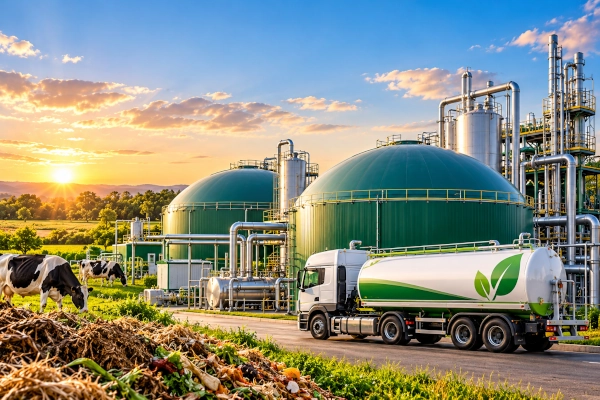
Petronet LNG Limited has signed a binding term sheet with Gruner Renewable Energy Private Limited to establish a joint venture for developing ten compressed biogas (CBG) plants across India. The proposed initiative involves an estimated capital investment of ₹1,200 crore and represents a significant expansion of Petronet LNG’s activities in the renewable gas sector.
The agreement, signed on 22 October 2026, envisages the establishment of ten CBG production facilities, each with a capacity of 18 metric tonnes per day. Together, the plants will have a designed production capacity of 180 tonnes per day. According to Petronet LNG’s regulatory disclosure to the stock exchanges, the proposed joint venture will cover the entire compressed biogas value chain, from feedstock procurement and processing to the distribution and sale of renewable gas and associated by-products.
Petronet LNG and Gruner Renewable Energy Establish Equal Partnership
Under the proposed arrangement, Petronet LNG and Gruner Renewable Energy will establish a private limited company with equal equity participation. Each partner will hold a 50% ownership stake, while representation on the joint venture’s board of directors will be proportional to the respective shareholdings.
The agreement establishes a framework for developing compressed biogas infrastructure in different states across India. The proposed company will undertake the development, establishment, commissioning, operation and maintenance of CBG plants, alongside activities connected with renewable gas production and distribution.
Petronet LNG informed the stock exchanges that the agreement does not constitute a related-party transaction. The company also clarified that Gruner Renewable Energy is not associated with its promoter group or group companies. The binding term sheet follows an earlier corporate decision, disclosed on 17 September 2026, approving the proposal to incorporate a joint venture with Gruner Renewable Energy.
The partnership brings together Petronet LNG’s experience in large-scale natural gas infrastructure and Gruner Renewable Energy’s involvement in the bioenergy sector. The proposed venture creates a framework for combining infrastructure development with specialised renewable gas production activities.
Ten Compressed Biogas Plants with Combined Capacity of 180 Tonnes Per Day
The proposed ₹1,200 crore investment will support the establishment of ten compressed biogas plants across different Indian states. Each facility will have a designed production capacity of 18 metric tonnes per day, bringing the combined capacity of the planned network to 180 metric tonnes per day.
Compressed biogas is produced by processing biodegradable materials such as agricultural residues, cattle dung, organic municipal waste and other suitable biomass. These materials undergo anaerobic digestion, a biological process in which microorganisms break down organic matter in the absence of oxygen. The resulting biogas contains methane and carbon dioxide, along with smaller quantities of other gases.
The raw biogas undergoes purification and upgrading to increase its methane concentration and remove unwanted constituents. After compression, the resulting fuel can be used in applications similar to compressed natural gas, subject to the applicable quality and technical standards.
The planned facilities will contribute to the development of renewable gas production capacity while creating opportunities to utilise organic waste as an energy resource. Their implementation will require coordinated arrangements for biomass collection, processing, gas purification, storage and distribution.
Joint Venture to Cover the Entire Compressed Biogas Value Chain
Petronet LNG’s regulatory filing outlines a comprehensive operational mandate for the proposed joint venture. The company will undertake feedstock procurement, production, manufacturing, processing, compression, storage, transportation, distribution, supply, trading and sale of compressed biogas.
The joint venture will also handle associated by-products generated during biogas production. Organic material remaining after anaerobic digestion can be processed into products such as fermented organic manure, depending on feedstock characteristics, processing methods and applicable quality requirements.
This integrated approach is intended to connect biomass procurement with fuel production and downstream distribution. Reliable feedstock availability is an important requirement for compressed biogas facilities because production depends on a consistent supply of suitable organic materials.
The agreement also permits the joint venture to explore additional business opportunities related to bioenergy. This provision gives the proposed company a broader operational scope beyond the ten initially planned compressed biogas plants.
Petronet LNG Expands Its Renewable Energy Portfolio
Petronet LNG is a major participant in India’s liquefied natural gas import and regasification infrastructure. The company operates LNG receiving terminals at Dahej in Gujarat and Kochi in Kerala, which support the supply of imported natural gas to domestic consumers.
Its participation in compressed biogas development represents a diversification of its energy business. While liquefied natural gas is a fossil fuel, compressed biogas is produced from renewable organic resources and can provide an additional source of methane-based fuel for suitable applications.
Petronet LNG has been exploring opportunities in the compressed biogas sector as part of its broader energy diversification strategy. In its corporate material released earlier in 2026, the company outlined plans to establish 25 CBG plants across India and identified preliminary project activities at locations in Uttar Pradesh, including Bahraich, Kanpur Dehat and Fatehpur.
The proposed partnership with Gruner Renewable Energy adds a structured joint venture arrangement to these wider renewable gas ambitions. By entering the sector through a dedicated partnership, Petronet LNG is seeking to develop a stronger presence in domestic bioenergy production alongside its established LNG infrastructure operations.
Supporting India’s Domestic Renewable Gas Production
India has been encouraging compressed biogas production as part of its efforts to diversify energy sources, improve the utilisation of organic waste and strengthen domestic fuel availability. Agricultural residues, livestock waste and biodegradable municipal materials represent potential feedstocks for producing renewable gas.
Compressed biogas can contribute to these objectives by converting suitable organic materials into usable fuel. Its production also creates opportunities for establishing local supply chains involving farmers, waste aggregators, transport operators and processing facilities.
The development of CBG infrastructure complements the government’s broader bioenergy initiatives, including the Sustainable Alternative Towards Affordable Transportation (SATAT) programme and the policy framework supporting compressed biogas production.
For India’s natural gas sector, increased CBG production can provide an additional domestic source of methane. Renewable gas can also support efforts to reduce dependence on imported fuels, although the scale of this contribution will depend on production volumes, operational performance and market integration.
The proposed Petronet LNG–Gruner Renewable Energy partnership will add to this developing ecosystem through its planned network of ten production facilities.
Opportunities for Agriculture and Rural Bioenergy Supply Chains
The proposed compressed biogas plants could create additional economic opportunities in areas where suitable agricultural and organic feedstocks are available. Biomass collection, transportation, processing and storage require organised supply chains that connect rural producers and waste generators with energy facilities.
Agricultural residues that have limited alternative uses can potentially serve as feedstock for biogas production. Cattle dung and other biodegradable materials can also support renewable gas generation when collected and processed through appropriate systems.
Apart from producing fuel, biogas facilities generate digestate that can be processed into organic manure. The productive use of this material can contribute to nutrient recycling and provide an additional commercial output from biogas production.
The development of integrated compressed biogas facilities therefore offers opportunities beyond energy generation. It can connect agricultural resource management, waste processing, renewable fuel production and organic manure supply within a common industrial framework.
The eventual benefits will depend on the locations selected for the proposed plants, the availability of suitable feedstock and the establishment of viable commercial arrangements for gas and by-product sales.
Proposed Investment Adds Momentum to India’s Bioenergy Sector
The ₹1,200 crore capital outlay proposed by Petronet LNG and Gruner Renewable Energy represents a substantial commitment to developing compressed biogas infrastructure. The planned network of ten plants also demonstrates the growing interest of established energy companies in domestic renewable gas production.
According to the company’s 22 October regulatory disclosure, the binding term sheet provides for establishing the joint venture and developing the proposed facilities. The agreement identifies the intended ownership structure, business activities, plant capacities and estimated capital investment.
As the partnership advances through incorporation, project planning and implementation, it will create a dedicated platform for developing compressed biogas infrastructure across multiple Indian states.
The initiative reinforces the expanding role of renewable gas in India’s energy sector. By bringing together established natural gas infrastructure experience and specialised bioenergy capabilities, the proposed joint venture represents another step towards strengthening domestic energy production, improving organic resource utilisation and building a more diversified national fuel ecosystem.
References
- Petronet LNG Limited: Intimation under Regulation 30 of SEBI (Listing Obligations and Disclosure Requirements) Regulations, 2015 — Binding Term Sheet between Petronet LNG Limited and Gruner Renewable Energy Private Limited, submitted to BSE and NSE on 22 October 2026.
Official corporate disclosures: https://www.petronetlng.in/web/pertonetlng/announcements - Petronet LNG Limited: Approval of Proposal for Incorporation of 50:50 Joint Venture Company between Petronet LNG Limited and Gruner Renewable Energy Private Limited, corporate announcement dated 17 September 2026.
https://www.petronetlng.in/web/pertonetlng/announcements - Petronet LNG Limited: Corporate Brochure — India Energy Week 2026, outlining the company’s compressed biogas development initiatives.
https://www.petronetlng.in/documents/d/pertonetlng/final-new-brochure-for-iew-2026 - Ministry of Petroleum and Natural Gas, Government of India: Sustainable Alternative Towards Affordable Transportation (SATAT) initiative and compressed biogas development framework.
https://mopng.gov.in/
You may also like
-
CSIR-CRRI Partners with Industry to Develop Advanced Indigenous Airport Runway and Pavement Materials
-
Paras Semiconductors Secures 43 Acres in Madhya Pradesh for Proposed ₹6,200 Crore Advanced Chip Packaging Facility
-
India Seeks South Korean Shipbuilding Partnerships as Sarbananda Sonowal Begins Four-Day Visit to Busan
-
Koraput Kalajeera Rice of Odisha: The GI-Tagged Aromatic Heritage of India’s Ancient Rice-Growing Region
-
ICAR Scientists Develop Indigenous Protective Gloves for Cotton Farmers, Sign Commercial Manufacturing Agreement
