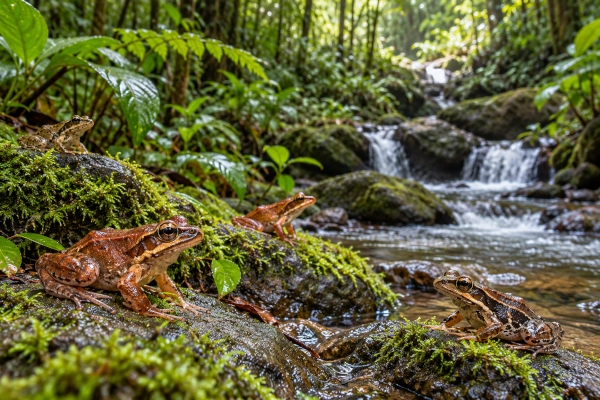
An extensive wildlife research effort involving more than 3,000 amphibians across the Western Ghats has highlighted the importance of monitoring a potentially devastating fungal disease affecting frog populations worldwide. Indian wildlife researcher Keerthi Krutha undertook demanding field surveys across protected forests and other natural landscapes to investigate the presence of Batrachochytrium dendrobatidis, a microscopic fungus responsible for the amphibian disease chytridiomycosis.
The research, revisited in conservation reporting published on 23 October 2026, involved surveys across 49 protected areas and 19 other landscapes in the Western Ghats. The work contributed to scientific understanding of the fungus in India and helped establish methods for monitoring amphibian health over extended periods.
The Western Ghats represent one of the world’s most important biodiversity hotspots, supporting numerous species of frogs, toads and other amphibians found nowhere else on Earth. Their dependence on clean water, suitable temperatures and healthy forest habitats makes them particularly vulnerable to environmental disturbances.
Krutha’s investigations demonstrate how systematic wildlife surveillance can help identify emerging biological threats before they cause widespread ecological damage. Her fieldwork also contributed to the documentation of previously unknown amphibian diversity in Kerala.
Investigating a Global Threat to Amphibians
The research focused on a microscopic fungus known as Batrachochytrium dendrobatidis, commonly abbreviated as Bd. This pathogen infects amphibian skin and can cause chytridiomycosis, a disease associated with serious population declines and extinctions in different parts of the world.
Unlike mammals, many amphibians depend heavily on their skin for essential physiological functions. Frogs absorb water through specialised areas of their skin and exchange respiratory gases through their skin to varying degrees. Their skin also plays an important role in maintaining the balance of water and electrolytes within the body.
The chytrid fungus interferes with these functions by infecting the outer layers of amphibian skin. Severe infections can disrupt electrolyte regulation and affect cardiac function, potentially causing death in susceptible animals.
The consequences have been particularly serious in some amphibian populations in Australia, Central America and other regions. Scientists recognise chytridiomycosis as a major threat to global amphibian biodiversity, although its effects differ considerably among species, habitats and fungal lineages.
The fungus does not produce identical outcomes wherever it occurs. Some amphibian populations experience severe disease, while others carry infections without obvious signs of illness. Understanding these differences is essential for accurately assessing the threat to India’s wildlife.
Keerthi Krutha Surveys Thousands of Frogs Across the Western Ghats
Keerthi Krutha began investigating amphibian chytrid fungus after joining a conservation research programme involving the Wildlife Information Liaison Development Society and the Zoo Outreach Organisation in Coimbatore.
The project aimed to improve understanding of the fungus in the Western Ghats, where information about amphibian diseases had remained limited despite the region’s remarkable species diversity.
Her work involved extensive journeys through forests, grasslands, streams and other amphibian habitats. Many surveys took place after sunset, when frogs become more active and their calls make them easier to locate.
Working in challenging conditions, Krutha navigated slippery rocks, swollen streams, heavy rainfall and leech-infested forest terrain. The surveys required careful observation, accurate documentation and strict sampling procedures to minimise disturbance to the animals.
Over several years, her field investigations expanded to 49 protected areas and 19 additional landscapes. The surveys collectively documented more than 3,000 amphibians and provided valuable information about the distribution of the fungus across different environments.
The research required sustained fieldwork because amphibian populations can vary greatly between habitats. Species living beside forest streams may encounter different environmental conditions from those inhabiting grasslands, plantations or temporary pools.
By examining amphibians across a wide geographical area, the research helped develop a broader understanding of disease occurrence in the Western Ghats.
Non-Invasive Skin Sampling Helps Detect the Fungus
A major component of the investigation involved collecting skin samples from amphibians without harming them.
Researchers used a non-invasive swabbing technique to obtain biological material from the skin of captured frogs. The samples could then undergo laboratory analysis to determine whether genetic material from the chytrid fungus was present.
The method allows researchers to investigate infections while avoiding the need to kill animals for routine sampling. After examination, frogs can be released into their natural habitats under appropriate field protocols.
Field teams also recorded relevant observations about the animals and their surroundings. Such information helps scientists interpret disease occurrence in relation to habitat conditions, species distribution and environmental characteristics.
The Wildlife Information Liaison Development Society’s project emphasised the importance of developing standardised field-sampling methods, laboratory procedures and quarantine protocols.
These safeguards are particularly important because researchers themselves must avoid transferring infectious material between sampling locations. Equipment hygiene and careful handling can help reduce the possibility of unintentionally spreading pathogens during field investigations.
The project also sought to establish procedures that future researchers could repeat. Consistent methods are essential for comparing disease observations across different locations and monitoring changes over time.
Scientific Research Identifies an Asian Chytrid Lineage
An important scientific contribution associated with Krutha’s work appeared in the journal PLOS ONE on 11 October 2013.
The study, titled Endemic Asian Chytrid Strain Infection in Threatened and Endemic Anurans of the Northern Western Ghats, India, examined chytrid infections among amphibians in the northern Western Ghats.
The research involved Neelesh Dahanukar, Keerthi Krutha, Mandar S. Paingankar, Anand D. Padhye, Nikhil Modak and Sanjay Molur.
Laboratory investigations associated with the project were undertaken at the Indian Institute of Science Education and Research, Pune, alongside the participating conservation organisations.
The research identified an Asian lineage of the chytrid fungus and provided evidence that amphibians in the Western Ghats were already encountering the pathogen.
This finding was important because the presence of Bd in a particular environment does not automatically establish that an outbreak is occurring. Scientists must examine the pathogen’s identity, infection characteristics and effects on local amphibian populations before drawing conclusions about disease severity.
The study therefore contributed to a more detailed understanding of chytrid distribution in India while emphasising the need for continued ecological monitoring.
Western Ghats Support Exceptional Amphibian Diversity
The Western Ghats stretch along India’s western peninsula and contain a remarkable range of forests, streams, wetlands, grasslands and high-altitude habitats.
The mountain system’s varied climate, complex topography and long evolutionary history have contributed to the development of numerous endemic plant and animal species.
Amphibians are particularly important components of this biodiversity. Many Western Ghats frogs have highly restricted geographical distributions, with some species confined to individual mountain ranges, forest systems or stream networks.
The region supports specialised groups such as night frogs, bush frogs, dancing frogs and other species adapted to particular ecological conditions.
Night frogs belonging to the genus Nyctibatrachus are associated with moist forest habitats and streams. Several species exhibit distinctive reproductive behaviour and depend on relatively undisturbed freshwater environments.
Other amphibians breed in temporary pools, forest-floor habitats, tree cavities or vegetation exposed to seasonal monsoon rainfall.
These ecological specialisations make conservation particularly challenging because the destruction or degradation of a small habitat can threaten an entire local population.
The high level of endemism also means that species lost from the Western Ghats may disappear from the world altogether.
For these reasons, monitoring infectious diseases is an important addition to established conservation measures addressing habitat destruction, pollution and environmental change.
Research Also Contributed to Discovery of a New Frog Species in Kerala
Krutha’s field investigations also contributed to the discovery of a previously undescribed night frog species from Kerala.
The species, Nyctibatrachus mewasinghi, commonly known as Mewa Singh’s night frog, was formally described in 2017.
Researchers documented the frog from Malabar Wildlife Sanctuary in Kerala, adding another species to the growing scientific inventory of the Western Ghats.
The discovery highlighted the importance of careful field observation and continued taxonomic research in forests that remain incompletely studied.
Identifying new species requires more than recognising unusual physical characteristics. Scientists examine anatomical features, geographical distribution and other available evidence to determine whether an animal represents a distinct species.
The discovery of Nyctibatrachus mewasinghi illustrates how conservation-oriented field surveys can contribute simultaneously to disease research and the documentation of biodiversity.
Such findings also demonstrate that even relatively well-known protected forests may support species that have escaped formal scientific description.
Frogs Serve as Important Indicators of Ecosystem Health
Amphibians occupy an important position in forest and freshwater ecosystems because of their sensitivity to environmental conditions.
Their permeable skin and dependence on moisture make many species vulnerable to changes in water quality, temperature and habitat structure.
Frogs also participate in food webs as predators and prey. They consume insects and other small organisms while providing food for snakes, birds, mammals and larger aquatic animals.
Changes in amphibian populations can therefore influence ecological relationships extending beyond the amphibians themselves.
Researchers frequently regard frogs as useful indicators of environmental health because unusual population declines may reveal changes in habitat conditions, pollution levels or the occurrence of infectious diseases.
However, a decline in frog numbers does not automatically establish chytridiomycosis as the cause. Habitat loss, climatic variation, pesticides, altered rainfall patterns and other factors can also affect amphibian populations.
Reliable conservation assessments require researchers to investigate these possible influences rather than attribute every unexplained decline to a single pathogen.
Krutha’s work contributes to this broader scientific approach by providing methods and observations that can support long-term disease surveillance.
Preventing the Spread of Amphibian Diseases
The movement of wildlife and biological material between ecosystems can create opportunities for infectious pathogens to spread.
Amphibian conservation programmes therefore place importance on biosecurity measures, including the careful handling of animals, cleaning of equipment and appropriate quarantine procedures.
The Wildlife Information Liaison Development Society identified the development of disease-monitoring and quarantine protocols among the objectives of its Western Ghats chytrid project.
The organisation also recognised the importance of examining risks associated with the movement and trade of exotic amphibians.
Some amphibian species can carry Bd without displaying severe disease and may act as reservoirs under particular circumstances. International wildlife trade and the release of non-native animals are consequently relevant considerations in disease prevention.
Protecting native amphibians requires coordinated efforts involving researchers, forest departments, wildlife veterinarians and conservation organisations.
Regular surveillance, responsible wildlife management and adherence to biosecurity procedures can help authorities recognise emerging risks and reduce opportunities for pathogen transmission.
Public awareness is another important component of prevention. Avoiding the release of exotic pets into natural habitats and reporting unusual amphibian mortality events can support conservation efforts.
Long-Term Monitoring Is Essential for Amphibian Conservation
One of the most important contributions of the Western Ghats research is the establishment of scientific information that can serve as a reference for future investigations.
Disease surveillance becomes more valuable when researchers can compare observations collected at different times using consistent methods.
Repeated surveys help scientists determine whether a pathogen remains restricted to particular locations, appears in additional habitats or affects different amphibian populations.
Such information can guide conservation planning and identify areas requiring more detailed investigation.
The initial findings associated with Krutha’s research do not establish that the Western Ghats are experiencing a widespread chytridiomycosis outbreak. Instead, they demonstrate the presence of a pathogen that requires scientific attention because of its documented effects on amphibians elsewhere.
Conservation responses should therefore rely on continued monitoring, laboratory evidence and ecological assessment.
The expanding body of research on amphibian diseases also highlights the value of collaboration between field biologists, conservation organisations and scientific institutions.
Combining field observations with molecular laboratory techniques can provide a clearer understanding of wildlife health than either approach alone.
Protecting the Western Ghats’ Unique Amphibian Heritage
The Western Ghats remain one of India’s most valuable ecological landscapes, supporting numerous endemic species and freshwater ecosystems essential to regional biodiversity.
Keerthi Krutha’s extensive surveys demonstrate the contribution that dedicated wildlife researchers can make to conservation through systematic observation, careful sampling and sustained scientific investigation.
Her work has helped improve understanding of the chytrid fungus in India, supported the development of monitoring methods and contributed to the discovery of previously undocumented amphibian diversity.
The research also reinforces the importance of recognising disease surveillance as part of wildlife conservation. Protecting species requires attention not only to habitat conditions and direct human pressures but also to biological threats that may remain invisible without laboratory investigation.
Continued scientific monitoring, stronger conservation partnerships and the protection of sensitive forest and freshwater habitats will help safeguard the exceptional amphibian diversity of the Western Ghats.
As India expands its biodiversity research and conservation capabilities, the work of scientists documenting these lesser-known species provides an important foundation for protecting the country’s natural heritage for future generations.
References
- The Better India, 23 October 2026. The Forest Is My Home: She Braved Rain, Leeches & Dark Nights to Check 3000+ Frogs for a Deadly Disease. Profile of Keerthi Krutha’s research and conservation fieldwork.
- Dahanukar, N., Krutha, K., Paingankar, M. S., Padhye, A. D., Modak, N., and Molur, S. (2013). Endemic Asian Chytrid Strain Infection in Threatened and Endemic Anurans of the Northern Western Ghats, India. PLOS ONE, 8(10), e77528. DOI: 10.1371/journal.pone.0077528.
- Wildlife Information Liaison Development Society and Zoo Outreach Organisation. Evaluation of the Amphibian Chytrid Fungus (Batrachochytrium dendrobatidis) on the Amphibians of the Western Ghats. Research project description, methodology and conservation objectives.
- Sanctuary Nature Foundation, 2014. Keerthi Krutha — Young Naturalist Award. Documentation of her contribution to amphibian disease research and wildlife conservation.
- The Times of India, 23 October 2026. She Checked More Than 3,000 Frogs Through Rain, Leeches and Dark Nights in the Western Ghats. Coverage of amphibian disease monitoring and the researcher’s conservation work.
- Scientific description of Nyctibatrachus mewasinghi, 2017. Taxonomic research documenting Mewa Singh’s night frog from Malabar Wildlife Sanctuary, Kerala.
You may also like
-
Zoological Survey of India Discovers Three New Centipede Species in Western Ghats of Kerala and Karnataka
-
Scientists Document 3,261 Flowering Plant Species in Agasthyamalai Biosphere Reserve, Including 1,018 Indian Endemics
-
Scientists Discover Two Rare Blind Fish Species in Assam’s Underground Waters, Revealing Hidden Biodiversity
-
India Begins National Red List Assessment of 1,211 Bird Species to Strengthen Wildlife Conservation
-
Wild Water Buffaloes Return to Madhya Pradesh’s Kanha Landscape After Nearly 100 Years
