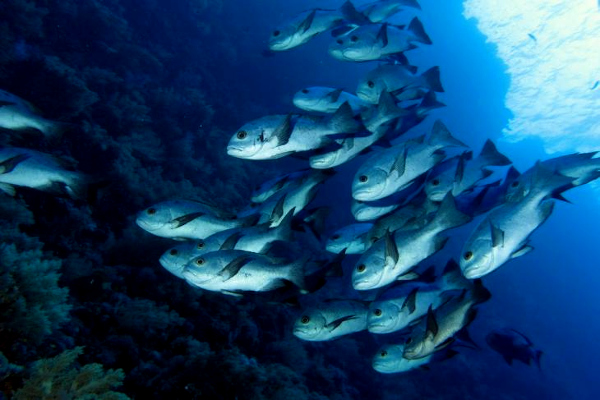
India has intensified scientific monitoring of its marine resources through a series of surveys across the country’s Exclusive Economic Zone.
The Centre for Marine Living Resources and Ecology (CMLRE) in Kochi carried out around 19 surveys between 2023 and 2026. The institution functions under the Ministry of Earth Sciences.
The surveys assessed fishery resources, marine biodiversity and changing ecological conditions across Indian waters.
Supporting Sustainable Fisheries
CMLRE collects scientific data to help India manage marine resources in a sustainable manner. The government also uses this information while framing policies on fisheries and marine conservation.
One major task involves estimating the potential fishery yield of India’s EEZ. Scientists conduct this assessment once every eight years.
The research also identifies important fish spawning grounds and breeding seasons. Such information can help authorities protect vulnerable fish populations and improve fisheries management.
CMLRE also studies deep-sea and distant-water fishery resources. Its findings support efforts to understand resources that remain relatively unexplored.
Mapping India’s Marine Biodiversity
The programme goes beyond fisheries and covers a wide range of marine biodiversity.
Scientists identify Ecologically and Biologically Significant Areas, or EBSAs, within Indian waters. These areas hold special importance for marine ecosystems and conservation.
CMLRE also develops biodiversity inventories and genomic reference libraries. These tools help researchers identify marine species more accurately.
The institution is digitising biological collections and scientific data as well. This work supports modern taxonomy and biodiversity research.
The data also contributes to India’s commitments under international frameworks. These include the Convention on Biological Diversity and Sustainable Development Goal 14, which focuses on oceans and marine resources.
Bhavasagara Repository to Preserve Deep-Sea Specimens
India is also strengthening the long-term preservation of marine biological material through the Bhavasagara National Repository.
The repository preserves and documents deep-sea biological specimens collected during scientific missions.
These specimens can provide valuable information about species diversity and deep-ocean ecosystems. They also create a permanent scientific record for future research.
Long-Term Monitoring Across Indian Waters
The Marine Living Resources programme carries out long-term observations across India’s EEZ.
Researchers monitor fisheries, biodiversity and environmental factors that influence marine ecosystems. They then assess and map changes across different regions.
Such continuous monitoring can help scientists understand how marine ecosystems respond to environmental pressure and human activity.
The government is also expanding collaboration with Indian and international research institutions. Capacity-building programmes aim to strengthen expertise in marine science and ocean biology.
Science to Guide Marine Conservation
CMLRE conducts studies on vulnerable marine ecosystems and species that may require greater protection.
The research supports conservation planning while helping India balance ecological protection with the sustainable use of marine resources.
Minister of State (Independent Charge) for Earth Sciences Dr. Jitendra Singh shared these details in a written reply in the Lok Sabha on August 12, 2026.
The government’s expanding marine research programme reflects a wider effort to understand India’s vast ocean territory through scientific observation. Better data on fisheries, biodiversity and deep-sea ecosystems can strengthen conservation while supporting the sustainable growth of India’s marine economy.
Source: Press Information Bureau, Ministry of Earth Sciences, Government of India, August 12, 2026.
You may also like
-
PGIMER, IIT Ropar and ISRO Plan Microgravity Research Laboratory to Advance India’s Human Spaceflight Medicine
-
New Technology Provides Environment Friendly Route for Treating Dye-Contaminated Wastewater
-
Large- and Small-scale Magnetic Activity Driving Microwave Polar Brightening in the Sun
-
Molecular Geometry Tweak Opens New Way for Smart Biomaterials
-
ISRO’s Indo-French TRISHNA Satellite Enters Advanced Development Stage, Launch Expected in 2027–28
