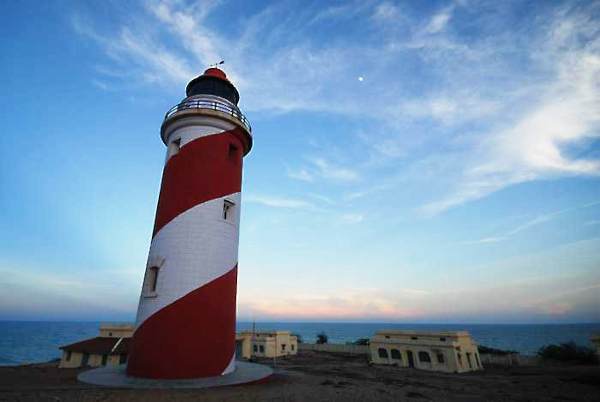
India is transforming its historic lighthouses into new centres of maritime tourism, heritage conservation and public education, with tourism facilities now developed at 75 lighthouses across the country.
The initiative, being implemented by the Ministry of Ports, Shipping and Waterways, seeks to preserve the historical and architectural significance of India’s lighthouses while opening them to visitors as cultural and educational destinations. The programme is being taken forward under Section 23 of the Marine Aids to Navigation Act, 2021, which allows lighthouse infrastructure to be used for educational, cultural and tourism-related purposes in addition to its primary navigational role.
Lighthouses continue to function primarily as Marine Aids to Navigation, helping ships navigate safely along India’s extensive coastline. The tourism initiative therefore does not replace their operational role, but adds a heritage and public-engagement dimension to infrastructure that has guided mariners for generations.
Lighthouse Museums Preserve India’s Maritime Story
As part of the programme, dedicated Lighthouse Museums have been established at Chennai, Mahabalipuram, Alappuzha, Kannur, Muttom, Dwarka and Gopnath.
These museums trace the evolution of lighthouse technology and present aspects of India’s maritime history, including the development of coastal navigation, signalling systems and the role played by lighthouses in supporting shipping and coastal communities.
By converting selected lighthouse complexes into public heritage spaces, the government is attempting to preserve a part of India’s maritime infrastructure that is often overlooked despite its close relationship with the country’s history of seafaring, trade and coastal development.
Tourism Infrastructure Developed at 75 Locations
Tourism facilities have been created at 75 lighthouse locations spread across Gujarat, Goa, Karnataka, Kerala, Tamil Nadu, Andhra Pradesh, Odisha, West Bengal, Maharashtra and the Andaman and Nicobar Islands.
The facilities vary by location but include cafeterias, landscaped gardens, gazebos, children’s play areas, internal walkways, public toilets, drinking-water facilities, amphitheatres and lifts.
Some locations have also been equipped with light-and-sound shows, allowing visitors to experience the history of the lighthouse and surrounding coastal region through multimedia presentations.
The objective is to transform lighthouse complexes into destinations where visitors can experience coastal landscapes while also learning about navigation, shipping and India’s maritime heritage.
Gujarat Has the Largest Number of Lighthouse Tourism Sites
Gujarat accounts for the largest number of lighthouses developed under the initiative, with 17 locations.
These include Mandvi, Rawalpir, Samiyani, Okha, Kachchhigadh, Porbandar, Mangrol, Jaffrabad, Jegri, Alang, Ghogha, Hazira, Valsad Khadi, Gopnath, Veraval, Dwarka and Umargaon.
The concentration reflects Gujarat’s long coastline and its historic importance in India’s maritime trade. Ports and coastal settlements along the Gujarat coast have maintained commercial links with West Asia and Africa for centuries, making the region especially suitable for maritime heritage tourism.
Kerala and Tamil Nadu Form Major Lighthouse Tourism Corridors
Kerala has 10 lighthouse tourism locations, including Kannur, Ponnani, Chetwai, Vypin, Alappuzha, Valiyazhikal, Thangasseri, Anjengo, Vizhinjam, Azhikode and Kadalur Point.
Several of these sites lie along a coast historically connected with the Indian Ocean spice trade, linking Kerala with Arabia, East Africa and Southeast Asia.
Tamil Nadu has one of the largest clusters under the programme, with lighthouse destinations extending from the northern Coromandel Coast to India’s southernmost maritime approaches.
The locations include Kanniyakumari, Kuthenkuli, Manappad, Kilakkarai, Dhanushkodi, Pamban, Karaikal, Mallipattinam, Kodikkarai, Nagapattinam, Poompuhar, Pulicat, Muttom Point, Mahabalipuram and Chennai.
The Tamil Nadu circuit is particularly significant because several of these locations are associated with ancient ports, historic coastal trade routes and major cultural centres.
Andhra Pradesh, Odisha and Bengal Strengthen East Coast Tourism
Along India’s eastern seaboard, Andhra Pradesh has tourism facilities at Ramayapatnam, Machilipatnam, Antervedi, Sacramento, Vakalapudi, Santapalli, Kalingapatnam, Baruva, Vodarevu and Pudimadaka.
Odisha’s lighthouse tourism sites include Gopalpur, Puri, Chandrabhaga, Paradip and False Point, while West Bengal has facilities at Tajpur, Dariapur and Sagar Island.
These locations provide an opportunity to connect lighthouse tourism with beaches, pilgrimage centres, ports, mangrove regions and historic coastal settlements.
Western Coast and Island Locations Also Included
In Karnataka, facilities have been developed at Tadri, Bhatkal, Kaup, Surathkal and Kundapur, while Goa’s Aguada Lighthouse forms part of the programme.
Maharashtra has tourism facilities at Uttan Point, Korlai Fort, Jaigarh, Ratnagiri, Vengurla Point and Kelshi.
The inclusion of Korlai Fort Lighthouse and Jaigarh Lighthouse is especially significant because they combine maritime navigation infrastructure with historic fortifications and coastal defence heritage.
In the Andaman and Nicobar Islands, North Point Lighthouse and Keating Point Lighthouse have been developed for tourism, adding an island-maritime dimension to the programme.
Maritime Heritage as a Tourism Asset
India’s lighthouse tourism initiative represents a broader effort to treat maritime infrastructure as part of the country’s cultural heritage rather than viewing it solely through its operational function.
Many Indian lighthouses occupy commanding coastal positions and are closely associated with historic ports, trading routes, naval movements and fishing communities. Their architecture and locations also make them natural tourism attractions.
By creating museums, visitor facilities and heritage interpretation centres around these structures, the government is attempting to combine navigation infrastructure, heritage conservation and coastal tourism within a single framework.
The initiative could also contribute to local economies by increasing visitor movement to smaller coastal settlements that may otherwise remain outside conventional tourism circuits.
Union Minister for Ports, Shipping and Waterways Sarbananda Sonowal provided details of the programme in a written reply to the Rajya Sabha on August 11, 2026.
The development of 75 lighthouse tourism destinations consequently represents more than an infrastructure beautification exercise. It is an attempt to reconnect the public with India’s long relationship with the sea and preserve the structures that have guided generations of sailors along one of the world’s most historically important maritime regions.
Source: PIB: https://www.pib.gov.in/PressReleasePage.aspx?PRID=2297603®=48&lang=1
You may also like
-
TDB Backs Panacea Medical Technologies to Develop Indigenous 32-Slice CT Scanner in Karnataka
-
Koraput Kalajeera Rice: Odisha’s Fragrant ‘Prince of Rice’ Preserved by Generations of Tribal Farmers
-
Mormugao Port Becomes India’s First Major Port to Secure Private 5G Network Authorisation
-
PM Modi Inaugurates ₹3,350 Crore Development Projects in Ladakh
-
AXISCADES Expands Global Technology Footprint with US Acquisition Plan and Swiss Company Takeover
