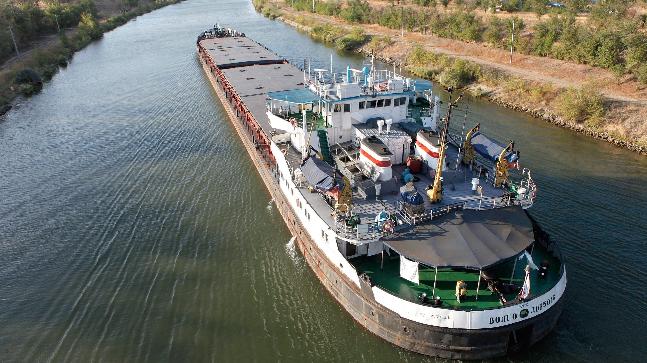
India is stepping up efforts to shift a larger share of freight from congested road and rail networks to coastal shipping and inland waterways, with cargo movement on the country’s National Waterways reaching 218 million metric tonnes during FY 2025-26. The expansion is being supported through the Sagarmala programme, new cargo incentives, private investment in inland terminals and the development of strategic waterways connecting industrial clusters with major ports.
Union Minister of Ports, Shipping and Waterways Sarbananda Sonowal, in a written reply to the Rajya Sabha, said the government is pursuing a combination of infrastructure development, fiscal incentives and regulatory reforms to strengthen coastal and inland water transport.
Sagarmala Projects Undergo Independent Impact Assessment
At the end of the 15th Finance Commission cycle, projects implemented under the Sagarmala scheme underwent an independent third-party impact evaluation by the National Productivity Council.
The projects assessed covered several major pillars of Sagarmala, including port modernisation, port connectivity, coastal community development, coastal shipping and inland waterways development. The government clarified that no project has so far been sanctioned for financial assistance under the port-led industrialisation pillar of the programme.
Sagarmala has increasingly been used to strengthen the infrastructure required for coastal movement of cargo and passengers, including the development of coastal berths, Ro-Ro and Ro-Pax facilities, passenger jetties and port-connectivity projects.
National Waterway Cargo Reaches 218 Million Tonnes
Cargo movement through India’s National Waterways reached 218 million metric tonnes in FY 2025-26, reflecting the growing role of rivers and inland channels in the country’s multimodal logistics network.
To accelerate this shift, the government has approved the Jalvahak scheme, which provides a 35 per cent incentive to cargo owners using inland waterways.
Scheduled cargo services are also being introduced on National Waterway-1, covering the Ganga-Bhagirathi-Hooghly river system, National Waterway-2 on the Brahmaputra and National Waterway-16 on the Barak River. Services involving these waterways can also operate through the Indo-Bangladesh Protocol Route, with Inland & Coastal Shipping Limited participating in the scheduled cargo initiative.
The objective is to provide industry with more predictable waterway services rather than depending entirely on irregular or project-specific cargo movements.
Major Ports Improve Vessel Turnaround Time
Operational performance at India’s Major Ports has also improved. Their average vessel turnaround time declined from 52.87 hours in FY 2021-22 to 48.84 hours in FY 2025-26.
The government also highlighted India’s performance in the Container Port Performance Index 2025, published by the World Bank. Jawaharlal Nehru Port ranked 22nd globally, placing it close to some of the world’s major container hubs. Singapore was ranked 21st and Shanghai 23rd, while Hong Kong stood ninth.
Faster turnaround reduces the amount of time vessels remain at berth or within port limits and can improve the overall efficiency and competitiveness of maritime logistics.
Coastal Cargo Promotion Scheme Targets Doubling of Modal Share
A major policy push was announced in the Union Budget 2026-27 through the proposed Coastal Cargo Promotion Scheme.
The initiative is intended to encourage companies to move freight away from roads and railways towards coastal shipping and inland waterways. The government aims to increase the combined modal share of coastal and inland water transport from around 6 per cent currently to 12 per cent by 2047.
Such a shift could have implications well beyond cargo transportation. A larger coastal and inland freight market would create demand for new cargo vessels, terminals, ship repair facilities, storage infrastructure, cargo-handling systems and multimodal logistics hubs.
The policy therefore seeks not merely to increase waterborne freight but also to create a commercially viable logistics ecosystem capable of attracting sustained private-sector investment.
National Waterway-5 to Link Odisha’s Mineral Belt With Ports
Another strategically important announcement in the Union Budget 2026-27 was the development of National Waterway-5 in Odisha.
The proposed waterway is intended to connect the mineral-rich Talcher and Angul regions with industrial centres such as Kalinga Nagar and subsequently with the ports of Paradip and Dhamra.
If successfully developed with adequate terminals and last-mile connectivity, NW-5 could provide bulk industries with an alternative route for transporting minerals and industrial cargo to coastal ports. Odisha’s concentration of coal, steel, aluminium and other heavy industries makes such a waterway particularly relevant for reducing logistics costs associated with bulk freight.
Private Companies Allowed to Develop Inland Terminals
The government has also opened a larger role for private investment through the National Waterways (Construction of Jetties/Terminals) Regulations, 2025.
The regulations establish a formal framework allowing private companies to invest in, develop and operate terminals along National Waterways. The measure is intended to provide greater regulatory certainty to companies considering investments in inland port infrastructure and cargo-handling facilities.
Expanding private participation could become crucial as inland waterways move from a largely government-supported transport segment towards a commercially integrated component of India’s logistics network.
Tonnage Tax Benefits Extended to Inland Vessels
Fiscal incentives have also been introduced to improve the economics of inland shipping.
The Union Budget 2025-26 extended the tonnage tax scheme to inland vessels registered under the Indian Vessels Act, 2021. The measure benefits qualifying vessels operating on National Waterways, rivers and canals and is intended to bring the taxation framework for inland shipping closer to that available to parts of the maritime shipping industry.
Together with the Jalvahak incentive, scheduled cargo services and private terminal regulations, the tax reform forms part of a broader attempt to make inland water transport commercially attractive to both vessel operators and cargo owners.
From Port Modernisation to Integrated Maritime Logistics
The latest policy measures indicate that the next phase of Sagarmala is increasingly focused on integrating ports with inland waterways, coastal shipping, industrial centres and multimodal logistics corridors.
India has traditionally moved the overwhelming majority of domestic freight through roads and railways. Expanding the share of coastal and inland water transport could provide an additional logistics option, particularly for bulk commodities and cargo moving between industrial regions and ports.
With 218 million tonnes of cargo already moving through National Waterways, a 35 per cent incentive for selected cargo movement, scheduled services on major river systems, private participation in inland terminals and a national target of doubling the modal share of coastal and inland water transport by 2047, the government is seeking to turn India’s rivers and coastline into a substantially larger component of the national freight network.
The strategy ultimately links the objectives of Sagarmala, National Waterways development and coastal shipping into a single larger goal: creating a more diversified, efficient and multimodal logistics system connecting India’s industrial hinterland with its ports and maritime trade routes.
Source: PIB: https://www.pib.gov.in/PressReleasePage.aspx?PRID=2297606®=48&lang=1
You may also like
-
Mormugao Port Becomes India’s First Major Port to Secure Private 5G Network Authorisation
-
PM Modi Inaugurates ₹3,350 Crore Development Projects in Ladakh
-
AXISCADES Expands Global Technology Footprint with US Acquisition Plan and Swiss Company Takeover
-
Skyroot Aerospace Secures Two Satellite Launch Contracts from US Space Company Reflect Orbital
-
India Dispatches First 18 Railway Coaches to Bangladesh Under 200-Coach Export Agreement
