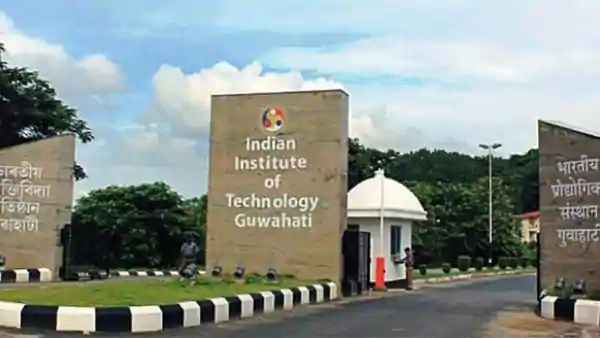
Researchers at IIT Guwahati have developed a low-cost portable device called E-Eye that can rapidly detect toxic metals and other contaminants in water and biological samples.
Designed as a point-of-care testing system, E-Eye uses optical sensing and digital electronics to analyse colour changes produced during chemical reactions. Based on the Beer-Lambert principle, the device converts these optical changes into digital measurements showing the concentration of contaminants.
The system has successfully detected substances including arsenic, lead, iron, chromium and fluoride, along with Escherichia coli bacteria.
Researchers say E-Eye has produced results comparable with conventional UV-Visible spectrophotometers and Atomic Absorption Spectroscopy (AAS) while being far cheaper and suitable for field use.
The device costs approximately ₹3,500, while each test can cost around ₹2. Its cost could fall further with large-scale manufacturing.
The research team has tested thousands of samples and sees applications not only in drinking-water monitoring but also in industrial effluents, soil, milk, vegetables, tea, herbal products and biological samples.
The technology could be particularly useful for programmes such as the Jal Jeevan Mission, allowing water quality to be checked directly at wells, village supply points and treatment facilities instead of relying entirely on distant laboratories.
E-Eye can also transmit test results wirelessly, opening the possibility of creating digitally connected water-quality monitoring networks.
The project has received support from the Ministry of Electronics and Information Technology (MeitY). The researchers have also established ENVIONIX Labs Pvt Ltd to commercialise the technology and are working towards industry partnerships for technology transfer.
Future versions are expected to incorporate solar power and cloud connectivity, making the system more suitable for continuous monitoring in remote areas.
Developed at a fraction of the cost of conventional laboratory equipment, E-Eye represents a promising indigenous solution for making rapid, decentralised and affordable contaminant testing more widely available across India.
You may also like
-
IISc Scientists Show How Strong Magnetic Fields Could Allow White Dwarfs to Exceed Chandrasekhar Limit
-
IIT Madras to Launch Global Mission to Map 100 Human Brains in 3D
-
3,898 Indian Scientists Feature in 2026 Global Top 2% Research Database; IISc Leads Indian Institutions
-
New Metal-free Porous Material can Help Produce Affordable Clean Energy
-
A Decade of Cosmic Flickering Reveals New Clues About A Rare Giant Binary Black Hole System
