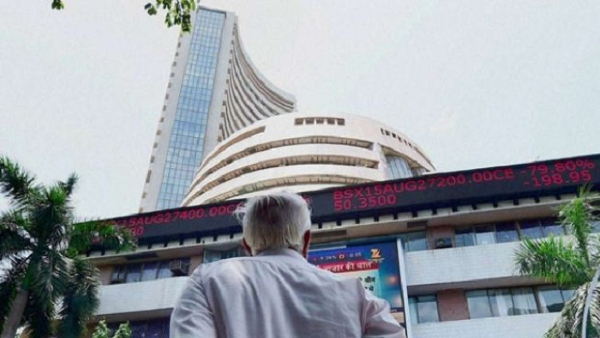
India’s capital markets are witnessing a major transformation as the country’s registered investor base has crossed 13.2 crore, reflecting a sharp expansion in retail participation and a growing investment culture among younger Indians.
According to data highlighted by the National Stock Exchange (NSE), India’s investor population is becoming not only larger but also younger and more geographically diverse, with participation increasingly spreading beyond the traditional financial centres and major metropolitan regions.
The milestone marks a dramatic increase from around 2.7 crore registered investors in FY2018-19, meaning the investor base has expanded nearly fivefold in about seven years. Nearly four out of every five investors currently registered with the market have joined since FY2019.
The expansion underlines the growing role of household participation in India’s financial markets, aided by digital trading platforms, simplified account opening, widespread smartphone adoption, improved financial awareness and greater access to formal investment products.
Younger Indians Enter the Stock Market
One of the most significant changes is the declining age of the average Indian investor.
NSE data indicate that the median age of registered investors has fallen from around 38 years in March 2020 to about 33 years by June 2026.
Investors below the age of 30 now account for approximately 37.9% of the NSE’s registered investor base, compared with around 23.5% in March 2020.
The shift suggests that equity investing is increasingly becoming part of the financial behaviour of younger Indians, many of whom are gaining exposure to stocks, mutual funds and other financial assets relatively early in their working lives.
Digital brokerage platforms, Unified Payments Interface-linked financial services, online KYC systems and widespread availability of investment information have substantially lowered the barriers that once restricted stock-market participation.
Investor Base Spreads Beyond Traditional Centres
The growth is also becoming geographically broader.
While states with established financial and industrial centres continue to account for a large share of investors, some of the fastest increases are being recorded in northern and eastern India.
Between FY2019 and FY2027 so far, the investor base in North India expanded around 6.3 times, adding approximately 4.11 crore investors.
Eastern India recorded an increase of about 5.9 times, while the investor bases in southern and western India expanded approximately 4.2 times and four times respectively.
This widening geographical participation indicates that capital-market investing is increasingly reaching households outside India’s traditional metropolitan investment centres.
Maharashtra Remains India’s Largest Investor Market
Maharashtra continues to have the country’s largest registered investor population.
The state has approximately 2.1 crore investors, representing around 15.5% of India’s total registered investor base.
Uttar Pradesh has emerged as the second-largest investor market with roughly 1.6 crore investors, accounting for approximately 11.9% of the national total.
Gujarat follows with around 1.1 crore registered investors, or approximately 8.5% of the total.
However, the dominance of the largest states is gradually declining.
The five biggest states together account for approximately 47.6% of registered investors in FY2027 so far, compared with about 52.8% in FY2019.
The change indicates that investment participation is steadily becoming more widely distributed across the country rather than remaining concentrated in a handful of states.
From Years to Months to Add One Crore Investors
The speed at which new investors have entered Indian capital markets highlights the scale of the transformation.
India reportedly took nearly 14 years to build its first one crore registered investors.
Adding the next one crore required another six years.
By comparison, the latest addition of one crore investors was achieved in approximately six months, with the registered investor population crossing the 13-crore mark in April 2026.
The acceleration reflects both technological changes in financial services and a structural shift in household attitudes towards investment.
Indian families historically directed a large share of their savings towards bank deposits, gold and property. Financial assets such as equities and mutual funds are now accounting for a growing part of household investment portfolios.
Investor Awareness Programmes Expand
Investor education has accompanied the expansion of market participation.
The NSE conducted 17,916 investor awareness programmes during FY2025-26, reaching approximately 9.4 lakh participants across the country.
Such programmes are aimed at educating new participants about financial products, market risks, fraud prevention, responsible investing and investor rights.
Financial literacy has become increasingly important as millions of first-time investors enter the securities market through mobile trading applications and digital investment platforms.
Pace of New Registrations Begins to Normalise
Although the long-term expansion remains significant, the rate at which new investors are being added has begun to moderate after the exceptional surge witnessed during and after the pandemic period.
Around 11.6 lakh new investors were registered in June 2026, an increase of approximately 10.9% compared with May but around 8.3% lower than the corresponding period a year earlier.
During the first quarter of FY2026-27, approximately 32.8 lakh investors were added.
Average monthly investor additions have moderated to around 10.9 lakh during FY2027 so far, compared with roughly 13.5 lakh in FY2026 and a peak of about 17.5 lakh per month during FY2025.
The moderation nevertheless comes from an historically high base and follows several years of extraordinary expansion in retail-market participation.
A Structural Change in India’s Financial Economy
The rise to more than 13.2 crore investors represents more than just an increase in demat and trading accounts.
It points to a deeper transformation in the way Indian households interact with the financial system.
A younger investor population, easier digital access and growing participation from smaller cities and emerging regions could help deepen India’s capital markets and provide domestic companies with a larger pool of long-term capital.
Greater domestic participation may also strengthen the role of household savings in financing economic growth while reducing the relative dependence of Indian equity markets on foreign portfolio flows.
At the same time, the rapid entry of inexperienced investors underscores the importance of financial literacy, appropriate risk management and effective market regulation.
With more than 13.2 crore Indians now registered as investors, India’s equity market is increasingly moving from being concentrated among a comparatively small urban investor community towards becoming a much broader component of the country’s household financial landscape.
References
DD News — India’s investor base crosses 13.2 crore, becomes younger and more diverse: NSE
DD News, 7 August 2026
https://ddnews.gov.in/en/indias-investor-base-crosses-13-2-crore-becomes-younger-and-more-diverse-nse/
National Stock Exchange of India — Market Pulse, July 2026
NSE Economic Policy and Research Department
https://www.nseindia.com/
You may also like
-
India’s Economic Warfare Challenge: Strategic Autonomy, Energy Security and the Rise of a Global Power
-
India-US Trade Deal Stalemate: Why Washington’s Tariff Pressure Has Failed to Secure an Agreement
-
US Double Standards in Foreign Policy: 16 Recent Cases Involving India, Russia, China and Global Trade
-
India’s Arctic Energy Ambitions: Russian Oil, LNG and a New Sea Route to Indian Ports
-
India and Russia Explore Joint Icebreaker Construction as Maritime Industrial Cooperation Expands
