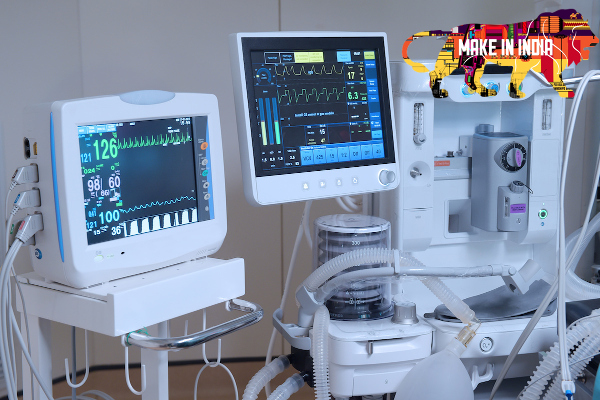
India’s medical device industry could grow into a $250 billion market by 2047, positioning the country as a major global MedTech manufacturing and innovation hub, according to a new white paper released by FICCI and DUA Consulting.
The report, titled “Service and Maintenance of Medical Equipment in Indian Healthcare – Towards a Safe, Reliable and Sustainable Medical Device Maintenance Ecosystem,” was released during the inaugural session of the ninth edition of India Medical Device 2026, organised by the Department of Pharmaceuticals in association with FICCI.
India’s medical device market is currently estimated at around $14 billion. The report projects that the sector could expand to $30–50 billion within the current decade before potentially reaching $250 billion by 2047.
Healthcare Demand and Indigenous Manufacturing to Drive Growth
According to the white paper, the expansion will be supported by several structural factors, including rising healthcare demand, increasing adoption of advanced medical technologies and stronger government support for domestic manufacturing.
India’s ambition to develop into a global MedTech hub is also expected to accelerate investment in medical equipment, diagnostics, healthcare electronics and associated technologies.
The government has already introduced measures such as the Production Linked Incentive Scheme for medical devices and the Strengthening of Medical Devices Industry Scheme, aimed at improving domestic manufacturing capabilities and reducing dependence on imports.
These initiatives have helped create a stronger production ecosystem and improved the competitiveness of Indian medical device manufacturers.
Manufacturing Alone Will Not Be Enough
The report, however, argues that the long-term success of India’s medical device industry cannot depend on manufacturing capacity alone.
As hospitals and healthcare facilities adopt increasingly sophisticated equipment, India will also require a reliable nationwide ecosystem for servicing, maintenance, calibration and lifecycle management.
Medical equipment is now integral to virtually every level of modern healthcare, from diagnosis and emergency medicine to surgery, critical care and specialised treatment.
The value of such equipment therefore extends far beyond its initial purchase.
Regular servicing and proper maintenance are essential to ensuring that sophisticated medical devices continue functioning accurately and safely throughout their operational life.
Patient Safety Closely Linked to Equipment Maintenance
The report places particular emphasis on the relationship between medical equipment maintenance and patient safety.
Poorly maintained equipment can result in inaccurate readings, unexpected breakdowns and interruptions to treatment.
A systematic maintenance programme, by contrast, can improve clinical reliability while reducing equipment downtime.
Effective servicing can also extend the usable life of expensive medical technologies and improve returns on investments made by hospitals and public healthcare institutions.
This becomes particularly significant for advanced devices such as imaging systems, diagnostic equipment, surgical platforms and critical-care technologies, where breakdowns can directly disrupt medical services.
Risk-Based Maintenance Framework Proposed
To create a more dependable system, the white paper proposes the establishment of a risk-tiered hybrid maintenance framework.
The proposed model would be linked to the medical device classification system followed by the Central Drugs Standard Control Organisation (CDSCO).
Under such a framework, maintenance requirements would vary depending on the level of risk associated with individual categories of medical devices.
Higher-risk equipment could therefore be subjected to more stringent servicing, calibration and inspection requirements than lower-risk devices.
This approach could help standardise maintenance practices while ensuring that resources are directed towards equipment where failure could have the greatest impact on patient care.
National Certification System for Service Engineers Recommended
Another major recommendation is the creation of a national certification architecture for medical equipment service engineers.
As medical devices become increasingly digital, connected and technically complex, servicing them requires specialised skills.
The report therefore calls for stronger technical training and a structured certification mechanism capable of ensuring that engineers responsible for maintaining medical equipment possess appropriate expertise.
Developing a large pool of trained service professionals could also create specialised employment opportunities as India’s MedTech industry expands.
Digital Technologies Could Transform Equipment Maintenance
The white paper advocates wider adoption of digital technologies to improve medical equipment reliability.
These include predictive maintenance systems, digital monitoring platforms and lifecycle management technologies.
Predictive maintenance can use equipment data to identify emerging faults before they result in complete breakdowns.
Hospitals could therefore schedule repairs and replacement of components before equipment becomes unavailable for clinical use.
Digital monitoring could also allow healthcare institutions to track equipment condition, maintenance history, calibration schedules and performance across multiple facilities.
Such systems could become particularly valuable for large hospital networks and government healthcare systems managing thousands of devices across different locations.
Fiscal and Commercial Reforms Suggested
The report also recommends encouraging innovation in commercial models for equipment maintenance.
Medical device servicing is currently delivered through a combination of manufacturer contracts, third-party service providers and in-house engineering teams.
The white paper argues that appropriate commercial structures could help improve service quality while lowering lifecycle costs.
It also calls for rationalisation of the fiscal framework surrounding maintenance services to encourage compliant and professional servicing practices.
India Building a Broader MedTech Ecosystem
The projected expansion of the medical device market represents a wider transformation taking place within India’s healthcare manufacturing sector.
The country is increasingly focusing on the domestic production of advanced equipment while simultaneously building capabilities in diagnostics, electronics, software, artificial intelligence and healthcare engineering.
For India to reach the projected $250 billion market size by 2047, however, the supporting ecosystem will need to evolve alongside manufacturing.
That means developing not only factories and supply chains but also trained technicians, calibration facilities, servicing networks, testing infrastructure and digital equipment-management systems.
The FICCI-DUA Consulting white paper therefore presents medical device maintenance as an increasingly important part of India’s healthcare and manufacturing strategy.
If these capabilities develop alongside indigenous manufacturing, India could move beyond being a large medical-device market and emerge as a major global centre for MedTech production, servicing, innovation and lifecycle management.
Reference
Press Information Bureau, Government of India
“India’s medical device industry projected to reach $250 billion by 2047: FICCI-DUA Consulting Report”
Published: August 7, 2026, 4:44 PM
You may also like
-
India’s Economic Warfare Challenge: Strategic Autonomy, Energy Security and the Rise of a Global Power
-
India-US Trade Deal Stalemate: Why Washington’s Tariff Pressure Has Failed to Secure an Agreement
-
US Double Standards in Foreign Policy: 16 Recent Cases Involving India, Russia, China and Global Trade
-
India’s Arctic Energy Ambitions: Russian Oil, LNG and a New Sea Route to Indian Ports
-
India and Russia Explore Joint Icebreaker Construction as Maritime Industrial Cooperation Expands
