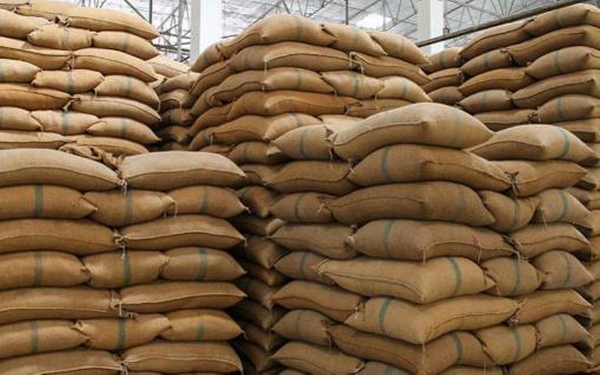
India’s decentralised grain storage programme is strengthening rural warehousing and cooperative infrastructure across Andhra Pradesh, Bihar, Uttar Pradesh and Madhya Pradesh, with 168 projects approved in the four states.
According to information presented in the Lok Sabha, 119 godowns have already been completed, while five projects are currently under construction. The initiative forms part of the World’s Largest Grain Storage Plan in the cooperative sector and seeks to create storage facilities closer to farms and local agricultural markets.
Andhra Pradesh Completes 117 Godowns
Andhra Pradesh accounts for the largest share of approved projects among the four states. All 117 approved godowns in the state have been constructed.
Bihar has received approval for 36 projects. Five are under construction, although no completed godown was reported under the project status presented in the annexure.
Uttar Pradesh has 14 approved projects, with one godown completed. Madhya Pradesh has completed the only project approved for the state.
Overall, the four states together reported:
- 168 approved projects
- 119 completed godowns
- Five projects under construction
Madhya Pradesh Cites Surplus Storage Capacity
Madhya Pradesh informed the Centre that it already possesses surplus storage capacity and is therefore not participating extensively in the decentralised cooperative storage programme.
However, one godown has been constructed at Paraswada Samiti in Balaghat district.
Eligible cooperative societies, including Primary Agricultural Credit Societies, can establish storage infrastructure on land owned by them or on leased land. State governments may facilitate land allocation wherever required.
PACS Develop Wider Rural Infrastructure
The programme extends beyond the construction of warehouses. Primary Agricultural Credit Societies in the four states have also operationalised custom hiring centres and fair price shops.
Bihar reported the largest number of participating PACS, with 5,828 societies. These include 2,659 custom hiring centres and 3,752 fair price shops.
Madhya Pradesh reported 2,032 PACS, along with 87 custom hiring centres and 4,012 fair price shops.
Uttar Pradesh recorded 1,862 PACS, 169 custom hiring centres and 212 fair price shops.
Andhra Pradesh reported 685 PACS, six custom hiring centres and 71 fair price shops.
The custom hiring centres allow farmers to access agricultural machinery and equipment without having to purchase expensive assets individually. Fair price shops operated through cooperative institutions can also improve the reach of the public distribution system in rural areas.
Subsidy Support for Cooperative Warehouses
Financial assistance has been provided under the Agricultural Marketing Infrastructure scheme to support the creation of cooperative storage facilities.
Bihar received advance subsidy support of ₹5.06 crore for 25 projects. Madhya Pradesh received ₹0.13 crore for one project, while Uttar Pradesh received ₹0.05 crore for one project.
No subsidy had been released to Andhra Pradesh under the Agricultural Marketing Infrastructure scheme at the time of the government’s reply.
Warehouses to Follow WDRA Standards
The storage facilities constructed under the programme must comply with prescribed technical standards and specifications issued by the Warehousing Development and Regulatory Authority.
No structural safety concerns have been reported by Bihar, Andhra Pradesh, Uttar Pradesh or Madhya Pradesh.
The godowns are also being brought within the WDRA regulatory framework. Eligible PACS and cooperative societies are being encouraged to obtain registration so that they can use the electronic Negotiable Warehouse Receipt system.
Under the e-NWR system, farmers and depositors receive electronic warehouse receipts for agricultural produce stored in registered warehouses. These receipts can improve transparency in storage transactions and may also be used to access institutional credit, subject to applicable banking conditions.
Bringing Storage Closer to Farmers
The decentralised model is intended to reduce the distance between farms, procurement centres and storage facilities. Local warehousing can help farmers avoid distress sales immediately after harvest, lower transportation expenses and reduce pressure on large centralised storage depots.
By integrating godowns, agricultural service centres, fair price shops and cooperative credit institutions, the programme seeks to transform PACS into multipurpose rural economic centres.
The information was provided by Union Home Minister and Minister of Cooperation Amit Shah in a written reply in the Lok Sabha.
Project Progress
| State | Projects approved | Godowns constructed | Projects under construction |
|---|---|---|---|
| Andhra Pradesh | 117 | 117 | 0 |
| Bihar | 36 | 0 | 5 |
| Uttar Pradesh | 14 | 1 | 0 |
| Madhya Pradesh | 1 | 1 | 0 |
| Total | 168 | 119 | 5 |
Advance Subsidy Released
| State | Projects supported | Subsidy |
|---|---|---|
| Bihar | 25 | ₹5.06 crore |
| Madhya Pradesh | 1 | ₹0.13 crore |
| Uttar Pradesh | 1 | ₹0.05 crore |
You may also like
-
India’s Economic Warfare Challenge: Strategic Autonomy, Energy Security and the Rise of a Global Power
-
India-US Trade Deal Stalemate: Why Washington’s Tariff Pressure Has Failed to Secure an Agreement
-
US Double Standards in Foreign Policy: 16 Recent Cases Involving India, Russia, China and Global Trade
-
India’s Arctic Energy Ambitions: Russian Oil, LNG and a New Sea Route to Indian Ports
-
India and Russia Explore Joint Icebreaker Construction as Maritime Industrial Cooperation Expands
