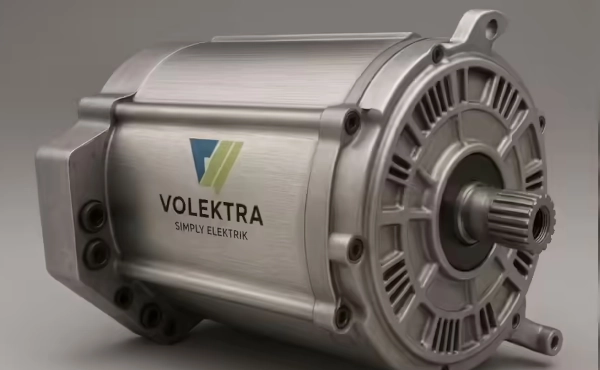
Electric motors lie at the heart of electric vehicles, industrial machinery, robotics, cooling equipment and defence systems. Many high-performance applications depend on permanent-magnet synchronous motors because they offer excellent efficiency, compact dimensions and high power density. However, these motors commonly require powerful rare-earth magnets containing elements such as neodymium, praseodymium, dysprosium and terbium.
Bengaluru-based Vimag Labs is developing a different approach. Its Virtual Magnet Synchronous Motor, or VMSM, replaces fixed permanent magnets with an electrically generated rotor magnetic field controlled through power electronics and proprietary software.
The company is effectively attempting to transform the electric motor from a machine whose magnetic characteristics are permanently fixed during manufacturing into a programmable motion platform whose magnetic field can be adjusted while the motor is operating.
India’s Software-Defined Motor Company
Vimag Labs is a Bengaluru-headquartered deep-technology company developing magnet-free motor systems for electric mobility, industrial equipment, robotics, cooling systems and critical applications. The company operates under the Volektra brand and is building its technology for customers in India, Europe and the United States.
Its central innovation is the VMSM platform—a synchronous electric motor that creates the rotor’s magnetic field electronically instead of obtaining it from permanent magnets embedded in the rotor.
The company combines four important elements into one integrated system:
- A specialised synchronous motor architecture
- Contactless rotor-excitation technology
- Custom power electronics
- Proprietary field-control software
Vimag Labs argues that the commercial advantage comes from engineering these elements together rather than treating the motor, inverter and control software as separate products.
Why Permanent Magnets Matter in Electric Motors
A conventional permanent-magnet synchronous motor contains magnets fixed inside or on the surface of its rotor. When the stator produces a rotating electromagnetic field, the magnetic rotor follows it synchronously, creating torque that turns the motor shaft.
Permanent magnets allow manufacturers to build compact and highly efficient traction motors. More than 90% of electric vehicles marketed globally have used permanent-magnet synchronous motors, according to the International Energy Agency, although manufacturers also employ induction, wound-field and reluctance-based alternatives.
The difficulty lies in the supply chain.
The IEA reported that China accounted for approximately 60% of magnet rare-earth mining, 91% of refined output and 94% of sintered permanent-magnet production in 2024. This concentration means that disruptions involving mining, refining, export controls, trade restrictions or geopolitical tensions can affect motor manufacturers across the world.
Electric-vehicle manufacturers are therefore searching for motors that can reduce or eliminate rare-earth content while retaining the efficiency, torque density, reliability and compactness expected from permanent-magnet systems. The United States Department of Energy has also identified non-permanent-magnet designs and reduced-rare-earth motors as important areas of electric-drive research.
Creating a Virtual Magnet
Vimag Labs replaces permanent magnets with an actively generated electromagnetic field.
In its VMSM architecture, electrical energy is delivered to rotor windings through a contactless excitation arrangement. Copper coils inside the rotor become electromagnets when energised, producing the magnetic field required for synchronous operation.
The company describes the machine as a rotating-transformer-excited synchronous motor. Electromagnetic induction transfers energy to the rotating section while avoiding conventional brushes and slip rings. This allows the motor to maintain a sealed, brushless and low-wear rotating architecture.
Power electronics regulate both the rotor excitation and stator operation. Proprietary algorithms then control the magnetic-field strength according to parameters such as:
- Motor speed
- Torque demand
- Vehicle load
- Thermal conditions
- Energy-efficiency targets
- Driving or operating mode
The magnetic field can therefore be strengthened, weakened or otherwise calibrated according to the motor’s operating requirements. A permanent magnet, by comparison, continues to produce a largely fixed magnetic field throughout its service life.
A Motor Controlled Through Software
The term “software-defined motor” reflects the importance of code within Vimag’s architecture.
Software does not merely monitor the system. It directly influences how the motor generates torque, responds to changing loads and manages its magnetic field. The controller can modify field behaviour across different parts of the operating envelope instead of depending entirely on physical magnet properties.
This creates the possibility of calibrating a single motor platform for different applications. A manufacturer could tune its response for urban two-wheelers, passenger vehicles, commercial fleets, industrial equipment or specialised machinery by changing control strategies alongside the necessary hardware configuration.
Software-based calibration could also allow performance characteristics to be refined during vehicle development without redesigning the motor’s permanent-magnet arrangement. Vimag Labs describes product evolution through software as one of the platform’s important advantages.
Brushless and Slip-Ring-Free Architecture
Electrically excited motors have existed for many years, but supplying power to a rotating rotor commonly requires brushes or slip rings. These components create physical electrical contact between stationary and rotating sections.
Brushes can wear over time, generate particles and require maintenance. Slip-ring assemblies can also increase mechanical complexity and affect packaging.
Vimag Labs says its patented architecture transfers excitation without conventional rotor electrical contacts. The company’s rotating-transformer arrangement supplies energy to the rotor while retaining a brushless and slip-ring-free construction.
This distinction is important because the company is not simply replacing permanent magnets with a traditional brushed wound rotor. It is developing an integrated contactless-excitation system supported by custom electronics and digital controls.
The Virtual Magnet Synchronous Motor Platform
Vimag’s VMSM platform differs from a conventional permanent-magnet synchronous motor in several fundamental ways.
The rotor field is actively generated instead of permanently embedded. Field intensity can be changed through software. Rare-earth magnet content is eliminated from the motor architecture, while the excitation system operates without brushes or slip rings.
The company says its technology is designed to equal or surpass permanent-magnet solutions across selected operating cycles. However, such performance depends on the motor’s power rating, cooling system, duty cycle, packaging and application. Large-scale commercial performance will ultimately need to be demonstrated through independent testing, customer validation and sustained production deployments.
That distinction is particularly important for emerging motor technologies. Removing permanent magnets solves one supply-chain challenge, but the resulting machine must still meet demanding automotive requirements involving efficiency, weight, volume, noise, vibration, thermal management, torque density, durability and manufacturing cost.
Applications in Electric Two-Wheelers
Vimag Labs is initially targeting electric mobility, including two-wheelers and passenger vehicles. The company says active pilots are underway with established manufacturers in both segments.
Electric two-wheelers represent an important potential market because they are manufactured in large volumes and are highly sensitive to component costs. Their motors must balance compact packaging, low weight, efficiency, acceleration, thermal performance and affordability.
A magnet-free architecture manufactured using copper, electrical steel, power electronics and locally available industrial components could reduce exposure to imported rare-earth magnets. Software calibration may also allow manufacturers to tailor motor behaviour for scooters, motorcycles, delivery vehicles and performance-oriented platforms.
The technology currently appears most relevant to higher-powered electric drivetrains rather than the smallest low-speed electric bicycles, according to statements attributed to the company’s leadership.
Passenger Cars and Commercial Vehicles
Passenger-car traction motors operate across a wide range of speeds and loads. They must deliver strong acceleration at low speed, efficient cruising, regenerative braking and reliable operation under demanding thermal conditions.
Vimag plans to adapt the VMSM architecture for passenger cars through integrated traction systems designed around vehicle range, torque delivery, refinement and software-calibrated performance.
Its application roadmap also includes light commercial vehicles and larger commercial vehicles. These platforms present different challenges, including heavier payloads, frequent stop-start operation, extended duty cycles and demanding fleet-utilisation requirements.
The company is also exploring integrated e-axle programmes in which the motor, control electronics, cooling arrangement, software and vehicle packaging are developed together.
High-Power Industrial Motors
Vimag’s ambitions extend beyond electric vehicles.
The company has outlined a roadmap for motor systems ranging from approximately 200 kW to 600 kW for high-power industrial applications. Potential uses include industrial machinery, pumps, compressors, process equipment, material-handling systems and large cooling installations.
Industrial customers often operate motors continuously for long periods. Small improvements in efficiency can therefore produce meaningful reductions in electricity consumption over a machine’s operating life.
Supply security can also be important for manufacturers of specialised industrial equipment. A motor architecture that avoids rare-earth magnets could help reduce exposure to material-price fluctuations and shortages while supporting locally controlled production.
Robotics, Cooling and Defence Applications
Software-defined field control may also have applications in robotics, where motors require precise torque control, rapid dynamic response and compact dimensions.
Cooling systems represent another potential market. Electric motors power fans, pumps and compressors used in buildings, data centres, industrial facilities, electric vehicles and advanced thermal-management systems.
Vimag Labs has also identified defence as a future application area. Indigenous magnet-free motor systems could be valuable for platforms where secure supply chains, local maintenance, custom control systems and freedom from imported critical materials are strategically important. The company’s current roadmap includes robotics, defence and cooling applications, although these areas remain under development.
Fifth Indian Patent for the VMSM Architecture
In July 2026, Vimag Labs announced that it had received its fifth Indian patent.
The patent, titled “A Robust Rotating Transformer Excited Synchronous Motor and Its Control,” protects the foundational architecture behind the company’s VMSM platform. It covers the motor and control arrangement used to generate and regulate the rotor’s magnetic field without permanent magnets.
According to the company, its intellectual-property portfolio now includes five granted patents, ten additional patent applications in the pipeline and fifteen trademark filings. Its intellectual property spans motor architecture, power electronics, control software and application-specific implementations.
The company says more than 87,600 engineering hours have been invested in developing the platform.
Funding and Manufacturing Scale-Up
Vimag Labs raised US$5 million in a Series A funding round led by Accel, with participation from Chakra Growth Fund and Thinkuvate.
The company has also signed a manufacturing memorandum of understanding with Jendamark Pvt. Ltd. to support production scale-up as customer programmes progress from prototypes and pilot testing towards industrialisation.
Its development process begins with defining an application’s power, torque, speed, packaging, cooling and cost requirements. Vimag then selects the motor and excitation architecture, builds prototypes, calibrates the controller and validates the system on a test bench or within the customer’s vehicle or machine.
The final stage involves developing repeatable manufacturing processes, establishing quality controls and preparing the supply chain for production.
Building Motors Around Common Materials
Vimag’s approach replaces high-performance rare-earth magnets with a system constructed around copper windings, electrical steel, power electronics and semiconductor-based controls.
This does not make the motor independent of all global supply chains. Power semiconductors, controllers, sensors, specialised electrical steels and manufacturing equipment can also be affected by international availability.
The strategic difference is that electronics and conventional motor materials generally have broader and more diversified manufacturing ecosystems than high-performance rare-earth permanent magnets. Vimag’s architecture may therefore shift the dependency from a geographically concentrated material to components that India can progressively design and manufacture domestically.
Potential Advantages for Electric Mobility
A commercially successful VMSM platform could provide several advantages for electric-vehicle manufacturers.
It could reduce exposure to rare-earth prices and supply restrictions. The rotor field could be adjusted according to driving conditions, allowing the control system to optimise performance across different speeds and loads.
The absence of permanent magnets may also reduce concerns about magnet damage or irreversible demagnetisation under extreme thermal conditions. Software-based control could enable application-specific calibration and continued refinement of motor behaviour during product development.
Manufacturers may also gain greater freedom in sourcing and localisation. Motors could potentially be produced close to vehicle-assembly plants using domestically available copper, steel, electronics and manufacturing capabilities.
These benefits remain subject to successful validation of efficiency, torque density, thermal performance, durability, electromagnetic compatibility and production economics.
Vimag Labs The Evolution of Make in India
Vimag Labs represents the evolution of Make in India from component assembly towards ownership of fundamental technology.
Electric motors are essential to mobility, industry, automation, renewable-energy systems, defence equipment and modern infrastructure. Developing an indigenous motor architecture gives India control over valuable intellectual property spanning electromagnetic design, power electronics, embedded software and advanced manufacturing.
The company’s platform also addresses a strategic weakness within the global electrification industry: dependence on a highly concentrated rare-earth magnet supply chain.
By replacing fixed magnetic materials with controlled electromagnetic fields, Vimag Labs is attempting to make software and engineering intelligence perform a function traditionally delivered by scarce physical materials.
From Electric Motor to Programmable Motion Platform
Vimag Labs is developing more than a rare-earth-free replacement for an existing motor.
Its broader objective is to create a programmable motion platform in which the motor architecture, excitation system, power electronics and software operate as one coordinated machine.
The success of the technology will depend on commercial validation, manufacturing quality, customer adoption and its ability to deliver permanent-magnet-class performance at a competitive system cost.
Should the VMSM platform achieve those goals, it could give India an important indigenous technology for electric vehicles, industrial machinery, robotics, cooling systems and defence applications.
Vimag Labs demonstrates how Indian deep-tech companies are beginning to tackle the foundational engineering challenges behind global electrification—designing technologies in India that can reduce strategic dependencies while serving international markets.
References
Vimag Labs – Official Website https://vi-mag.com/ Vimag Labs – Virtual Magnet Synchronous Motor Technology https://vi-mag.com/technology.html Vimag Labs – Electric Mobility and Industrial Applications https://vi-mag.com/applications.html Vimag Labs – Company and Leadership https://vi-mag.com/company.html Vimag Labs – Fifth Patent for the Magnet-Free VMSM Platform https://vi-mag.com/patent-vmsm.html International Energy Agency – Rare Earth Elements https://www.iea.org/reports/rare-earth-elements International Energy Agency – Rare-Earth Supply-Chain Concentration https://www.iea.org/reports/rare-earth-elements/executive-summary International Energy Agency – Critical Minerals Required for Clean-Energy Technologies https://www.iea.org/reports/the-role-of-critical-minerals-in-clean-energy-transitions/mineral-requirements-for-clean-energy-transitions US Department of Energy – Electric Motors Research and Development https://www.energy.gov/cmei/vehicles/electric-motors-research-and-development US Department of Energy – Electric Drive Systems Research and Development https://www.energy.gov/cmei/vehicles/electric-drive-systems-research-and
You may also like
-
India’s Economic Warfare Challenge: Strategic Autonomy, Energy Security and the Rise of a Global Power
-
India-US Trade Deal Stalemate: Why Washington’s Tariff Pressure Has Failed to Secure an Agreement
-
US Double Standards in Foreign Policy: 16 Recent Cases Involving India, Russia, China and Global Trade
-
India’s Arctic Energy Ambitions: Russian Oil, LNG and a New Sea Route to Indian Ports
-
India and Russia Explore Joint Icebreaker Construction as Maritime Industrial Cooperation Expands
