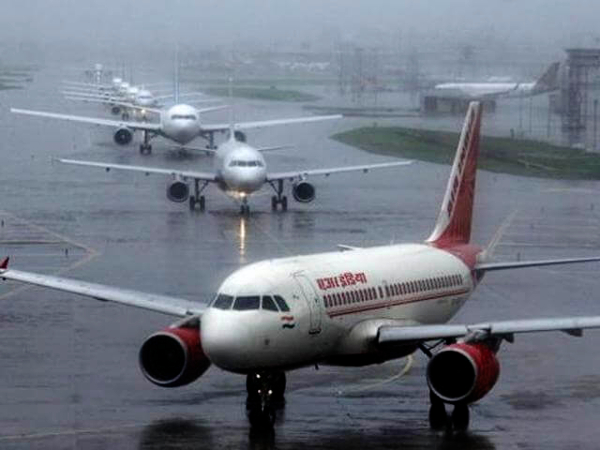
India is strengthening its domestic pilot-training infrastructure as the country’s expanding airline fleet, airport network and regional aviation market create sustained demand for qualified commercial pilots.
Eleven Flying Training Organisations have become operational under the Airports Authority of India’s liberalised policy for flight-training institutes. The initiative is intended to increase flying capacity, reduce delays faced by student pilots and help India train a larger share of its future aviation workforce within the country.
The development forms part of a broader effort by the Ministry of Civil Aviation, the Directorate General of Civil Aviation and the Airports Authority of India to create a more efficient, transparent and safety-oriented pilot-training ecosystem.
Official Ministry of Civil Aviation data showed that India had 41 Flying Training Organisations operating from 63 bases as of July 2, 2026. The expansion of bases is important because one organisation may conduct training from more than one airport or airfield.
The government has also accelerated the approval of additional institutions. Civil Aviation Minister Ram Mohan Naidu said in April 2026 that six new FTOs had been permitted during the preceding 18 months and another six were in the pipeline.
What Is a Flying Training Organisation?
A Flying Training Organisation is an institution approved and regulated by the Directorate General of Civil Aviation to provide practical aircraft training required for the issue of pilot licences.
Under India’s aviation regulations, the flying experience needed for Private Pilot Licences and Commercial Pilot Licences must be acquired through DGCA-approved training organisations.
An FTO ordinarily provides training in areas such as basic aircraft handling, take-offs and landings, navigation, radio communication, emergency procedures, instrument flying and cross-country operations.
Students seeking a Commercial Pilot Licence must complete the prescribed theoretical examinations, medical assessments, flying experience and skill tests before becoming eligible for licensing.
Flying schools generally operate fleets of light single-engine aircraft for initial instruction. Some also maintain multi-engine aircraft for advanced training required by pilots preparing for airline careers.
An FTO should not be confused with an Approved Training Organisation providing type-specific instruction. After obtaining the appropriate licence, a pilot may require separate training for a particular commercial aircraft type, such as an Airbus A320 or Boeing 737, before operating it for an airline.
Liberalised Policy Opens More Airports to Training
The Airports Authority of India introduced a liberalised FTO policy to encourage private investment and make greater use of suitable airports for pilot training.
A major reform was the removal of airport royalty charges previously imposed on training organisations. Land rentals were also rationalised, reducing some of the financial barriers associated with establishing and operating flying schools at AAI airports.
Flight training requires more than aircraft and instructors. An organisation needs access to runways, parking space, hangars, fuel, maintenance facilities, suitable airspace and sufficient periods of relatively uncongested flying.
Operating from a major metropolitan airport can be difficult because commercial passenger flights receive priority and training aircraft may spend considerable time waiting on the ground. Smaller and regional airports can provide a more suitable environment for repeated circuits, take-offs, landings and basic manoeuvres.
The liberalised policy therefore seeks to distribute training activity across regional airports where unused infrastructure and airspace capacity can be converted into productive aviation assets.
FTO Slots Awarded Across Regional Airports
In the first phase of the expansion, the Airports Authority of India awarded nine FTO slots at five airports:
Belagavi and Kalaburagi in Karnataka, Jalgaon in Maharashtra, Khajuraho in Madhya Pradesh and Lilabari in Assam.
A second phase covered six additional slots at Bhavnagar in Gujarat, Hubballi in Karnataka, Kadapa in Andhra Pradesh, Kishangarh in Rajasthan and Salem in Tamil Nadu.
Not every awarded slot becomes operational immediately. Selected organisations must arrange aircraft, instructors, engineers, buildings, maintenance support and regulatory approvals before training can begin.
The distinction between an allocated slot, DGCA approval and an operational training base is therefore important. Eleven organisations becoming operational represents the conversion of policy approvals and airport allocations into functioning training capacity.
Why India Needs More Domestic Pilot Training
India’s civil-aviation sector is expanding simultaneously across airlines, airports, regional routes, cargo operations, business aviation and helicopter services.
Indian carriers have placed large aircraft orders that will be delivered over several years. Each additional aircraft requires multiple sets of pilots to support daily operations, weekly rest, recurrent training, leave and reserve requirements.
Pilot demand is therefore determined by more than the number of aircraft purchased. Airlines need sufficient flight crew to operate their schedules reliably without excessive workloads or disruptions.
New airlines and regional carriers will create additional demand, while retirements, overseas recruitment and movement between airlines will continue to influence the availability of experienced pilots.
The Civil Aviation Ministry has indicated that the country could add around 50 airports and approximately 500 aircraft over the next five years. The expansion makes the creation of a dependable domestic training pipeline a strategic requirement for the aviation industry.
Reducing Dependence on Overseas Flight Schools
A considerable number of Indian students travel to countries such as the United States, Canada, South Africa, Australia and New Zealand for flight training.
Overseas schools can offer advantages such as favourable weather, extensive general-aviation infrastructure and high aircraft availability. However, foreign training also involves substantial spending on accommodation, travel, visas, currency conversion and licence conversion after returning to India.
Students may encounter further delays if overseas licences, flying records or examination requirements do not align directly with Indian regulations.
Greater training capacity within India could retain more of this expenditure in the domestic economy while creating employment for Indian instructors, aircraft-maintenance engineers, ground personnel, administrators and support-service providers.
Domestic training also gives the DGCA more direct oversight of instructional standards, aircraft maintenance, student progression and safety performance.
It will not completely eliminate overseas training, nor should that be the immediate objective. The priority is to ensure that Indian students have sufficient access to reliable, competitively priced and professionally managed training facilities at home.
Increasing Aircraft and Instructor Availability
Approving more organisations alone will not automatically increase the number of pilots completing their training.
The productivity of an FTO depends heavily on the number and serviceability of its aircraft. A school may enrol many students, but progress will remain slow when only a limited number of aeroplanes are available or when aircraft spend extended periods undergoing maintenance.
Flying instructors are another critical resource. Experienced instructors are frequently recruited by airlines after accumulating sufficient flight hours, creating regular turnover at training institutions.
This can leave schools with shortages of instructors authorised to supervise solo flights, cross-country exercises, instrument training and skill tests.
The government and regulator must therefore ensure that expansion in student intake is matched by growth in aircraft fleets, engineering capacity, instructors, examiners and suitable operating bases.
Improving Transparency Through FTO Rankings
The DGCA has introduced a ranking system for approved Flying Training Organisations to help students compare institutions and encourage improvements in performance.
The framework evaluates areas including operational efficiency, safety compliance, training outcomes, regulatory performance and student support.
The first rankings were published in October 2025, followed by the second phase in April 2026. Rankings are intended to be issued twice a year.
In the April 2026 assessment, one organisation reached Category A, while 17 were placed in Category B and 17 in Category C. No institution reached the highest Category A-plus level.
The distribution showed that the training ecosystem was improving but continued to face considerable differences in performance among institutions.
For aspiring pilots, a ranking system can provide information beyond advertising claims. Students need to know whether a school has adequate aircraft, instructors, flying hours, maintenance support and a record of completing courses within reasonable timelines.
The system could also pressure poorly performing organisations to address recurring delays and operational weaknesses.
Safety Must Remain the Central Standard
The need to produce more pilots cannot be allowed to weaken training quality.
Aviation safety depends on disciplined instruction, technically serviceable aircraft, accurate flying records, qualified instructors and effective regulatory supervision.
Student pilots must gain sufficient practical experience in changing weather, navigation, decision-making, aircraft limitations and emergency handling. Meeting the minimum number of flying hours should represent the completion of structured training rather than the accumulation of time without adequate instructional value.
Rapid expansion can create risks when organisations enrol more students than their aircraft and instructor capacity can support. Oversight must therefore examine the actual quality of flying instruction and not simply the number of licences issued.
The FTO ranking mechanism, periodic audits and digital monitoring of training records can help identify weak institutions before operational problems become safety concerns.
Regional Economic Opportunities
Flying schools can also generate economic activity around regional airports.
An operational FTO creates demand for aircraft technicians, instructors, administrative staff, refuelling services, security, accommodation, transport and catering.
Students may remain near the training base for several months, supporting local rental housing and small businesses.
Training activity can also improve the utilisation of airports that handle relatively few scheduled passenger flights. Instead of remaining underused, their runways and associated facilities can support aviation education and employment.
States with favourable weather and available airspace may gradually develop aviation-training clusters combining flying schools, maintenance organisations, simulator centres and academic programmes.
Such clusters could allow India to train students from neighbouring countries and eventually emerge as a regional centre for aviation education.
Building a Complete Aviation-Skills Ecosystem
Pilot training is only one part of the workforce requirement created by India’s aviation expansion.
The sector also needs aircraft-maintenance engineers, air-traffic controllers, flight dispatchers, cabin crew, airport managers, ground handlers, safety specialists and aviation-security personnel.
Training capacity must therefore develop as an integrated ecosystem rather than through isolated institutions.
The presence of the Indira Gandhi Rashtriya Uran Akademi and Rajiv Gandhi National Aviation University at Fursatganj demonstrates how flying instruction and aviation education can operate within the same regional cluster. The aviation university is India’s first national institution dedicated to the sector, while IGRUA has provided commercial-pilot training for several decades.
Similar combinations of academic education, practical training, simulators and maintenance facilities could help create a more professionally structured aviation workforce.
From Approvals to Actual Flying Hours
The expansion of India’s FTO network is an important step, but the ultimate measure of success will be the number of students completing safe and timely training.
A newly approved organisation adds value only when it has adequate aircraft, instructors, maintenance support and access to sufficient flying hours.
The government’s liberalised airport policy has helped bring 11 Flying Training Organisations into operation, while additional institutions are being permitted and developed.
With 41 organisations operating across 63 bases, India now possesses a wider domestic training network than it did only a few years ago.
The next phase must focus on performance: reducing waiting periods, improving aircraft availability, maintaining rigorous safety standards and ensuring that students receive transparent information before investing in training.
As airlines induct more aircraft and regional aviation expands, an efficient domestic pilot-training system will become a crucial part of India’s ambition to develop into a major global civil-aviation hub.
References
DD News, report on the expansion of Flying Training Organisations and domestic pilot-training capacity.
Ministry of Civil Aviation, Government of India, Flying Training Organisations dashboard, July 2026.
Press Information Bureau, Ministry of Civil Aviation, “Civil Aviation Minister Ram Mohan Naidu Releases Second Phase of FTO Ranking,” April 24, 2026.
Press Information Bureau, Ministry of Civil Aviation, parliamentary replies and annual reviews concerning the Airports Authority of India’s liberalised FTO policy.
Directorate General of Civil Aviation, Ranking System for DGCA-Approved Flying Training Organisations.
You may also like
-
National Institute of Naturopathy Opens Admissions for BNYS Programme at Pune for 2026–27
-
Yudhishthira’s Counter-Diplomacy With Shalya: Working With an Ally Who Has Joined the Other Side
-
Gnani AI Launches Nationwide Challenge Offering Up to 100 Paid AI Internships
-
NMMSS Scholarship Application Deadline Extended to October 31, 2026
-
DGCA Introduces Training Framework for Gyroplane Pilots in India
