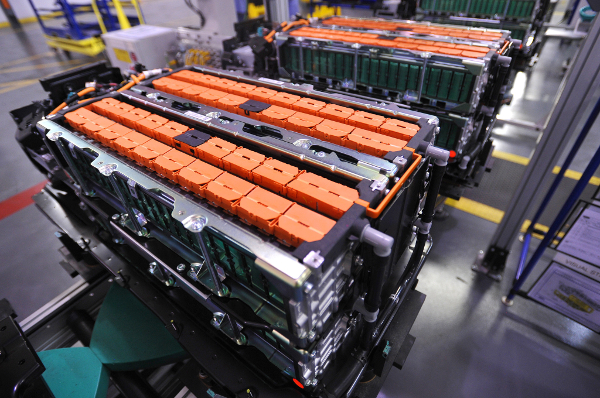
In a development that links clean energy innovation with sustainable recycling, Indian scientists have found a way to give discarded battery material a second life by turning it into a high-value component for fuel cells. Researchers have developed a technology to recover spent graphite from end-of-life lithium-ion batteries and repurpose it as a functional material that can improve fuel cell efficiency and durability. The work was carried out by the International Advanced Research Centre for Powder Metallurgy and New Materials (ARCI), an autonomous institute under the Department of Science and Technology.
The breakthrough comes at a time when the rapid spread of lithium-ion batteries and fuel cell technologies is creating two parallel challenges: growing battery waste and the need for more cost-effective, long-lasting fuel cell catalysts. Scientists have increasingly been exploring whether discarded battery materials can be reused to solve performance problems in clean-energy systems, and graphite has emerged as a promising candidate because of its usefulness in platinum-based oxygen reduction reaction electrocatalysts.
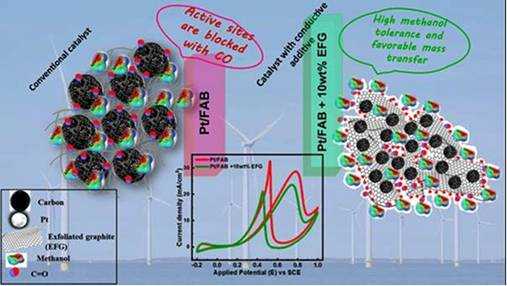
According to the official release, the researchers recovered graphite from spent lithium-ion batteries and chemically exfoliated it to increase its surface area and the number of reactive edge functional groups. They then carried out extensive physicochemical characterisation, electrochemical evaluation for oxygen reduction reaction performance and methanol tolerance, and composition optimisation to determine the best-performing formulation. The research has been published in ACS Sustainable Resource Management.
What makes the study particularly important is that it demonstrates methanol-tolerant oxygen reduction performance in acidic media using recycled graphite, something earlier work had not clearly established. When combined with platinum catalysts, the exfoliated graphite formed a conductive network that improved electronic conductivity and oxygen transport, while also selectively adsorbing methanol molecules. This acted as a barrier that reduced methanol oxidation and carbon monoxide poisoning of platinum, two major factors that can weaken fuel cell efficiency and long-term stability.
The researchers identified an optimum composition of 10 wt% exfoliated graphite, which delivered the best balance of performance and durability. By improving methanol tolerance and protecting platinum under operating conditions relevant to Direct Methanol Fuel Cells, the innovation could help lower reliance on costly catalyst materials while making fuel cells more commercially viable.
Beyond its immediate technical value, the technology points to a broader circular-economy opportunity. Reusing battery waste in this way could support more sustainable lithium-ion battery recycling, reduce environmental impact, strengthen clean energy technologies, and contribute to improved energy security. In practical terms, it turns a disposal problem into a useful industrial resource for the next generation of energy systems.
Source: PIB
You may also like
-
Molecular Geometry Tweak Opens New Way for Smart Biomaterials
-
IISc Scientists Show How Strong Magnetic Fields Could Allow White Dwarfs to Exceed Chandrasekhar Limit
-
IIT Madras to Launch Global Mission to Map 100 Human Brains in 3D
-
3,898 Indian Scientists Feature in 2026 Global Top 2% Research Database; IISc Leads Indian Institutions
-
New Metal-free Porous Material can Help Produce Affordable Clean Energy
