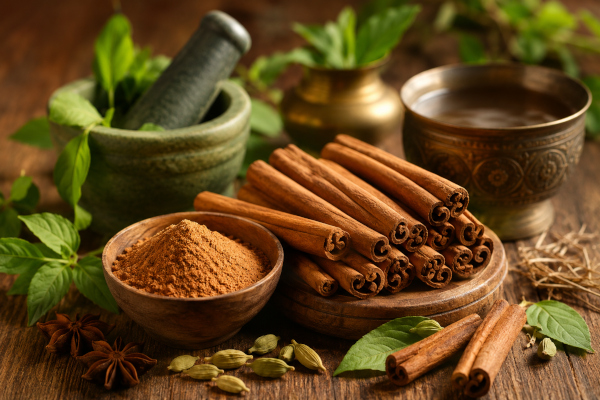
Cinnamon is one of those rare kitchen spices that carries fragrance, warmth and medicine in the same bark. In Indian homes, it enters biryani, pulao, masala tea, herbal decoctions, sweets, kashayams and festive cooking with quiet authority. Ayurveda understands cinnamon as Tvak or Dalchini, an aromatic bark that kindles digestion, clears heaviness, improves circulation and brings warmth into a body dulled by coldness, dampness and sluggish metabolism.
The beauty of cinnamon lies in its balance of sweetness and heat. Its aroma is soft, but its action is penetrating. A small piece of cinnamon in boiling water changes the nature of the drink. A pinch of powder in food changes the digestive behaviour of the meal. This is why Indian food traditions used cinnamon not merely for flavour, but for function. It made rich foods lighter, milk preparations warmer, winter drinks more comforting and spice blends more complete.
In Ayurvedic language, cinnamon is mainly associated with Katu rasa and Madhura rasa, meaning pungent and sweet taste. Its guna, or qualities, are light, sharp and slightly dry. Its virya, or potency, is heating. Its vipaka, or post-digestive effect, is generally understood as pungent. Because of this profile, cinnamon is especially useful for balancing Kapha and Vata. It reduces coldness, stickiness, mucus tendency, heaviness, bloating and poor digestive fire. It needs careful use in people with strong Pitta, acidity, mouth ulcers, burning sensation or heat-dominant conditions.
Cinnamon’s first gift is to Agni, the digestive fire. Ayurveda repeatedly places digestion at the centre of health because poorly digested food becomes ama, the toxic residue that blocks channels and weakens tissues. Cinnamon helps awaken dull digestion. It supports appetite, reduces gas, improves the movement of food through the gut and brings warmth to a cold stomach. This is why a mild cinnamon tea after a heavy meal often feels comforting.
In many Indian kitchens, cinnamon is used in spice combinations that support digestion. It appears with cardamom, clove, black pepper, bay leaf, cumin and fennel. These spices do not merely create aroma; they create digestive intelligence. When cinnamon is added to rice dishes, meat preparations, lentil soups or milk-based recipes, it helps the body process richness with greater ease. This is the old Indian principle of food as medicine: the spice is chosen according to the weight and nature of the food.
Cinnamon is especially valuable in Kapha conditions. Kapha, when aggravated, creates heaviness, sleepiness, mucus, congestion, slow metabolism and water retention. Cinnamon’s warmth and sharpness help cut through this heaviness. A simple warm infusion of cinnamon, ginger and black pepper has long been used in households during cold weather, damp climate and seasonal congestion. It gives warmth to the chest, supports clearer breathing and helps the body respond to cold-induced sluggishness.
For Vata, cinnamon works differently. Vata is cold, dry, mobile and irregular. Cinnamon’s warmth helps calm coldness and supports circulation, but its dryness means it is best combined with ghee, milk, jaggery, honey or other soothing ingredients when used for Vata-dominant people. A pinch of cinnamon in warm milk with a little ghee can feel nourishing, while cinnamon boiled aggressively in large quantity may become too sharp for a sensitive Vata constitution.
Cinnamon also has a deep relationship with circulation. Ayurveda sees warmth, movement and open channels as vital to health. Cinnamon’s heating and penetrating qualities help stimulate flow. In traditional household practice, it is often used during cold extremities, winter tiredness and slow circulation. It brings a gentle internal warmth that spreads through the body. This makes it a beloved spice in cold seasons, hill regions and rainy climates.
In women’s health traditions, cinnamon is often used cautiously as a warming spice. Its heat can support comfort during cold-type menstrual discomfort, especially when the body feels heavy, cold and sluggish. It is usually combined with ginger, ajwain or jaggery in household preparations. At the same time, its heating nature means excess use is avoided during heavy bleeding, strong Pitta symptoms or pregnancy unless guided by a qualified practitioner.
Cinnamon also belongs to the world of respiratory care. In traditional practice, it is used in small quantities for cough linked with coldness and mucus. Its aromatic nature helps open the senses, while its heating quality supports the clearing of Kapha from the throat and chest. A pinch of cinnamon with honey is a familiar household remedy, especially when the throat feels coated and the body feels cold. Honey itself is Kapha-reducing in Ayurveda, and cinnamon strengthens that action when used in moderation.
The spice also supports the mind through its aroma. Cinnamon’s fragrance is comforting, festive and grounding. Ayurveda values aroma because smell has a direct effect on the nervous system and prana. A warm cinnamon drink can lift dullness and create a sense of comfort. In cold weather, it brings emotional warmth along with physical warmth. This is why cinnamon appears naturally in winter foods, festival sweets and evening drinks.
Modern nutrition also shows cinnamon as a concentrated spice rather than a bulk food. Ground cinnamon is rich in carbohydrates and fibre, with small amounts of minerals such as calcium, potassium, iron and magnesium. USDA-linked nutrition databases list ground cinnamon as a fibre-rich spice, though in daily life it is consumed in very small quantities. Its value lies more in potency than quantity. A pinch can influence taste, aroma and digestion. (fdc.nal.usda.gov)
Modern research has also studied cinnamon for its possible role in blood sugar regulation, antioxidant activity and metabolic health. These findings are interesting, but cinnamon should be understood as a supportive food-spice rather than a replacement for medical treatment. People taking medicines for diabetes should use cinnamon carefully, because regular intake in larger amounts may influence blood sugar control. Ayurvedic wisdom also supports this cautious approach: strong spices are powerful when used with timing, constitution and moderation.
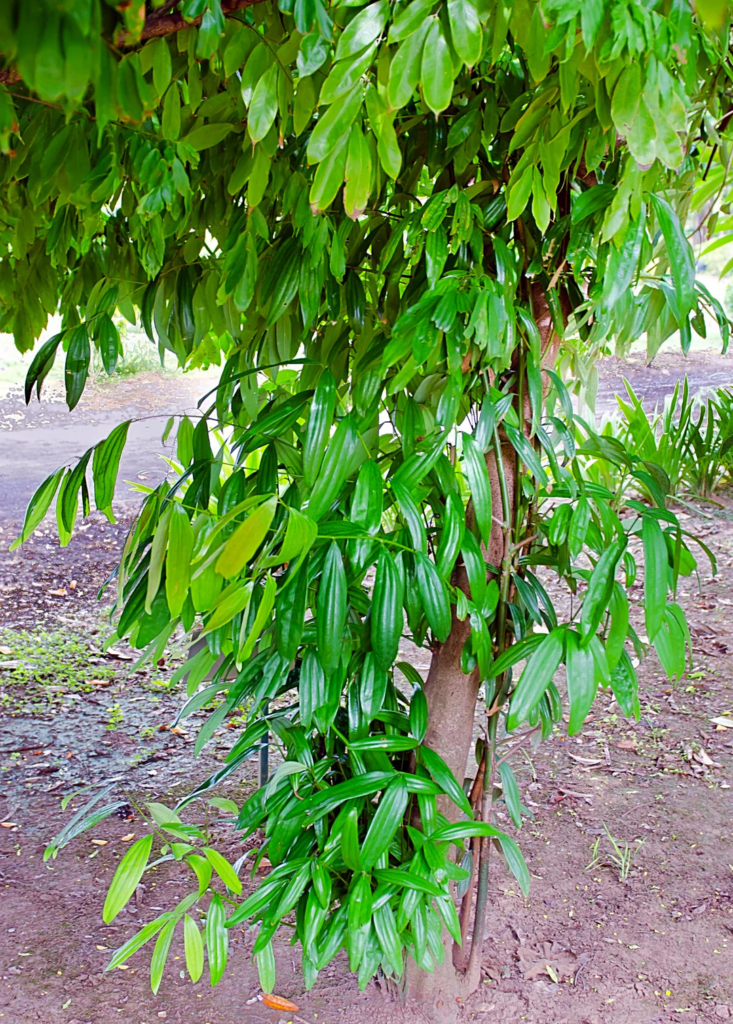
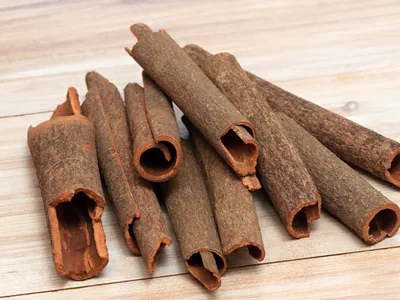
There are different types of cinnamon in the market. Ceylon cinnamon, often called true cinnamon, comes mainly from Cinnamomum verum. Cassia cinnamon, widely sold as common cinnamon, comes from related species and usually has a stronger, sharper taste. Cassia cinnamon contains higher levels of coumarin, a natural compound that can stress the liver when consumed in high amounts over a long period. NCCIH notes that prolonged use of cassia cinnamon may be an issue for sensitive people, especially those with liver disease, while Ceylon cinnamon usually contains only trace amounts of coumarin. (nccih.nih.gov)
This safety point is important because Ayurveda never encourages reckless excess. Cinnamon is a heating spice, not a daily food to be eaten by the spoon. In normal cooking quantities, it is generally safe for most people. In large supplement-style doses, especially with cassia cinnamon, it requires caution. People with liver disease, those taking blood thinners, pregnant women, people with ulcers or strong acidity, and those on regular medicines should speak to a qualified health professional before using cinnamon medicinally.
The best Ayurvedic way to use cinnamon is simple. Add a small stick to boiling tea. Put a tiny piece in rice or curry. Use a pinch in warm milk during cold weather. Combine it with ginger and tulsi for seasonal support. Add a little to stewed apples for a digestive dessert. Mix a small pinch with honey for cold-type throat heaviness. Use it as a spice, not as a challenge to the body.
Cinnamon water can be made by boiling a small piece of cinnamon in one cup of water for a few minutes. This drink suits cold weather, sluggish digestion and Kapha heaviness. It should be avoided when there is burning sensation, acidity, excessive thirst, mouth ulcers or strong heat in the body. For Vata people, the same drink can be softened with a little jaggery or taken after food. For Kapha people, it can be taken plain and warm.
Cinnamon with honey is a common household combination, especially for Kapha-type cough and heaviness. Ayurveda gives special importance to honey as a scraping and channel-clearing substance when used raw and unheated. Cinnamon adds warmth and aromatic sharpness. The important rule is that honey should never be cooked or added to boiling liquid. Let the drink cool to a warm, sip-safe temperature before adding honey.
Cinnamon in milk has a different effect. Milk is cooling, nourishing and building, while cinnamon is warming and digestive. Together, they create a comforting drink suitable for cold evenings, Vata discomfort and winter nourishment. A pinch of cinnamon in warm milk with a little ghee or nutmeg can support calmness. This preparation should be kept mild because too much cinnamon can overpower the nourishing quality of milk.
In Indian cooking, cinnamon also represents the intelligence of spice architecture. A biryani uses cinnamon for warmth, cardamom for fragrance, clove for intensity, bay leaf for depth and pepper for sharpness. A masala chai uses cinnamon to give body and heat. A festive payasam can use cinnamon in a very small amount to balance sweetness. Every use has a reason. The spice is not decoration; it is digestive design.
From an Ayurvedic perspective, cinnamon teaches the principle of measured heat. The body needs warmth to digest, circulate and clear stagnation. The same warmth, when excessive, can create burning, irritation and dryness. Cinnamon is medicine when used with respect. It is disturbance when used without measure. This is the heart of Ayurveda: the right substance, in the right quantity, for the right person, at the right time.
Cinnamon’s place in the kitchen therefore remains special. It is a bridge between food and medicine, taste and therapy, comfort and correction. It can wake up a dull stomach, warm a cold body, lighten a heavy meal and bring fragrance to simple food. In a small piece of bark, Ayurveda sees the power of Agni itself — fragrant, disciplined, warming and transformative.
You may also like
-
Ayurveda on Cold Foods and Iced Drinks: Why Food Temperature Matters for Digestion
-
Serum Institute of India-Manufactured Ebola Vaccine Enters Clinical Trial in Uganda
-
Ayurveda and Hydration: How Much Water Should We Really Drink?
-
Warm Water in Ayurveda: When and Why It Is Recommended
-
Women Make Up 43% of India’s Ayush Workforce as Sector Supports 17.6 Lakh Livelihoods
