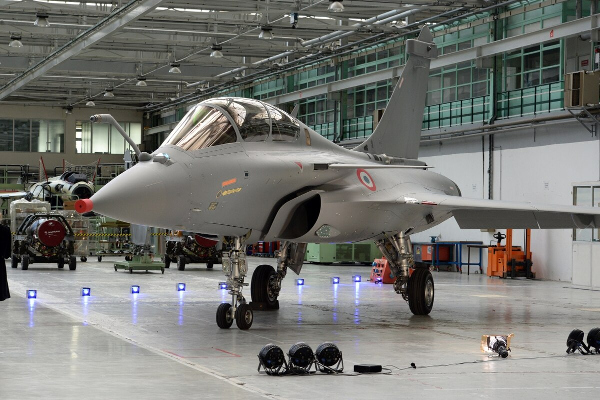
India’s proposed acquisition of 114 Rafale fighter jets is moving from a combat aircraft purchase into a larger air-power and industrial strategy. The visit of Indian Air Force Chief Air Chief Marshal A. P. Singh to France has placed the project under sharp focus because the deal is connected directly with India’s fighter squadron strength, long-term deterrence, local aerospace manufacturing and the future shape of Indo-French defence cooperation.
The Rafale already has a strong place in the Indian Air Force. The first batch of 36 aircraft gave India a proven twin-engine, omni-role fighter capable of air superiority, deep strike, maritime strike, nuclear delivery, electronic warfare support and long-range precision engagement. Its combat value comes from the combination of radar, weapons, sensors, survivability systems and mission flexibility. The proposed 114-aircraft acquisition would transform Rafale from a high-end limited fleet into a much larger pillar of India’s combat aviation structure.
This project arrives at a critical moment for the IAF. India faces a two-front security environment, with Pakistan on the western front and China across the Himalayan theatre. Air power is central to deterrence in such a geography because aircraft can shift quickly between sectors, strike deep targets, dominate skies, support ground formations and carry out rapid punitive missions. A modern fighter fleet gives the political leadership more options during crises and gives military commanders the ability to create pressure across distance.
The real importance of the new Rafale plan lies in its Make-in-India framework. The earlier Rafale purchase was a direct fly-away acquisition from France. The next project is being shaped around local production, transfer of technology, Indian industrial participation and integration of Indian weapons and communication systems. This changes the character of the deal. It becomes a platform for building aerospace capacity rather than simply adding aircraft numbers.
Dassault’s partnership with Tata Advanced Systems for Rafale fuselage production marks a major foundation stone in this direction. Rafale fuselages being produced in India for the first time outside France is a strong signal of trust in Indian aerospace manufacturing. A fighter aircraft fuselage is a high-precision structure that demands strict tolerances, advanced materials, quality control, supply-chain discipline and skilled engineering. Building such sections in India brings the country closer to the deeper layers of combat aircraft production.
The Hyderabad facility planned under the Dassault-Tata partnership is expected to produce key structural sections, including the rear fuselage, central fuselage and front section. This matters because the airframe is the physical backbone of the aircraft. Once India develops an ecosystem capable of manufacturing such structures at scale, the same skills can feed future programmes such as AMCA, Tejas Mk2, unmanned combat aircraft, trainer platforms and export-oriented aerospace components. The Rafale project can therefore become a bridge between foreign partnership and indigenous capability.
The proposed deal is also expected to include a larger role for Indian weapons and secure data links. This is strategically significant. A fighter aircraft becomes more sovereign when it can communicate through national networks, use domestic sensors, carry Indian missiles and plug into the country’s own command-and-control architecture. Integration of Indian weapons would reduce dependence on external supply chains and allow the IAF to shape its Rafale fleet around Indian operational doctrine.
Modern air combat is built around networks. Fighters no longer operate as isolated machines. They fly inside a digital battlespace connected to radars, airborne warning aircraft, ground controllers, satellites, electronic warfare systems, drones and missile units. Secure data links allow pilots to receive real-time battlefield information, share targeting data, avoid threats and coordinate strikes. A Rafale fleet integrated with Indian radars and sensors would strengthen India’s ability to fight as a networked air force.
The possible involvement of Safran in engine assembly also adds another layer to the story. The M88 engine powers the Rafale, and any Indian role in engine assembly, maintenance or component supply would carry long-term strategic value. Aero-engine technology is among the most difficult areas of defence manufacturing. India has strong aircraft design ambitions, yet engine capability remains a decisive gap. A serious industrial partnership around fighter engines could help Indian engineers, suppliers and technicians move closer to the knowledge base required for future indigenous propulsion.
The Rafale’s operational profile suits India’s geography. In the western theatre, it can carry out precision strikes, air defence missions, suppression of enemy assets and quick reaction roles. In the Himalayan theatre, its ability to operate with advanced weapons and sensors gives the IAF a credible high-altitude combat tool. In the Indian Ocean region, Rafale’s maritime strike potential adds value against hostile naval movement, island-based threats and long-range surface targets. A larger fleet would allow India to distribute Rafales across multiple theatres with greater flexibility.
The proposed number of 114 aircraft is also important from a squadron perspective. Fighter strength is measured not only by aircraft quality but also by availability, depth and replacement capacity. A limited elite fleet can produce strong effects in selected missions. A larger fleet creates sustained pressure across many sectors. India’s air defence planning requires aircraft that can remain available through training cycles, maintenance schedules, wartime losses and multi-front deployment needs. A 114-aircraft Rafale project would significantly improve the IAF’s ability to sustain high-tempo operations.
The deal also carries a powerful industrial message. India’s defence manufacturing ecosystem has moved from licensed assembly towards deeper participation in global aerospace supply chains. The Rafale project can accelerate this movement by involving private Indian companies, precision engineering firms, electronics suppliers, composite manufacturers, tooling specialists and maintenance organisations. Each aircraft built or assembled in India can support hundreds of smaller industrial links behind it.
Aerospace manufacturing creates long-term strategic dividends because the skills remain even after one project ends. Workers trained on fighter-grade structures can move into other advanced platforms. Quality systems created for Rafale components can support civil aviation, drones, helicopters and space-sector manufacturing. Tooling, inspection, certification and materials expertise can strengthen the wider national industrial base. This is why the Make-in-India Rafale plan is best understood as an ecosystem-building project.
The Indo-French defence relationship gives the programme a strong diplomatic foundation. France has been one of India’s most reliable defence partners across aircraft, submarines, missiles, space cooperation and strategic technologies. The Rafale fleet, Scorpene submarines, aircraft engines, avionics and missile systems all sit within this larger relationship. A new Rafale project would deepen this strategic alignment at a time when India is seeking partners who can support capability growth without restricting India’s strategic autonomy.
India has selected the Rafale Marine for its aircraft carrier fleet, creating future commonality between the Indian Air Force and Indian Navy. Common platforms can reduce training complexity, support shared maintenance ecosystems, improve spares management and create stronger bargaining power with the manufacturer. A wider Rafale family in Indian service would help build a national support structure around the aircraft, from simulators and maintenance to weapons integration and pilot training.
The project also supports deterrence by signalling continuity. India is telling adversaries that its air-power modernisation is moving on several tracks at once: imported high-end fighters, indigenous Tejas production, AMCA development, missile integration, drones, electronic warfare and network-centric systems. Rafale fits into the high-performance end of this structure. Its presence strengthens India’s ability to respond quickly to crises while domestic platforms mature.
At the same time, the deal must be understood as a process still moving through procurement stages. The Letter of Request, French response, commercial negotiations, technology terms, Indian partner selection, production plan, weapon integration, delivery schedule and final CCS approval are all important steps. The project has momentum, but the contract has to pass through formal decision-making before it becomes a signed acquisition. That distinction is important because defence deals of this size involve pricing, offsets, technology guarantees, timelines and sovereign commitments.
For India, the ideal outcome would be a Rafale package that delivers aircraft quickly while building long-term capability at home. A first batch of fly-away aircraft can address immediate IAF needs. A larger India-built portion can develop industrial depth. Local weapon integration can strengthen sovereignty. Engine, avionics and airframe participation can create skilled capacity. Maintenance and repair hubs can support fleet readiness across decades.
Modern air power is no longer only about buying fighters. It is about owning the ecosystem around them. Aircraft, engines, radars, missiles, data links, maintenance, software, supply chains and trained manpower together create combat power. The Make-in-India Rafale project sits exactly at this intersection. It promises aircraft for the squadron line, manufacturing work for Indian industry, technology pathways for engineers and deterrence value for national security.
The 114 Rafale project can become one of India’s most important air-power programmes of the coming decade. It can strengthen the IAF’s frontline strength, deepen Indo-French strategic cooperation and push Indian aerospace manufacturing into a more advanced league. The visit of the IAF Chief to France therefore represents more than a procurement milestone. It reflects India’s effort to build a fighter fleet that can fight, sustain, upgrade and integrate from Indian soil.
You may also like
-
Indian Navy Vice Chief Inspects Japan’s Mogami-Class Stealth Frigate as India-Japan Shipbuilding Cooperation Expands
-
Philippine Marine Wargames Reportedly Show BrahMos Can Penetrate Chinese Destroyer Air Defences
-
Safran Signs 18 Agreements with Indian Aerospace Suppliers, Expanding Make in India Manufacturing Partnerships
-
Indian Army’s Vajra Corps Certifies First Batch of Drone Operators, Strengthens Battlefield Surveillance
-
India to Seek 35% Increase in Defence Modernisation Budget for FY 2027–28
