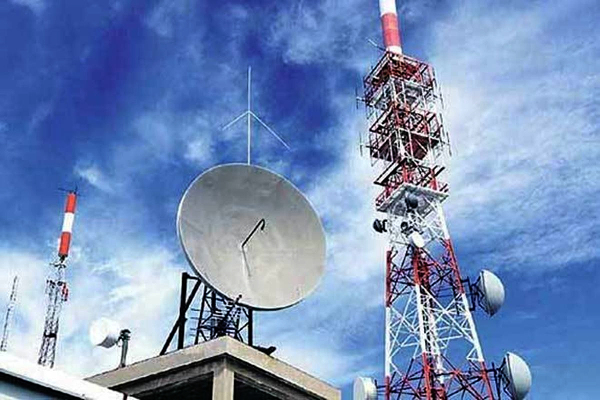
India’s march towards 6G is beginning to move from vision documents and policy announcements into laboratory hardware, wireless demonstrations and indigenous testbeds. At the centre of this shift is a high-technology project that brings together SAMEER Kolkata, IIT Madras, IIT Guwahati and IIT Patna to build a 6G terahertz testbed with Orbital Angular Momentum and multiplexing. For India, this is more than another telecom research initiative. It is a statement that the country wants to enter the next wireless era as a creator of technology, a designer of standards and a builder of critical communication infrastructure.
The project has been approved under the Telecom Technology Development Fund through Digital Bharat Nidhi. SAMEER Kolkata, an autonomous research and development organisation under the Ministry of Electronics and Information Technology, is working with the three IITs on a testbed that explores one of the most advanced frontiers in future wireless communication: the terahertz band. This is the region of the spectrum that sits above conventional microwave and millimetre-wave systems, offering the possibility of extremely high data rates, dense short-range links and futuristic applications that demand vast bandwidth.
The importance of the project became clearer when the consortium demonstrated a high data-rate line-of-sight wireless link at India Mobile Congress 2025. The demonstration reportedly achieved a data rate of 6,400 megabytes per second over a 270 gigahertz wireless link. In simple terms, this is the kind of experimental leap that shows how future wireless systems may move enormous volumes of data across the air with speed and precision. Such demonstrations are vital because 6G will require far more than towers, spectrum auctions and consumer smartphones. It will need antennas, chips, waveguides, signal processing systems, channel models, beam control, energy-efficient hardware and field-tested design knowledge.
The terahertz band is attractive because it can provide large contiguous bandwidths. Modern telecom networks face a simple physical challenge: demand for data keeps rising, while lower-frequency spectrum becomes crowded. 4G and 5G already pushed networks into higher bands, including mid-band and millimetre-wave ranges. 6G is expected to push research further into sub-terahertz and terahertz territory. This higher-frequency region can support ultra-fast links for short-distance wireless backhaul, data-centre connectivity, industrial automation, high-resolution sensing, extended reality systems, robotics, defence communication nodes and precision scientific applications.
The SAMEER–IIT Madras consortium project becomes strategically important because it gives Indian researchers a domestic platform to test these technologies instead of depending entirely on foreign labs, imported evaluation systems or overseas intellectual property. A testbed is the bridge between theory and deployment. It allows scientists to generate signals, transmit them, measure losses, study reflections, examine atmospheric effects, validate modulation schemes, test antenna arrays and evaluate how future 6G hardware behaves under realistic conditions. Without such platforms, a country can discuss 6G. With such platforms, it can build 6G.
One of the most interesting parts of the project is the use of Orbital Angular Momentum, or OAM. In conventional wireless communication, information is carried through changes in frequency, phase, amplitude, polarisation and time slots. OAM explores another dimension of electromagnetic waves: the twisting structure of the wavefront. A wave carrying OAM can be imagined as having a spiral-like phase pattern. Different spiral modes can, in principle, carry separate data streams over the same frequency, creating another method of multiplexing. This could help future networks increase capacity by allowing multiple information channels to coexist in carefully controlled beams.
Multiplexing is the science of carrying many streams of information through a shared medium. It is the reason multiple calls, videos, messages and machine signals can pass through telecom networks at the same time. 6G will require multiplexing techniques that go beyond familiar methods because its applications will demand massive data transfer, near-instant response and precise location awareness. By combining THz communication with OAM and multiplexing, the Indian testbed is exploring a frontier where bandwidth, beam physics and signal design meet.
IIT Madras’s role in this ecosystem is especially significant. The institute has already been associated with India’s indigenous telecom journey through earlier work in 5G systems, testbeds, wireless research and industry collaboration. Its presence in the 6G THz project gives the programme academic depth, strong engineering talent and access to a research culture that can connect theory with prototypes. IIT Guwahati and IIT Patna add further strength to the consortium, bringing regional research capacity into a national mission. SAMEER adds specialised expertise in microwave electronics, electromagnetic systems and applied communication technologies.
This matters because 6G is expected to be a network of networks. It will combine terrestrial mobile systems, satellite links, high-altitude platforms, sensing systems, artificial intelligence, edge computing and cyber-physical infrastructure. Future wireless networks may support immersive classrooms, remote industrial control, autonomous ports, connected farms, smart mines, battlefield networks, drone corridors, emergency response grids and digital twins of cities or factories. These systems require communication links that are fast, reliable, secure and intelligent.
The global standards community is already moving towards IMT-2030, the formal international framework associated with 6G. The expected usage scenarios include immersive communication, hyper-reliable and low-latency communication, massive communication, ubiquitous connectivity, AI and communication, and integrated sensing and communication. This means 6G will become more than a faster mobile internet layer. It will be a sensing, intelligence and connectivity fabric. India’s THz testbed is relevant because terahertz links can play a role in several of these areas, especially high-capacity communication, sensing-rich environments and data-heavy industrial systems.
The strategic value of indigenous 6G research is also economic. Nations that shape early telecom technologies often gain influence over patents, standards, manufacturing supply chains and export markets. In earlier telecom generations, India was largely a user of imported standards and equipment. With 4G, India built experience as a massive deployment market. With 5G, India began asserting domestic capability through indigenous testbeds, 5G labs and the Made-in-India 4G stack. With 6G, the ambition is higher: India wants to contribute to the technology itself.
The Bharat 6G Vision places affordability, sustainability and ubiquity at the heart of this mission. These principles matter for India because the country’s telecom needs are different from those of small, highly urbanised economies. India needs networks that serve megacities, border villages, mountains, islands, farms, ports, highways, factories and dense public spaces. A 6G system designed with Indian requirements in mind must balance high performance with cost, energy efficiency and rural reach. Indigenous testbeds allow researchers to keep these realities in the design process from the beginning.
The THz testbed also supports India’s goal of building intellectual property in advanced telecom. Patents emerge when researchers solve hard technical problems early. These problems include THz signal generation, compact antennas, beam alignment, chip packaging, thermal design, propagation modelling, OAM beam generation, mode separation, interference control and energy efficiency. Each solution can become part of a future standards contribution, product design or commercial system. By investing in such testbeds, India creates a foundation for patents, startups, deep-tech manufacturing and exportable telecom products.
The project also links naturally with India’s wider semiconductor and electronics ambitions. THz communication requires highly specialised components. Transmitters, receivers, oscillators, amplifiers, mixers, antennas and packaging technologies must work at extremely high frequencies. This pushes the country towards advanced electronics design, material science, precision fabrication and system integration. A strong 6G research ecosystem can therefore feed into semiconductor policy, defence electronics, space communication, radar systems and high-speed scientific instrumentation.
There is also a defence and national-security angle. Future military communication will require fast, directional, secure and low-latency links across command centres, unmanned systems, ships, aircraft, ground sensors and space-linked assets. THz links have characteristics that make them attractive for short-range, high-capacity and highly directional communication. Such systems require advanced beam control and reliable hardware. A civilian telecom testbed can therefore contribute to a larger national knowledge base in high-frequency communication, electromagnetic design and secure wireless networking.
For industry, the testbed offers an experimental foundation for applications that may arrive before consumer 6G smartphones. Data centres, chip-to-chip wireless links, factory automation, smart logistics hubs, medical imaging systems, connected laboratories and defence test ranges may adopt high-frequency communication technologies earlier than mass-market mobile users. India’s domestic companies, startups and research institutions can use such testbeds to understand practical challenges, build prototypes and prepare for future markets.
The wider government ecosystem is already moving in this direction. The Bharat 6G Alliance brings together industry, academia, startups, telecom service providers, research institutions and standards organisations. TTDF-funded projects, 5G labs in academic institutions, 6G research proposals and global collaborations are creating a structured pathway for India’s telecom transition. The SAMEER–IIT Madras THz testbed is one of the most technologically ambitious pieces of this pathway because it deals directly with the physics and hardware of future high-speed wireless communication.
The achievement should also be seen as a psychological shift in Indian technology policy. For decades, the country often entered new technology cycles after standards had already matured elsewhere. In 6G, India wants to be present during the research stage, the standard-setting stage and the prototype stage. This changes the country’s bargaining position. A nation that contributes technology to global standards gains credibility, market access and strategic autonomy. It also gives its engineers the confidence to design for Indian conditions while competing globally.
The road ahead will require patience. THz communication faces real engineering challenges, including high propagation loss, line-of-sight dependence, sensitivity to blockage, device-level complexity and power-efficiency constraints. OAM-based communication also requires precise beam generation, alignment, mode purity and demultiplexing. These challenges are exactly why testbeds are necessary. They allow researchers to discover what works, what fails and what needs redesign before technologies reach commercial networks.
India’s 6G journey will therefore be built step by step: from testbeds to prototypes, from prototypes to standards contributions, from standards to products, and from products to deployment. The SAMEER–IIT Madras-led consortium marks an important step in this chain. It shows that India is already experimenting with the tools that may define the next generation of wireless communication.
The larger message is clear. India’s 6G ambition is not limited to faster downloads. It is about building a sovereign telecom knowledge base, training researchers, creating patents, strengthening industry, shaping standards and preparing the country for an era where communication networks will sense, compute and coordinate the physical world. The 6G THz testbed gives that ambition a laboratory, a signal path and a measurable demonstration. In the story of Bharat 6G, this is where policy begins to turn into engineering.
You may also like
-
ISRO Plans Four Operational Launch Pads by 2029 to Expand India’s Space Capabilities
-
Indian Scientists Discover How Rapidly Spinning Black Holes Produce High-Frequency X-Ray Oscillations
-
ISRO Completes Historic SPADEX Mission as Both Satellites Re-enter Earth’s Atmosphere After Successful Space Docking Experiments
-
Indian Scientists Discover Rare Accretion Disk Around Neutron Star 24,000 Light-Years Away
-
BARC Scientists Develop Indigenous Technology to Recover 90% of Lithium from Seawater
