
Indian scientists have developed a new light-driven nano-catalyst that could make the manufacturing of medicines and industrial chemicals cleaner, faster and more energy-efficient. The innovation comes from researchers at the Institute of Nano Science and Technology, Mohali, an autonomous institute of the Department of Science and Technology, and represents an important step towards greener chemistry for India’s pharmaceutical and chemical industries.
Modern chemical manufacturing often depends on high temperatures, toxic solvents and energy-intensive processes. These conditions increase cost, environmental burden and industrial complexity. The new nano-catalyst offers a more sustainable route by using light energy to drive chemical reactions under milder conditions. The PIB release says the technology could reduce the use of toxic solvents, lower energy consumption and make chemical production more environmentally friendly.
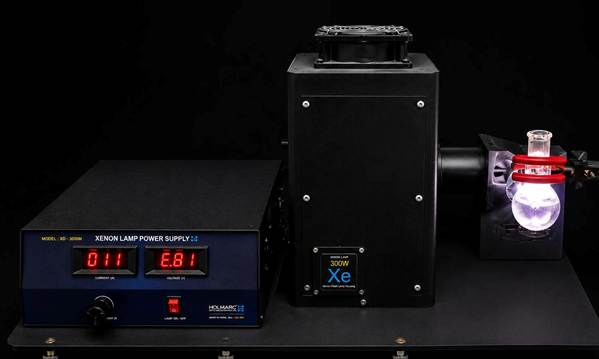
The material developed by the INST team is a nanocomposite built from three key components: gold nanoparticles, the light-absorbing molecule BODIPY, and palladium nanoparticles. Each component has a specific role. Gold nanoparticles absorb light. BODIPY acts as a light-harvesting molecular bridge. Palladium functions as the active catalytic centre where the chemical reaction is accelerated. Together, they form a hybrid system that converts light into useful chemical energy.
The working principle is elegant. When light falls on the gold nanoparticles, they capture that energy and transfer it to BODIPY. The absorbed energy then reaches palladium, which uses it to speed up chemical reactions. This stepwise movement of energy makes the process more efficient than conventional catalyst systems where heat and harsher reaction conditions are often required.
This is important for pharmaceutical manufacturing because many medicines require carefully controlled chemical reactions. A catalyst that can work efficiently under mild conditions can help reduce unwanted by-products, improve process efficiency and support cleaner production pathways. In a country like India, where pharmaceutical manufacturing is both a major economic strength and a public health asset, such innovations can support affordable and sustainable production.
The technology also has wider relevance for industrial chemicals. Chemical industries across the world are under pressure to reduce pollution, cut energy use and move away from hazardous solvents. The new nano-catalyst directly responds to this challenge by showing how advanced materials can help reactions occur with light instead of heavy thermal input. PIB notes that the system can allow chemical reactions to happen under milder and more environment-friendly conditions, including the possible use of water instead of harmful solvents.
The research has been published in the journal Nanoscale, according to the PIB release. The material was designed and synthesised by combining gold, BODIPY and palladium into one integrated catalytic platform. This combined architecture is important because the three components work together to create performance that each component alone would struggle to deliver.
The development also highlights the value of Indian nanoscience research. Nanotechnology allows scientists to engineer materials at extremely small scales, where light absorption, surface reactions and energy transfer can behave in powerful ways. By designing such materials intelligently, researchers can create catalysts that are more selective, efficient and sustainable.
For India, this innovation fits well with the larger push towards green manufacturing. Cleaner chemical processes can reduce industrial emissions, lower dependence on harmful solvents and cut operating costs. When such technologies mature, they can help Indian companies produce medicines and chemicals with lower environmental impact while improving competitiveness in global markets.
The work also reflects how laboratory research can support national industrial priorities. India’s pharmaceutical sector needs constant process innovation to remain affordable, scalable and globally competitive. Green catalytic systems like this can eventually support cleaner bulk drug synthesis, speciality chemical production and high-value industrial chemistry. The long-term impact could include lower production cost, safer manufacturing environments and better access to green products.
The PIB release credits the technology to the work of Dr. Prakash P. Neelakandan and his team. Their approach shows how combining light-responsive molecules with noble-metal nanoparticles can create a new class of catalytic systems for sustainable chemistry.
The larger message is clear: the future of chemical manufacturing will increasingly depend on precision, efficiency and environmental responsibility. India’s light-powered nano-catalyst brings these goals together. It uses advanced material science to make chemistry cleaner, places Indian research in an important global field, and offers a promising route towards affordable, sustainable production of medicines and industrial chemicals.
Publication link: 10.1039/D5NR04898B.
You may also like
-
ISRO Successfully Completes Critical Gaganyaan Crew Module Separation Tests at VSSC
-
ISRO’s Aditya-L1 Expands Global Solar Research as Joint Observations with Europe’s Proba-3 Reveal New Insights
-
ISRO Advances Indigenous 1,100 kN Methane Rocket Engine for Next-Generation Launch Vehicle
-
Indian Scientists Identify A Few Martian Analogue Sites
-
Climate History Finds Monsoon Fluctuation Footprints From Sediment Transport to Farming Adaptations
