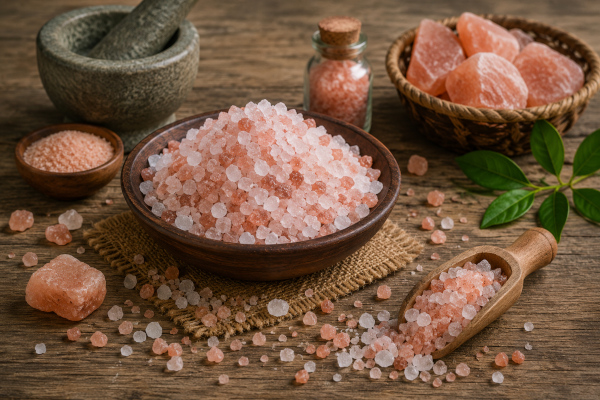
Saindhava Lavana, commonly known as rock salt, is one of the most respected salts in Ayurveda. Among the different varieties of lavana, Saindhava is traditionally praised as the finest because it supports taste, digestion and Vata balance while being gentler than many other salts. It is widely used in food, takra, digestive preparations, classical formulations and daily pathya cooking.
Saindhava Lavana is valued because it brings flavour without overwhelming the body. Ayurveda treats salt as more than seasoning; it is a substance that affects Agni, doshas, appetite, water balance and tissue softness. Saindhava stands apart because it is considered ruchikara, deepana, vatanulomana and comparatively mild.
Names and Identity
Sanskrit name: Saindhava Lavana
Common name: Rock salt
Hindi: Sendha namak
Malayalam: Induppu / Kalluppu in common usage
Category: Lavana dravya
Main use: Digestive salt, pathya seasoning, ingredient in takra and digestive formulations
The name Saindhava is traditionally connected with salt obtained from the Sindhu region. In Ayurvedic practice, it is used both as a food ingredient and as a medicinal support in formulations.
Ayurvedic Nature of Saindhava Lavana
Saindhava Lavana is mainly associated with lavana rasa, the salty taste. Classical Ayurveda also describes it as gentle, digestive and supportive to the heart and taste perception.
Rasa: Lavana, with a mild sweet undertone
Guna: Laghu and snigdha — light and slightly unctuous
Virya: Generally considered cooling or mild compared to other salts
Vipaka: Madhura
Main actions: Deepana, pachana, ruchya, vatanulomana, hridya
Because of its pleasant and balanced nature, Saindhava is often preferred in Ayurvedic cooking over stronger salts. It improves taste, supports digestion and helps the proper movement of Vata in the abdomen.
Effect on Doshas
Saindhava Lavana is especially useful in balancing Vata, because salt softens dryness, reduces stiffness and supports downward movement. It also helps relieve abdominal gas and digestive obstruction when used properly.
It is milder for Pitta compared with many other salts, though excess use can still increase heat, thirst and water retention. For Kapha, it should be used in measured quantity, especially in people with swelling, heaviness or excess fluid accumulation.
Traditional Benefits
Saindhava Lavana is used in Ayurveda to improve appetite, enhance taste, stimulate digestive fire and support proper digestion. It helps reduce tastelessness of the mouth, abdominal bloating and Vata-related discomfort. In small amounts, it makes food more acceptable and easier to digest.
It is commonly added to takra, soups, digestive powders, herbal decoctions and food preparations where digestion needs support. In traditional homes, rock salt is often used in buttermilk with roasted cumin, asafoetida and other digestive spices.
Classical Recipe Reference: Takra
A classical preparation called Takra, or processed buttermilk, is described in Bhavaprakasha Nighantu 12/162–163. This preparation belongs to the category of Pana, meaning drinkable preparations.
In this recipe, one part of dadhi prepared from buffalo milk is mixed with four parts of clean water and filtered. Fried Hingu, Jiraka, Saindhava Lavana and Rajika are ground into a fine powder and added to the diluted curd. The mixture is then churned well to prepare Takra.
This recipe shows the importance of Saindhava Lavana as a digestive companion. Takra itself is valued in Ayurveda for digestion and gut balance. When combined with rock salt, cumin, asafoetida and mustard, it becomes more stimulating, tasteful and suitable for digestive correction.
Properties of the Takra Preparation
The Takra preparation is described as deepana, meaning it increases digestive fire. It is pachana, helping digestion, and ruchikara, improving taste and appetite. It is also triptikara, giving satisfaction after consumption.
The recipe tradition mentions its benefit in Udara roga, which refers to abdominal enlargement or abdominal disorders. In Ayurvedic logic, this makes sense because takra with Saindhava Lavana and digestive spices helps kindle Agni, move Vata and reduce heaviness in the abdomen.
Role of Saindhava Lavana in Takra
Saindhava Lavana improves the taste of Takra and supports its digestive action. Curd and buttermilk preparations can become heavy when taken improperly, so Ayurveda combines them with spices and rock salt to make them lighter and more suitable for digestion.
In this formulation, Hingu supports Vata movement, Jiraka kindles digestion, Rajika adds sharpness, and Saindhava Lavana harmonises the preparation by improving taste, softness and digestive acceptance. This is a beautiful example of Ayurvedic food science, where every ingredient has a clear purpose.
Manuscript and Textual Importance
The reference to Takra in Bhavaprakasha Nighantu shows how Ayurvedic manuscripts preserved practical food-medicine wisdom. Bhavaprakasha is respected for its detailed treatment of herbs, food substances, dietetics and therapeutic preparations. The Takra recipe demonstrates that Ayurveda viewed buttermilk as more than a simple drink. It was processed, spiced and balanced according to digestive need. Saindhava Lavana’s presence in this formulation highlights its classical status as a refined digestive salt used to improve taste, kindle Agni and support abdominal health.
Household Uses of Saindhava Lavana
Saindhava Lavana may be used in small quantities in buttermilk, lemon water, soups, kanji, digestive churnas and cooked food. It is especially suitable in preparations for weak appetite, bloating and Vata-related abdominal discomfort. It pairs well with cumin, dry ginger, asafoetida, black pepper and coriander.
A simple traditional digestive drink can be made by mixing thin buttermilk with roasted cumin powder and a small pinch of Saindhava Lavana. This is commonly used after meals to support digestion and lightness.
Precautions
Saindhava Lavana is gentle among salts, yet it remains salt and should be used in moderation. People with high blood pressure, kidney disease, swelling, water retention or salt-restricted diets should use it only with medical guidance. Excess intake may increase thirst, fluid retention, skin issues or Pitta-related discomfort.
It should be treated as a supportive ingredient, not as a medicine to be consumed in large quantity.
Conclusion
Saindhava Lavana is one of Ayurveda’s most respected salts because it combines taste with digestive intelligence. It supports appetite, improves flavour, assists Vata movement and makes food more suitable for the stomach. The classical Takra preparation from Bhavaprakasha Nighantu shows its value beautifully: rock salt, cumin, asafoetida and mustard transform buttermilk into a digestive and satisfying drink. In the Ayurvedic kitchen, Saindhava Lavana is a reminder that even a pinch of salt can become medicine when used with wisdom, proportion and proper context.
You may also like
-
Robotics, AI and Nanoscience Set to Transform Precision Medicine in India
-
Why Ayurveda Recommends Eating Only When Hungry
-
Ayurveda on Eating at the Right Time: How Food Timing Supports Balance and Health
-
Ayurveda and Late-Night Living: What Irregular Sleep Does to the Body
-
India’s Ayush Services Economy Reaches $36.92 Billion, RIS Study Projects Strong Growth to 2047
