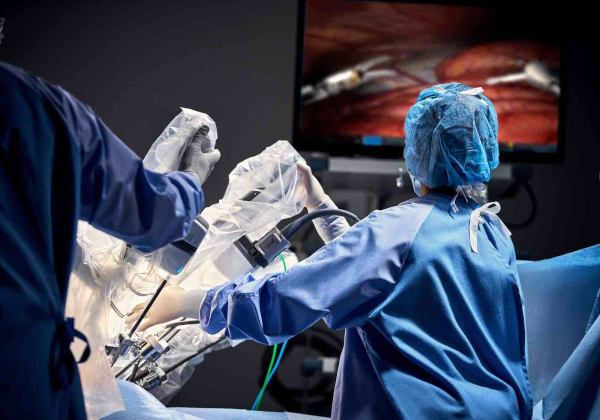
Robotics is expected to move far beyond operating theatres and become an enabling technology across multiple branches of medicine, supporting diagnosis, treatment, remote care and increasingly personalised healthcare.
Union Minister of State for Science and Technology Dr. Jitendra Singh said the convergence of robotics, artificial intelligence and nanoscience could create a broader ecosystem for precision health delivery and precision medicine in India.
He made the remarks while delivering the inaugural address at the International Conference of the Society of Robotic Surgery on October 2, 2026.
Robotics Could Expand Beyond Surgery
Dr. Jitendra Singh said robotics should not be seen only through the lens of robotic surgery.
As the technology matures, he said similar systems could find applications across specialties such as endocrinology, cardiology, diagnostics and other areas of clinical medicine.
This broader shift would place robotics alongside artificial intelligence as a general-purpose medical tool rather than a technology restricted to a single procedure or department.
Precision Medicine to Combine Genetics, Lifestyle and Environment
The Minister said medicine is moving towards increasingly personalised treatment models in which patients with the same diagnosis may receive different interventions based on their individual biological and environmental profiles.
Genetic background, lifestyle, diet and environmental exposure could increasingly influence clinical decisions.
Robotics and AI can support this transition by helping physicians process complex datasets, identify patterns and deliver treatments with greater consistency and precision.
Genome India Programme Could Support Personalised Healthcare
Dr. Jitendra Singh referred to the Genome India Programme, under which 10,000 individuals have already been sequenced.
He said India could eventually move towards much wider genomic screening, including the possibility of sequencing newborns in the future.
Managing genomic information at population scale would require substantial computing capacity, automated analysis and intelligent clinical decision-support systems. AI and robotics could therefore become important components of a future genomics-driven healthcare infrastructure.
Nanomedicine May Improve Drug Delivery
Nanoscience is another area expected to play an increasing role in healthcare.
Dr. Jitendra Singh referred to research aimed at developing oral insulin as an example of how nanoscale technologies could address limitations in conventional drug delivery.
Nanomedicine can potentially improve how medicines are transported, released and targeted within the body, opening opportunities for therapies that are difficult to deliver effectively through traditional formulations.
Tele-Robotics Can Take Specialists to Remote Patients
India’s geographical scale makes remote medical technology particularly relevant.
Dr. Jitendra Singh said tele-robotics could allow specialist expertise to reach patients without requiring them to travel long distances to major hospitals.
He cited his experience with robotic ultrasonography, in which an ultrasound examination was performed remotely on a person located around 10,000 kilometres away in Antarctica.
Such systems illustrate how robotic equipment, telecommunications and remote clinical control can be combined to extend specialist services across geographical boundaries.
Remote Care Could Change Traditional Referral Patterns
The traditional healthcare model often requires patients in smaller towns or remote regions to travel to specialist centres.
Tele-robotic systems could partially reverse this model by allowing specialists to interact with patients through remotely controlled diagnostic or therapeutic equipment.
This approach could be particularly useful in areas where specialist availability remains limited but reliable digital connectivity and local healthcare infrastructure are present.
It also has potential applications in emergency medicine, remote diagnostics, critical care support and specialist consultation.
AI and Robotics Can Address India’s Complex Disease Burden
India faces a dual healthcare challenge.
Infectious diseases continue to remain important in many parts of the country, while metabolic and lifestyle-related illnesses such as diabetes, cardiovascular disease and obesity are increasing rapidly.
Dr. Jitendra Singh also noted that diseases traditionally associated with older populations are increasingly appearing among younger people.
Managing this changing disease profile will require large-scale screening, earlier diagnosis, continuous monitoring and more personalised treatment approaches.
AI-based analytical tools and robotic systems can support healthcare professionals by improving efficiency, expanding reach and handling large volumes of clinical information.
Technology Is Becoming Central to Modern Medicine
The Minister placed robotics within a broader technological transformation already reshaping healthcare.
Artificial intelligence, biotechnology, nuclear medicine, genomics, quantum technologies and nanomedicine are increasingly converging with conventional clinical practice.
Future healthcare systems are therefore likely to depend less on isolated technologies and more on integrated platforms capable of combining biological data, imaging, diagnostics, automation and clinical decision-making.
Robotics can serve as the physical interface for many of these systems, translating digital intelligence into precise actions.
Robotic Surgery Moves Into Institutional Learning
Dr. Jitendra Singh also welcomed the growing inclusion of robotic surgery in academic and professional training.
He said platforms such as SRS India 2026 were helping move robotic surgery into institutional learning, research and structured medical education.
Training will become increasingly important as robotic systems expand into more specialties. Their effective use requires not only technical familiarity but also clinical protocols, safety standards and multidisciplinary coordination.
India Has Opportunity to Build a Wider Precision Health Ecosystem
The growing convergence of robotics, artificial intelligence, genomics and nanoscience provides India with an opportunity to develop a more connected model of healthcare delivery.
The immediate applications are visible in robotic surgery, remote imaging and assisted diagnosis. The longer-term potential lies in combining these technologies with genomic and patient-specific data to create more precise treatment pathways.
For a country with a large population and wide geographical variation in specialist access, the value of these technologies will depend on their ability to improve reach, affordability and clinical effectiveness.
India’s expanding capabilities in digital health, biotechnology, medical robotics and genomics provide a strong foundation for that transition, with precision medicine emerging as a major direction for the next phase of healthcare innovation.
References
Press Information Bureau, Government of India — Robotics to Become an Accelerating Tool in Every Specialty of Medicine: Union Minister Dr. Jitendra Singh, published October 2, 2026.
You may also like
-
Ayurveda and Anger: How Emotional Excess Affects Physical and Mental Health
-
Ayurveda and Stress: Daily Practices for Mental Balance and Emotional Well-Being
-
Ayurveda and Bowel Routine: Why Regularity Matters for Digestive Health
-
Why Ayurveda Warns Against Suppressing Hunger, Thirst and Sleep
-
India Strengthens Quality Standards for Ayurveda, Yoga and Sowa-Rigpa Through Nationwide BIS Initiative
