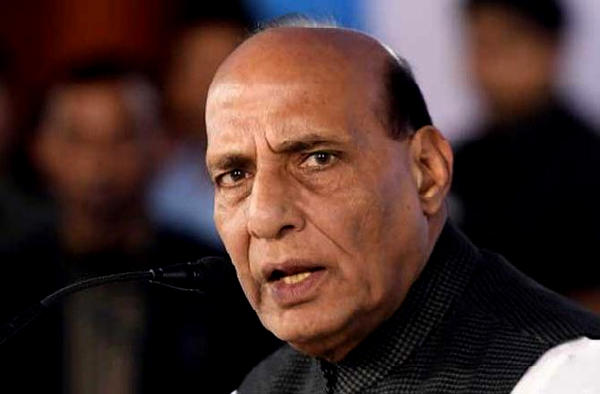
Defence Minister Rajnath Singh has called for a new phase of India’s defence self-reliance programme, termed Aatmanirbharta 2.0, with greater emphasis on advanced technologies, indigenous research and development, resilient supply chains and internationally competitive defence manufacturing. Addressing the fifth edition of the Indian Navy’s Naval Innovation and Indigenisation Seminar, SWAVLAMBAN 2026, in New Delhi on 26 October 2026, he outlined the need to move beyond established indigenisation achievements towards more demanding technological objectives.
The Defence Minister emphasised that future defence self-reliance must focus on developing cost-effective, technologically advanced and operationally superior systems. He also called for a stronger domestic research ecosystem capable of supporting military innovation, reducing dependence on imported technologies and contributing to India’s long-term development objectives under Viksit Bharat 2047.
The seminar highlighted the expanding participation of Indian startups, micro, small and medium enterprises (MSMEs), established defence manufacturers and academic institutions in addressing the technological requirements of the Armed Forces. It also provided an opportunity to review the Indian Navy’s progress in translating innovation challenges into procurement programmes and operational capabilities.
Aatmanirbharta 2.0 to Focus on Advanced Defence Technologies
Rajnath Singh described India’s progress in defence indigenisation over the past decade as the foundation for a more ambitious phase of technological development. He said the next stage must address advanced capabilities that are difficult to develop and require sustained investment, specialised expertise and long-term research commitments.
The proposed Aatmanirbharta 2.0 approach places greater emphasis on technological sophistication rather than relying solely on increasing the number of domestically manufactured products. According to the Defence Minister, indigenous systems must combine operational performance with cost efficiency and the ability to compete with international technologies.
This approach is particularly relevant to defence sectors where critical components, specialised materials and advanced subsystems remain dependent on external suppliers. Developing domestic alternatives in such areas requires coordinated efforts involving research institutions, industry and the Armed Forces.
The Defence Minister also highlighted the importance of innovators who combine scientific discipline with a long-term technological vision. He identified their contribution as essential to pursuing more demanding research objectives and building capabilities that can support future military requirements.
Supply Chain Security Identified as a Strategic Priority
One of the central themes of Rajnath Singh’s address was the need to strengthen domestic defence supply chains.
He described supply chain management as a strategic requirement directly connected with national security. Dependence on a limited number of suppliers or imported technologies can expose military production and maintenance programmes to disruptions arising from international developments, restrictions or shortages of critical materials.
The Defence Minister identified the limited domestic availability of certain raw materials, including rare earth elements, and the absence of specific technologies as important causes of external dependence.
He called for a dynamic, time-bound roadmap identifying the technologies India needs to develop, the industries capable of supporting their production and the resources required to achieve self-reliance in critical areas.
Such planning would allow policymakers and industry to prioritise technologies according to their strategic importance and the feasibility of domestic development.
Rajnath Singh also stressed that defence planners should assess buffer stocks and indigenous production capabilities before supply disruptions occur. This would help strengthen preparedness and reduce the risk of critical shortages affecting operational requirements.
Defence Research Needs Greater Investment and Risk-Taking
The Defence Minister placed research and development at the centre of the next phase of India’s defence modernisation programme.
He noted that advanced research frequently involves uncertainty and the possibility of failure. Such risks are inherent in developing new technologies, particularly when research teams attempt to achieve capabilities that have not previously been demonstrated domestically.
Rajnath Singh called for a change in institutional attitudes towards research failures. He argued that unsuccessful experiments should be recognised as part of the innovation process rather than treated solely as setbacks.
The Defence Minister also raised the need for financing mechanisms capable of supporting high-risk, high-reward research projects. He identified greater private sector participation as an important element of this approach, particularly where companies are willing to invest in emerging technologies and experimental engineering.
At the same time, he emphasised the importance of low-cost technological solutions that allow researchers to undertake smaller-scale experiments without requiring extensive resources at every stage.
The proposed approach seeks to create an environment in which promising defence technologies can progress through successive stages of research, prototyping, validation and operational development.
Industry and Academia Must Build a Stronger Innovation Ecosystem
Rajnath Singh emphasised the importance of closer cooperation between defence manufacturers, universities, research laboratories and educational institutions.
He referred to research cultures in countries such as Israel, South Korea and the United States, highlighting the role of experimentation, institutional encouragement and sustained investment in technological advancement.
The Defence Minister called for greater opportunities for young researchers to pursue careers in advanced scientific and engineering disciplines.
He also stressed the need for educational institutions to encourage research and innovation from an early stage, allowing students and researchers to develop practical solutions to complex technological problems.
Stronger industry-academia collaboration can help connect fundamental scientific research with the engineering and manufacturing requirements of defence systems.
Such collaboration is particularly relevant to emerging technologies involving artificial intelligence, quantum systems, advanced sensors, autonomous platforms and new materials, where progress often depends on expertise from multiple scientific disciplines.
Indian Navy’s iDEX Programme Expands to 229 Challenges
The seminar highlighted the expanding role of Innovations for Defence Excellence (iDEX) in supporting indigenous defence technologies.
According to the Ministry of Defence, more than 4,000 proposals have been submitted against 229 challenges issued by the Indian Navy.
The figures indicate considerable interest among Indian startups, MSMEs and technology developers in addressing operational requirements identified by naval personnel.
Chief of the Naval Staff Admiral Krishna Swaminathan stated that Navy-specific iDEX challenges have increased from 20 in 2022 to 229 in 2026. These account for approximately 35% of all iDEX challenges across the defence sector.
The programme encourages innovators to develop solutions for identified military requirements, helping connect technological development with operational needs.
Indian startups and MSMEs have participated in programmes involving naval sensors, communications systems and other specialised technologies.
The Defence Minister commended these efforts, describing the translation of operational challenges into indigenous technological solutions as an important contribution to defence self-reliance.
Navy Records 41 AoN Cases Worth Over ₹3,500 Crore
The Indian Navy also reported significant progress in moving innovation projects towards procurement.
Admiral Krishna Swaminathan stated that 41 Acceptance of Necessity cases worth more than ₹3,500 crore have received approval under the innovation framework.
Acceptance of Necessity represents an important stage in defence procurement, establishing an in-principle requirement for acquiring specified equipment or technologies.
However, AoN clearance does not itself constitute a signed procurement contract.
The Navy separately reported that 25 contracts valued at more than ₹1,900 crore have been signed.
These figures demonstrate how the innovation programme has progressed beyond the identification of technological challenges towards formal procurement activity.
The distinction between approvals and contracts is important because individual projects move through different stages of evaluation, development and acquisition before entering operational service.
The reported contract value provides an indication of the commercial opportunities emerging for Indian defence technology companies through naval innovation programmes.
Five Priorities Identified for Faster Technology Induction
The Chief of the Naval Staff identified five areas requiring attention to accelerate the development and induction of indigenous technologies.
These include ideation, prototyping, testing, contracting and induction, and life-cycle support.
Together, these stages cover the progression of a technological concept from its initial development through operational deployment and long-term maintenance.
Admiral Swaminathan emphasised the importance of translating promising innovations into capabilities that can meet the Navy’s operational requirements.
This requires collaboration between the Armed Forces, industry, startups and MSMEs throughout the development process.
Testing and validation are particularly important because defence technologies must demonstrate reliability under demanding operational conditions.
Life-cycle support also plays a major role in determining whether an indigenous system can remain operationally effective after induction. Maintenance arrangements, spare parts availability, upgrades and sustained technical assistance must accompany the initial acquisition of equipment.
The Navy’s emphasis on these stages reflects the need to establish an integrated system connecting research, development, procurement and operational deployment.
Growing Naval Requirements Increase Importance of Indigenous Shipbuilding
Rajnath Singh highlighted the increasing demand for naval vessels amid evolving security and operational requirements in the Indian Ocean Region.
He noted that warship construction requires substantial capital investment and called for approaches that can reduce costs while expanding domestic production.
India’s naval shipbuilding ecosystem involves specialised infrastructure, complex equipment integration and extensive supply chains supporting the production of modern military vessels.
Reducing costs without compromising operational capability requires improvements in manufacturing efficiency, equipment availability, indigenous component development and project execution.
The Defence Minister stressed that future self-reliance efforts must prioritise quality, efficiency and affordability alongside domestic production capacity.
He also identified Buyer Nominated Equipment (BNE) as an area where dependence on imported systems remains a challenge.
BNE refers to equipment selected or nominated by the buyer for integration into larger platforms, such as ships. Greater domestic availability of such equipment can help reduce external dependencies and strengthen the resilience of naval construction programmes.
The proposed approach places greater emphasis on indigenising critical systems and components rather than measuring progress only through the number of ships constructed domestically.
Dual Technology Roadmap Proposed for Civilian and Military Applications
A significant proposal from the seminar was the development of a Dual Technology Roadmap.
Rajnath Singh called for identifying technologies that can serve both civilian and military requirements, particularly in the maritime sector.
Many advanced technologies developed for naval operations can also support commercial shipping, port infrastructure, offshore activities and other civilian applications.
Similarly, commercially developed technologies may offer opportunities for adaptation to military requirements.
The Defence Minister suggested expanding indigenisation planning beyond existing Positive Indigenisation Lists by identifying additional priority technologies and products required for both civilian and military shipping.
He also called for technologies that could serve multiple branches of the Armed Forces and the Indian Coast Guard.
Such common applications could reduce duplication in research programmes and create opportunities for greater technological standardisation.
The proposal connects indigenous technology development with the broader objective of inter-service jointness, in which different military services cooperate more closely in capability development and resource utilisation.
Artificial Intelligence, Quantum Technologies and Autonomous Systems in Focus
SWAVLAMBAN 2026 placed considerable emphasis on emerging technologies expected to influence future naval operations.
The seminar addressed areas including artificial intelligence, autonomous systems, robotics, quantum technologies and hypersonic technologies.
Artificial intelligence has applications in information processing, surveillance analysis, autonomous navigation and decision-support systems. Its integration with military platforms requires careful attention to reliability, security and operational requirements.
Autonomous maritime systems represent another important area of development. Such platforms can potentially support surveillance, reconnaissance and other missions while reducing the need for continuous human presence onboard.
Quantum technologies, including quantum sensing, are being examined for specialised applications that may offer improvements in measurement and detection capabilities.
The Defence Minister welcomed cooperation between military personnel, research institutions and industry in addressing these technological challenges.
He emphasised that developing advanced capabilities requires sustained research efforts rather than short-term technological initiatives.
The seminar provided a platform for discussing how promising research can be translated into operational systems that meet the Navy’s future requirements.
More Than 100 Technology Exhibition Stalls Showcase Indigenous Innovations
The Defence Minister also visited the technology exhibition organised as part of SWAVLAMBAN 2026.
The exhibition featured more than 100 stalls operated by startups and MSMEs, showcasing technologies being developed in response to naval operational challenges.
The displayed innovations covered autonomous maritime platforms, artificial intelligence, quantum technologies, persistent surveillance, resilient navigation, advanced communications and counter-drone systems.
A dedicated section highlighted successful technologies that have progressed towards induction by the Indian Navy.
The exhibition demonstrated the growing participation of specialised Indian technology enterprises in areas traditionally associated with established defence manufacturers and research institutions.
It also provided opportunities for innovators to interact directly with naval users and understand the practical requirements of military equipment.
Such interaction is important for refining prototypes, identifying operational limitations and aligning technology development with procurement requirements.
Defence Minister Releases Technology Publications at SWAVLAMBAN
During the seminar, Rajnath Singh released two publications intended to improve the visibility of naval technology requirements among Indian developers.
These included the Compendium of Technology Imperatives, Problem Statements and Future Concepts and the Swavlamban 5.0 document.
The publications are intended to provide industry and research institutions with greater insight into the Navy’s technological priorities and future development opportunities.
The Defence Minister also felicitated speakers and iDEX innovators for their contributions to indigenous defence technology development.
The recognition reflects the role of individual researchers, startups, engineering teams and industry organisations in supporting the Navy’s innovation programmes.
SWAVLAMBAN 2026 Brings Together Defence, Industry and Academia
The fifth edition of SWAVLAMBAN is being held at the Manekshaw Centre in New Delhi from 26 to 27 October 2026.
The seminar is organised by the Indian Navy in collaboration with the Defence Innovation Organisation and the Society of Indian Defence Manufacturers.
Its theme, Strength and Power through Innovation and Indigenisation, highlights the importance of technological development and domestic industrial capability in strengthening India’s defence preparedness.
Secretary (Defence Production) Sanjeev Kumar described the seminar as an opportunity to bring together stakeholders from across the defence ecosystem.
He encouraged stronger cooperation between companies, research institutions and military organisations to address technological challenges and develop indigenous capabilities.
The programme includes discussions on emerging defence technologies, domestic supply chains, academic entrepreneurship and the expansion of promising startups.
Engagements involving investors and venture capitalists are also intended to explore financing and commercialisation opportunities for defence enterprises.
Aatmanirbharta 2.0 Sets a New Direction for Defence Innovation
The call for Aatmanirbharta 2.0 reflects an effort to move India’s defence indigenisation programme towards greater technological depth and industrial resilience.
The next phase identified by Rajnath Singh emphasises advanced research, reduced dependence on critical imported technologies, more secure supply chains and the development of globally competitive military equipment.
The progress reported under the Navy’s iDEX programme provides an example of how military requirements can be connected with domestic innovation. The increase to 229 challenges, the submission of more than 4,000 proposals and the signing of contracts worth over ₹1,900 crore demonstrate the programme’s growing scale.
The proposed Dual Technology Roadmap also establishes a broader direction for research and manufacturing, encouraging technologies that can serve civilian shipping, naval operations and multiple branches of the Armed Forces.
As these priorities advance, sustained cooperation between the government, defence manufacturers, startups, academic institutions and research organisations will remain central to building advanced indigenous capabilities.
SWAVLAMBAN 2026 has placed these objectives within a wider framework of defence modernisation, technological innovation and long-term national industrial development.
References
- Press Information Bureau, Ministry of Defence, 26 October 2026. Raksha Mantri calls for ‘Aatmanirbharta 2.0’, next leap in defence self-reliance, at SWAVLAMBAN 2026. Release ID: 2328397.
https://www.pib.gov.in/PressReleaseDetail.aspx?PRID=2328397®=48&lang=1 - Ministry of Defence, Government of India — Official announcements concerning the Indian Navy, defence innovation and indigenisation initiatives.
https://mod.gov.in/
You may also like
-
Defence Acquisition Council Clears ₹2.12 Lakh Crore Proposals, 82% Earmarked for Indian Industry
-
Manastu Space Secures ₹116 Crore Government Support to Develop Indigenous Green Propulsion Systems
-
GeM’s AABHAR Collection Showcases 294 Indigenous Products, Strengthens Market Access for Indian Artisans
-
Indian Semiconductor Companies Propose New Manufacturing and Chip Design Investments in Madhya Pradesh
-
CSIR-CRRI Partners with Industry to Develop Advanced Indigenous Airport Runway and Pavement Materials
