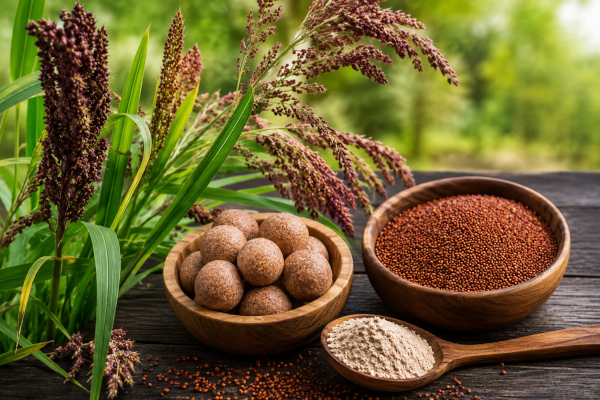
Ragi, also known as finger millet, nachani or mandua, is one of India’s most respected traditional grains. In many parts of South India, Maharashtra, Karnataka, Andhra Pradesh, Tamil Nadu, Kerala, Odisha and the Himalayan regions, ragi has been used for generations as a strengthening food for children, farmers, workers, elders and recovering individuals. Its small reddish-brown grains carry a deep nutritional value and a strong place in India’s food culture.
In Ayurveda, food is understood through its effect on digestion, strength, tissues, doshas and long-term vitality. Ragi fits beautifully into this traditional wisdom because it is nourishing, grounding, cooling and sustaining. It gives steady energy, supports bone strength, satisfies hunger and helps the body remain stable through physical work and seasonal heat.
Ragi is a millet that represents the old Indian idea of “anna as medicine”. It is simple, affordable, local, climate-resilient and deeply supportive when prepared properly.
Sanskrit and Regional Names
Ragi is commonly identified as finger millet and botanically known as Eleusine coracana. In Indian food traditions, it is known by several names.
In Sanskrit and Ayurvedic usage, ragi is often associated with names such as Madhulika and Manduka Dhanya in regional traditions. In Hindi, it is called mandua or nachni. In Kannada, Telugu, Tamil and Malayalam food culture, it is widely known as ragi. In Marathi, it is called nachani.
These names show how deeply this grain has travelled through India’s agricultural and culinary traditions.
Ayurvedic Nature of Ragi
From an Ayurvedic perspective, ragi may be understood as a strengthening millet with cooling and slightly drying qualities.
Its taste is mainly madhura rasa, or sweet taste, with a mild kashaya rasa, or astringent undertone. Its guna, or qualities, are guru and ruksha, meaning heavy and dry. Its virya, or potency, is generally considered sheeta, meaning cooling. Its vipaka, or post-digestive effect, may be understood as madhura, giving nourishment and tissue support after digestion.
Because of these properties, ragi is grounding and sustaining. It builds strength, gives fullness and supports the body during heat, exhaustion and physical labour. At the same time, its dry and heavy nature means it works best when cooked well and combined with ghee, buttermilk, milk, coconut, cumin, ginger, cardamom or digestive spices according to the person’s constitution.
Effect on Doshas
Ragi is especially useful for pacifying pitta because of its cooling nature. It can be helpful during hot seasons, burning sensations, heat-related tiredness and excess internal warmth when prepared in suitable forms such as ragi kanji, ragi porridge or ragi malt.
For kapha, ragi can be useful in controlled portions because it is dry and filling. It gives satiety and helps reduce frequent hunger when used as part of a balanced diet. Roasted ragi flour, ragi dosa, ragi idiyappam, ragi mudde with thin rasam, or ragi porridge with warming spices can suit kapha-prone individuals.
For vata, ragi requires careful preparation. Since it is dry and heavy, vata individuals benefit from ragi cooked with ghee, sesame oil, warm milk, coconut milk, cumin, ajwain, dry ginger or jaggery in suitable quantity. Thin, warm preparations are better than dry rotis for people with gas, bloating or weak digestion.
Ragi as a Strength-Giving Food
Ragi is traditionally valued as a food of strength. Farmers, manual workers and people engaged in physically demanding routines used ragi because it gives slow, steady energy. It keeps the body satisfied for longer and supports endurance.
In Ayurveda, such foods are important for maintaining bala, or strength. Ragi gives a sense of firmness and stability to the body. It is especially useful in diets where the person needs nourishment without excessive heaviness from refined foods.
Ragi mudde, ragi kanji, ragi roti and ragi malt are examples of traditional preparations that convert this humble millet into a practical strengthening food.
Ragi for Bones and Dhatu Nourishment
Ragi is widely respected for its mineral richness, especially calcium. From an Ayurvedic viewpoint, strong bones depend on proper nourishment of asthi dhatu, the bone tissue. Foods that support steady mineral intake, good digestion and proper assimilation can contribute to better bone strength over time.
Ragi is traditionally given to growing children, women, elders and physically active people because it supports nourishment in a simple and natural way. When cooked with milk, ghee, sesame, dates, coconut or jaggery in appropriate combinations, it becomes a wholesome food for strength and stability.
A simple ragi porridge with milk, cardamom and a little ghee is often used as a nourishing preparation. For adults who prefer a lighter form, ragi kanji with buttermilk, cumin and curry leaves can be cooling and digestive.
Ragi and Digestion
Ragi is rich and filling, so proper digestion is important. Ayurveda always reminds us that even the best food becomes beneficial only when agni, the digestive fire, can process it.
For strong digestion, ragi can be taken as mudde, roti, dosa, puttu, idiyappam or malt. For sensitive digestion, ragi works better as a thin porridge or fermented dosa batter. Fermentation improves digestibility and gives lightness to the preparation.
Digestive spices such as cumin, dry ginger, ajwain, black pepper, curry leaves and coriander can be added depending on the recipe. Ghee also helps soften the dry quality of ragi and improves taste, nourishment and digestion.
Ragi for Summer and Heat Balance
Because of its cooling nature, ragi is excellent during summer when the body seeks hydration, strength and light nourishment. Ragi kanji, ragi ambli and ragi malt are traditional summer foods in many regions.
Ragi ambli made with cooked ragi, diluted buttermilk, cumin, curry leaves and a little salt is especially valued as a cooling drink. It supports hydration, gives energy and keeps the stomach comfortable during hot weather.
For people who work outdoors, ragi can provide both nourishment and cooling support. This is why it has remained a powerful traditional food in agrarian communities.
Ragi for Children
Ragi is one of the most popular traditional foods for children in many Indian households. It is often given as ragi porridge after proper cooking. The grain is filling, mineral-rich and supportive for growth.
For children, ragi should be prepared soft and smooth. A thin porridge with milk, a little ghee and mild sweetness is commonly used. Cardamom may be added for aroma and digestion. Sprouted ragi flour is also used in many homes because sprouting can make the grain easier to digest.
The quantity should match the child’s age, appetite and digestive strength. A small warm serving is better than a heavy portion.
Ragi for Women’s Health
Ragi has a valued place in women’s diets because of its nourishing and strengthening nature. It is commonly used during periods of physical demand, recovery, household work, farming routines and general fatigue.
Its mineral richness supports strength, while its cooling quality helps balance heat. Ragi porridge, ragi dosa, ragi puttu with coconut, ragi malt with milk, and ragi laddu with sesame and jaggery are traditional ways of using it.
For women with weak digestion, bloating or cold body tendency, warming spices and ghee should be added. This helps balance the dry and heavy qualities of the grain.
Ragi for Elders
For elders, ragi can be a supportive food when cooked soft. Thin ragi porridge, ragi kanji, ragi malt or soft ragi dosa may be easier than dry preparations.
The grain gives strength and fullness without needing rich or complicated cooking. It can be useful as a breakfast or evening meal when prepared warm and light. Ghee, cumin, ginger, buttermilk or milk may be selected according to digestion and constitution.
Elders with weak agni should take ragi in small quantities and in well-cooked form.
Ragi and Modern Diets
Ragi has regained importance in modern diets because it is a traditional millet with strong nutritional value. It is naturally gluten-free, rich in dietary fibre and known for its mineral content. It gives slower energy release compared with many refined grains and helps maintain satiety.
In modern kitchens, ragi is used in dosa, idli, roti, porridge, puttu, idiyappam, cookies, laddus, pancakes, malt drinks and health mixes. While modern recipes are useful, Ayurveda prefers preparations that are freshly cooked, warm, digestible and suited to the person’s body type.
The best way to use ragi is to keep it close to traditional cooking methods.
Best Ayurvedic Ways to Use Ragi
Ragi kanji is one of the simplest and most medicinal forms. Ragi flour is cooked with water into a smooth liquid and then combined with buttermilk, cumin and a little salt. This is cooling and suitable for summer.
Ragi malt is nourishing and strengthening. Ragi flour is cooked well and mixed with milk, cardamom, ghee and a small amount of jaggery. It is suitable for children, students, workers and people needing strength.
Ragi dosa is a lighter fermented form. It suits many people because fermentation improves digestibility. It can be taken with coconut chutney, sambar or vegetable curry.
Ragi mudde is a traditional strength food. It is made by cooking ragi flour in water into a firm ball and eaten with sambar, rasam or leafy green curry. It is filling and ideal for people with strong digestion.
Ragi puttu with coconut is a traditional South Indian preparation. Coconut balances the dryness of ragi and improves taste and nourishment.
Ragi laddu with sesame, jaggery and ghee is a strengthening snack. It should be taken in small quantity because it is rich and heavy.
Simple Ayurvedic Ragi Recipe: Cooling Ragi Ambli
Take two tablespoons of ragi flour and mix it with a little water to make a smooth paste. Boil one and a half cups of water and add the paste slowly while stirring. Cook until it becomes smooth and glossy. Allow it to cool until lukewarm. Add thin buttermilk, roasted cumin powder, curry leaves and a small pinch of rock salt.
This preparation is cooling, filling and useful during hot weather. It gives strength without making the body feel heavy when taken in the right quantity.
Simple Nourishing Recipe: Ragi Milk Porridge
Take two tablespoons of ragi flour and mix with water to form a lump-free paste. Cook it slowly in water until thick and smooth. Add warm milk, a little ghee, cardamom and a small amount of jaggery. Serve warm.
This preparation is useful for children, elders, students and people who need steady nourishment. Ghee and cardamom help balance the dryness and heaviness of ragi.
Who Can Benefit from Ragi
Ragi is useful for people who need strength, satiety and mineral nourishment. It suits people with active lifestyles, growing children, students, farmers, workers, elders and those who prefer traditional millet-based food.
It is also useful during summer when taken as kanji or ambli. People with pitta tendency may benefit from its cooling nature. Kapha-prone individuals can use it in roasted, fermented or spiced forms. Vata-prone individuals should take it warm, soft and with ghee or digestive spices.
Precautions
Ragi is heavy and dry, so very large quantities may burden weak digestion. People with gas, bloating, constipation or very sensitive digestion should begin with small portions and use ghee, cumin, ginger or ajwain.
People with a tendency toward coldness in the body should prefer warm preparations over cold ragi drinks. Those with kidney stone history or mineral-restricted diets should follow professional dietary advice.
Diabetic individuals can include ragi as part of a balanced meal, but portion size, preparation method and total carbohydrate intake matter. Ragi malt with excess jaggery or sugar becomes heavy and unsuitable for blood-sugar control.
As with all Ayurvedic food guidance, the right quantity, season, digestion and constitution decide the benefit.
Best Combinations
Ragi combines well with ghee, coconut, sesame, milk, buttermilk, cumin, curry leaves, dry ginger, cardamom, coriander, green gram, leafy vegetables and vegetable curries.
For cooling, combine ragi with buttermilk and cumin. For strength, combine it with milk, ghee and cardamom. For digestion, combine it with ginger, ajwain or pepper. For daily meals, combine it with sambar, rasam, chutney or green leafy preparations.
Conclusion
Ragi is one of India’s great traditional grains. It is simple, strong, nourishing and deeply connected with regional food wisdom. Ayurveda teaches that food should support strength, digestion, balance and seasonal harmony. Ragi does all of this when prepared properly.
It cools the body, supports bones, gives steady energy and keeps the stomach satisfied. It is a grain of farmers, children, elders, workers and health-conscious homes. In an age of refined foods, ragi reminds us that true nourishment can come from the smallest grains.
Used with wisdom, ragi is more than a millet. It is a complete traditional food that carries the strength of Indian soil, the intelligence of Ayurveda and the simplicity of everyday healing.
You may also like
-
Bharat Biotech’s Nucelion and VeGen Bio Partner to Manufacture Advanced Dual-Target CAR-T Cancer Therapy in India
-
Ayurveda and Anger: How Emotional Excess Affects Physical and Mental Health
-
Ayurveda and Stress: Daily Practices for Mental Balance and Emotional Well-Being
-
Ayurveda and Bowel Routine: Why Regularity Matters for Digestive Health
-
Why Ayurveda Warns Against Suppressing Hunger, Thirst and Sleep
