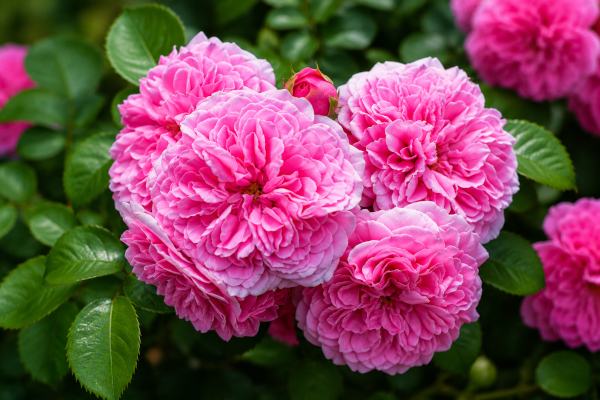
Rose occupies a distinctive place in Ayurveda, Indian cuisine, perfumery, religious practice and household wellness traditions. Known in Sanskrit as Shatapatri, meaning “the flower with a hundred petals,” rose is valued for its fragrance, cooling character and ability to transform simple preparations into aromatic foods and medicines.
The rose commonly associated with classical Gulkand preparations is the cabbage rose or hundred-petalled rose, botanically accepted as Rosa × centifolia L. The multiplication sign reflects its hybrid origin. Plants of the World Online recognises it as an artificial hybrid involving Rosa canina, Rosa gallica and Rosa moschata. It belongs to the Rosaceae family.
Names and Botanical Identity
| Category | Name |
|---|---|
| Sanskrit | Shatapatri, Taruni, Karnika, Gandhadhya |
| Hindi | Gulab |
| English | Cabbage rose, hundred-petalled rose, Provence rose |
| Malayalam | Panineer Poovu, Rosa Poovu |
| Tamil | Roja |
| Kannada | Gulabi Hoovu |
| Telugu | Gulabi Puvvu |
| Botanical name | Rosa × centifolia L. |
| Family | Rosaceae |
| Principal part used | Fresh or dried flower petals |
The names Shatapatri and “hundred-petalled rose” arise from the flower’s densely arranged petals. Gandhadhya refers to its rich fragrance, while Taruni conveys freshness, beauty and youthful grace.
How to Identify the Rose Plant
Rosa × centifolia is a woody, branching shrub with long, often arching stems carrying numerous prickles. Mature plants commonly form a spreading bush and may require support when heavily flowered.
The leaves grow alternately and are divided into several oval leaflets with clearly serrated edges. Their colour ranges from fresh green to greyish green, depending on climate and variety.
The flowers provide the clearest identification. They are large, rounded and densely packed with overlapping petals, producing a full, cabbage-like appearance. Flowers are commonly pink, pale pink, rose-red or occasionally white. Their weight may cause the flower heads to bend or nod downward. A strong, sweet fragrance becomes especially noticeable during the cooler hours of morning.
The fruit, known as the rose hip, develops below the petals after successful pollination, although many highly doubled cultivated forms produce little fruit. Ayurvedic culinary preparations principally use the fragrant petals.
For food preparations, select an aromatic, traditionally cultivated rose rather than decorative florist roses treated with pesticides, colouring agents or preservatives.
Rose According to Ayurveda
Ayurvedic literature discusses rose under the names Shatapatri, Taruni and Gulab. Its exact description may vary slightly among Nighantus and regional traditions, yet its cooling, fragrant and Pitta-pacifying character remains central.
| Ayurvedic attribute | Traditional description |
|---|---|
| Rasa — taste | Madhura, Tikta and Kashaya: sweet, bitter and astringent |
| Guna — qualities | Laghu and Snigdha: light and unctuous |
| Virya — potency | Sheeta: cooling |
| Vipaka — post-digestive effect | Madhura: sweet |
| Dosha influence | Primarily pacifies aggravated Pitta |
| Traditional actions | Hridya, Ruchya, Twachya, Balya and Dahashamaka |
Ayurvedic reviews describe rose through qualities such as Hridya, supportive and pleasing to the heart; Ruchya, enhancing taste and interest in food; Twachya, traditionally associated with the skin; and Medhya, connected with mental clarity and composure. These are classical Ayurvedic descriptions rather than claims of guaranteed clinical treatment.
Cooling Pitta and Internal Heat
Rose is especially associated with conditions characterised in Ayurveda by excess heat. Its Sheeta Virya, or cooling potency, makes it a valued ingredient during hot seasons and in foods prepared for Pitta-dominant constitutions.
Traditional rose preparations are connected with relief from:
- Sensations of internal heat
- Excessive thirst during hot weather
- Heat-related irritability
- Burning sensations associated with aggravated Pitta
- Dryness caused by summer conditions
The cooling effect depends greatly on the form in which rose is used. Fresh petals, rose-infused water and Gulkand each possess a distinct culinary character.
Rose, the Heart and the Mind
Ayurveda describes rose as Hridya, meaning agreeable or beneficial to the heart. The term includes physical nourishment as well as the emotional experience created by pleasant taste, colour and fragrance.
The aroma of fresh rose petals is traditionally used to create a calm, uplifting atmosphere. Rose garlands, rose water, floral baths and fragrant food preparations bring together sensory pleasure and emotional balance. This makes rose especially suitable for summer beverages, festive foods and preparations associated with hospitality.
Rose in Ayurvedic Food Traditions
Rose petals appear in several traditional preparations:
Gulkand
Gulkand is a sun-matured preserve made from fragrant rose petals and sugar. Cardamom may be added for aroma. It is among the best-known Ayurvedic rose preparations.
Rose Water
Rose water is produced through distillation or infusion. Culinary rose water is used in beverages, milk preparations, sweets, rice dishes and festive foods.
Dried Petal Powder
Shade-dried petals may be powdered and incorporated into traditional mixtures, herbal teas or cosmetic preparations.
Rose Sherbet
Rose petals or culinary rose extract may be combined with water and sweetening ingredients to create a refreshing seasonal drink.
Aromatic Milk Preparations
Rose petals, cardamom and milk form a fragrant combination used in cooling desserts and festive beverages.
Classical Recipe: Gulkand or Rose-Petal Jam
The formulation is attributed to Siddha Bheshaja Manimala, 2/148 and classified as Ashita, an eatable preparation. It combines rose petals, sugar and cardamom through prolonged maturation in sunlight.
Ingredients
| Ingredient | Common or botanical identity | Part used | Ratio |
|---|---|---|---|
| Sharkara | Normal sugar | — | 3 parts |
| Gulab | Rose, Rosa centifolia L. | Flower petals | 1 part |
| Ela | Cardamom, Elettaria cardamomum Maton | Seed | As required |
Selecting the Rose Petals
Use freshly opened, strongly fragrant roses cultivated specifically for culinary use. Harvesting during the cool morning hours helps preserve fragrance.
Remove the white or pale base of each petal when it tastes strongly bitter. Sort the petals carefully and remove insects, damaged portions and stalk material. When washing is necessary, rinse briefly and allow the petals to dry completely before placing them in the jar. Residual water can affect preservation.
Method of Preparation
Crush the rose petals gently to release their aroma and moisture.
Take a completely clean and dry glass jar. Spread one layer of crushed rose petals across the bottom.
Add an even layer of sugar over the petals. Continue alternating layers of rose petals and sugar until all the ingredients have been placed in the jar.
Close the jar securely with a clean, dry lid. The cited version instructs that the jar be kept in sunlight for one year.
Mix the preparation every alternate day using a clean and completely dry spoon. This allows the sugar and petals to combine evenly.
At the end of the maturation period, add finely powdered cardamom and mix thoroughly.
Store the completed Gulkand in a clean, dry glass container.
Ayurvedic Properties of the Preparation
The formulation describes Gulkand as:
- Sheeta — cooling in potency
- Snigdha — unctuous
- Madhura — sweet
- Balya — strength-promoting
- Pittashamaka — pacifying aggravated Pitta
- Dahashamaka — traditionally relieving burning sensations
It is presented as a Pathya preparation for Pitta-associated heat and burning sensations. The source also gives diabetes as a precaution because sugar forms the major part of the recipe.
Understanding the Ingredients
Rose Petals
Rose provides fragrance, cooling potency and a gentle astringent undertone. Its sensory character makes the preserve pleasing to the mind and palate.
Sugar
Sugar draws moisture from the petals and gradually creates the preserve’s syrup-like consistency. In Ayurvedic terms, its sweetness and nourishing quality strengthen the cooling profile of the recipe.
Cardamom
Cardamom introduces a fresh aromatic note and balances the dense sweetness of the preserve. It also makes the preparation more agreeable after a meal.
Sunlight
Solar heat gradually softens the petals and helps the sugar absorb their colour, aroma and moisture. The transformation occurs slowly, preserving the identity of the flower within the finished jam.
An Important Source Note About the Gulkand Method
The formulation supplied with this article gives three parts sugar, one part rose petals, cardamom and a one-year sunlight period, citing Siddha Bheshaja Manimala 2/148.
The current FSSAI–CCRAS Ayurveda Aahara Compendium records another standardised Gulkanda entry from Siddha Bheshaja Manimala. That version uses equal parts rose petals and sugar, omits cardamom and prescribes seven to ten days of sunlight. It attributes the preparation to the Jwara Prakarana of the fourth Guchcha, verse 41. Both versions should be treated as separate textual or editorial formulations, with one complete method followed consistently.
About the Siddha Bheshaja Manimala
Siddha Bheshaja Manimala is a Sanskrit Ayurvedic compendium composed by Sri Krishnarama Bhatt. A scholarly review places its completion in 1953 on the full-moon day of the bright fortnight of Phalguna. This makes it a work of modern Sanskrit Ayurvedic literature carrying forward classical pharmaceutical, dietary and therapeutic traditions.
The text contains five major chapters known as Guchchas, meaning bunches or clusters. Its title compares proven formulations to precious gems arranged in a garland. The work discusses herbal preparations, mineral and herbo-mineral medicines, pharmaceutical procedures, disease-specific formulations, home remedies and practical methods drawn from the author’s experience. A published edition contains the Vaishwanara Hindi commentary, edited by R. Kaladhara Bhatt and issued by Krishnadas Academy in Varanasi.
The inclusion of Gulkand illustrates the breadth of the text. Ayurvedic knowledge within the work extends from complex medicinal formulations to accessible household preparations based on familiar ingredients such as rose petals, sugar and cardamom.
Traditional Ways of Consuming Gulkand
Gulkand is generally taken in a small quantity as a sweet preserve. Traditional serving methods include:
- A small spoonful by itself
- Mixed with cool or room-temperature milk
- Added to traditional beverages
- Used as a filling in sweets or paan
- Combined with suitable summer foods
Portion size should remain modest because of its concentrated sugar content.
Who Should Exercise Care?
People with diabetes, insulin resistance or medically prescribed sugar restrictions should avoid this traditional sugar-rich preparation unless their healthcare professional approves a suitable alternative.
People managing obesity, high triglycerides, dental problems or calorie-controlled diets should account for its high sugar concentration.
Anyone with an allergy to rose, pollen or cardamom should avoid the preparation.
Pregnant women, children and people receiving medical care should use concentrated herbal foods in quantities appropriate to their health needs.
Hygiene and Storage Precautions
Use only edible, pesticide-free rose petals.
The jar, lid and spoon must remain clean and completely dry.
Inspect the preparation regularly. Discard the entire batch when visible mould, unpleasant odour, gas formation or unusual fermentation appears.
Avoid adding wet petals, wet utensils or water to the jar.
A year-long household maturation requires careful control of moisture, temperature, insects and contamination. Preparation under professional or standardised food-processing conditions offers greater consistency.
Rose as Food, Fragrance and Ayurvedic Heritage
Rose demonstrates Ayurveda’s ability to unite taste, fragrance, nourishment and seasonal wisdom. Its petals carry cooling qualities, gentle astringency and a fragrance capable of transforming both food and atmosphere.
Gulkand represents this transformation in its most celebrated form. Fresh petals are layered with sugar, exposed to sunlight and slowly changed into a fragrant preserve. Cardamom adds warmth and complexity, creating a preparation that belongs equally to Ayurveda, Indian cookery and the household tradition of seasonal foods.
Through Shatapatri, the familiar rose becomes more than an ornamental flower. It emerges as a cultural ingredient, an aromatic food and a living connection with India’s long tradition of preparing food according to season, constitution and sensory harmony.
REFERENCES
- Central Council for Research in Ayurvedic Sciences (CCRAS) and Food Safety and Standards Authority of India (FSSAI). Ayurveda Aahara Compendium. Entry: “Gulkanda,” citing Siddha Bheshaja Manimala, Jwara Prakarana, Chaturtha Guchcha, Shloka 41. The formulation records rose petals and sugar, its preparation in sunlight, cooling properties and diabetes-related precaution.
https://ccras.nic.in/wp-content/uploads/2024/10/03102024-FSSAIs-Ayurveda-Aahara-Compendium.pdf - Food Safety and Standards Authority of India. Ayurveda Aahara Compendium. Official compilation of classical Ayurvedic foods, drinks and dietary preparations.
https://www.fssai.gov.in/upload/uploadfiles/files/Ayurveda%20Aahara%20Compendium.pdf - Royal Botanic Gardens, Kew. Plants of the World Online: Rosa × centifolia L. Botanical identity, accepted name, synonyms and taxonomic information.
https://powo.science.kew.org/taxon/324763-2 - International Plant Names Index. Rosa centifolia L. Nomenclatural and publication details.
https://www.ipni.org/n/324763-2 - Arun, C. H.; Hussain, Gazala; Madhur, Shobita; and Basavaraj, Ganti Y. “A Book Review on Siddha Bheshaja Manimala.” Journal of Biological & Scientific Opinion, Volume 5, Issue 4, 2017, pp. 69–75.
DOI: 10.7897/2321-6328.05465
https://www.researchgate.net/publication/320270489_A_BOOK_REVIEW_ON_SIDDHA_BHESHAJA_MANIMALA - Siddha Bheshaja Manimala. Sanskrit Ayurvedic compendium composed by Sri Krishnarama Bhatt, containing herbal, mineral, dietary and disease-specific formulations. The work is arranged into five sections known as Guchchas and is available with the Vaishwanara Hindi commentary edited by R. Kaladhara Bhatt.
Health Disclaimer
This article is intended for educational, historical and cultural purposes. Ayurvedic properties and traditional uses describe concepts recorded in classical and later Ayurvedic literature. They do not constitute medical diagnosis, treatment or a substitute for professional healthcare. People with diabetes, allergies, chronic illness, pregnancy-related concerns or prescribed dietary restrictions should consult a qualified healthcare professional before using Gulkand or concentrated rose preparations.
You may also like
-
Bharat Biotech’s Nucelion and VeGen Bio Partner to Manufacture Advanced Dual-Target CAR-T Cancer Therapy in India
-
Ayurveda and Anger: How Emotional Excess Affects Physical and Mental Health
-
Ayurveda and Stress: Daily Practices for Mental Balance and Emotional Well-Being
-
Ayurveda and Bowel Routine: Why Regularity Matters for Digestive Health
-
Why Ayurveda Warns Against Suppressing Hunger, Thirst and Sleep
