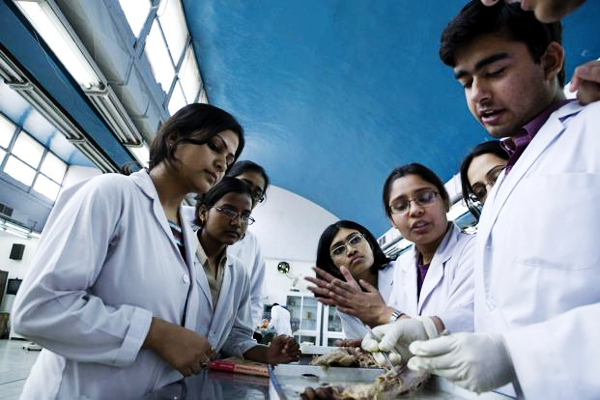
India has recorded a major expansion in medical education over the past 12 years, with the number of MBBS seats increasing from 51,348 in 2014 to 1,39,489 in 2026. During the same period, the number of medical colleges more than doubled from 387 to 844, considerably expanding the country’s capacity to train doctors.
Postgraduate medical education has also grown rapidly. The number of PG seats has risen from 31,185 in 2014 to 86,360, representing an increase of nearly 177%. The expansion of postgraduate capacity is particularly important for producing specialists in fields such as general medicine, surgery, paediatrics, anaesthesia, radiology, obstetrics and other areas where shortages continue to affect healthcare delivery.
The establishment of medical colleges in remote and underserved districts forms an important part of the government’s strategy. New institutions are being developed by linking medical colleges with existing district and referral hospitals, allowing students to receive clinical training while strengthening healthcare services in regions that previously had limited access to medical education and specialist treatment.
The government has approved 157 medical colleges under the Centrally Sponsored Scheme for establishing new colleges attached to district or referral hospitals. The scheme gives preference to underserved and aspirational districts without an existing government or private medical college. It is intended to distribute medical education capacity more evenly across the country instead of concentrating colleges in major urban centres.
Community-based training programmes are also being used to connect medical education more closely with public healthcare needs. Under the Family Adoption Programme, undergraduate medical students work with selected families and learn about their health conditions, social environment and access to government health programmes. The District Residency Programme requires postgraduate students to spend three months training in district hospitals, supporting service delivery in rural and underserved areas.
The rapid increase in seats will require corresponding growth in teaching faculty, hospital beds, laboratories, clinical material, hostels and training facilities. The National Medical Commission has introduced regulations covering minimum standards, faculty qualifications, competency-based medical education and the maintenance of educational quality as the system expands.
The expansion is expected to create more opportunities for Indian students to pursue medical education within the country while gradually strengthening the availability of doctors and specialists. Its long-term impact will depend on the quality of training, the geographical distribution of graduates and the ability of states to recruit and retain medical professionals in public hospitals, rural districts and remote communities.
The latest figures were provided by Union Minister of State for Health and Family Welfare Anupriya Patel in a written reply in the Lok Sabha on July 24, 2026.
Reference
Press Information Bureau, Government of India
Ministry of Health and Family Welfare
“MBBS Seats Increase to 1.29 Lakh, PG Seats Nearly Triple to 86,360 Between AY 2023–24 and AY 2025–26”
Published on July 24, 2026
PIB Release ID: 2288843
Akashvani News
You may also like
-
Bharat Biotech’s Nucelion and VeGen Bio Partner to Manufacture Advanced Dual-Target CAR-T Cancer Therapy in India
-
Indian Physicist Ashoke Sen Becomes First Indian to Receive Prestigious Oskar Klein Medal
-
Ayurveda and Anger: How Emotional Excess Affects Physical and Mental Health
-
Indian Army’s Northern Command Opens 75-Day Defence Technology Internship Programme for Young Innovators
-
Ayurveda and Stress: Daily Practices for Mental Balance and Emotional Well-Being
