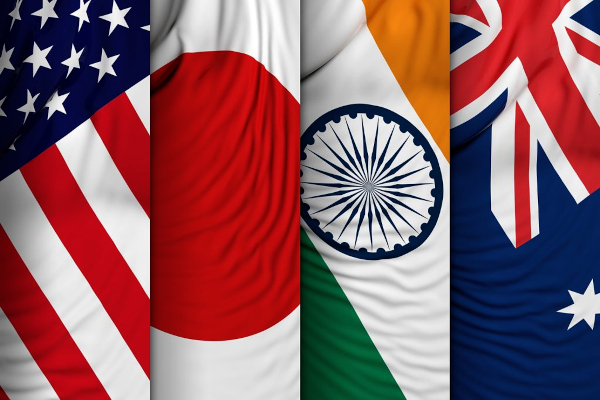
A major geopolitical shift is quietly unfolding beneath the surface of global diplomacy, and at the centre of it lies something far less visible than aircraft carriers or missiles — critical minerals. As India, the United States, Japan, and Australia prepare for deeper strategic coordination under the Quad framework, one of the most important emerging priorities is the creation of alternative supply chains for rare earths and strategic minerals currently dominated by China. Though often overshadowed by military discussions and Indo-Pacific security debates, the battle for critical minerals may ultimately shape the future balance of global technological and economic power more profoundly than conventional geopolitics.
The Quad — comprising India, the United States, Japan, and Australia — initially emerged as a loose strategic grouping focused on ensuring a free, open, and rules-based Indo-Pacific. Over time, however, the grouping has evolved into a broader framework involving technology cooperation, maritime security, resilient supply chains, semiconductors, cyber security, healthcare, infrastructure, and emerging technologies. Increasingly, critical minerals have become one of the most strategically sensitive pillars of this cooperation.
Modern civilisation now runs on minerals that most ordinary people rarely think about. Lithium powers electric vehicle batteries. Cobalt and nickel are crucial for energy storage systems. Rare earth elements are indispensable for fighter aircraft, missiles, radar systems, semiconductors, wind turbines, smartphones, advanced electronics, fibre optics, satellites, and precision-guided weapons. Gallium and germanium are essential for advanced chips and communication systems. Without secure access to these materials, modern economies and militaries simply cannot function at scale.
The problem confronting the Quad countries is that China today occupies an extraordinarily dominant position in global critical mineral processing and refining. While some minerals are mined elsewhere, China controls much of the downstream ecosystem that converts raw materials into usable industrial products. In several categories of rare earth refining, China accounts for an overwhelming majority of global processing capacity. This has created deep strategic concern across the United States, Japan, Australia, and increasingly India.
The fear is not merely economic dependence. It is strategic vulnerability. In recent years, geopolitical tensions have repeatedly demonstrated how supply chains can become instruments of coercion. Countries dependent on a single supplier for critical technologies or industrial inputs risk economic disruption, industrial paralysis, price manipulation, and national-security vulnerabilities during periods of conflict or diplomatic confrontation.
The Quad countries are therefore attempting to gradually construct an alternative ecosystem — one capable of reducing strategic overdependence on China without necessarily severing economic ties entirely. This emerging strategy is not officially framed as anti-China containment, but its implications are unmistakable.
Australia plays a particularly important role in this effort because of its vast mineral reserves. The country possesses major deposits of lithium, rare earths, nickel, cobalt, and other strategic resources. Australian mining capacity gives the Quad a potential upstream supply base independent of China. However, raw mining alone is insufficient. The real challenge lies in refining, processing, advanced manufacturing, and downstream industrial integration — areas where China currently dominates.
Japan brings a different kind of strength to the partnership. Tokyo has spent years attempting to reduce strategic vulnerabilities after earlier tensions with Beijing exposed the risks associated with rare-earth dependence. Japanese companies possess highly advanced expertise in materials science, battery chemistry, precision manufacturing, semiconductor technologies, and industrial supply-chain management. Japan therefore serves as a crucial technological and industrial node within the emerging Quad mineral architecture.
The United States brings financial power, strategic coordination, technological innovation, and defence-industrial demand. Washington increasingly views critical minerals not merely as economic commodities but as core national-security assets essential for military readiness and technological supremacy. American legislation including the Inflation Reduction Act and CHIPS-related industrial policies reflects a broader push toward reshoring or friend-shoring strategic supply chains away from excessive Chinese dependence.
India’s role in this evolving framework is particularly fascinating because New Delhi sits at the intersection of strategic geography, industrial ambition, and geopolitical balancing. India possesses significant untapped rare-earth potential, expanding manufacturing ambitions, and one of the world’s fastest-growing markets for electronics, renewable energy, electric mobility, and advanced infrastructure. The country is simultaneously trying to expand domestic semiconductor manufacturing, battery production, defence manufacturing, and clean-energy deployment — all sectors heavily dependent on critical minerals.
New Delhi has therefore accelerated efforts to secure overseas mineral assets while expanding domestic exploration. India has signed agreements and initiated discussions with countries including Australia, Argentina, Chile, and several African states for access to lithium, cobalt, copper, and rare-earth resources. Public-sector enterprises such as Khanij Bidesh India Limited (KABIL) have become increasingly active in overseas mineral acquisition efforts.
The strategic importance of these minerals becomes even clearer when viewed through the lens of future warfare. Advanced fighter jets, drones, radar systems, naval electronics, missile guidance systems, space infrastructure, and AI-driven military systems all require sophisticated supply chains dependent on rare earths and specialty materials. A nation unable to secure these supply chains risks losing technological and military competitiveness over time.
This is one reason why the Quad’s critical minerals discussions are increasingly linked with semiconductor ecosystems, AI infrastructure, quantum technologies, battery manufacturing, and clean-energy systems. The issue is not simply mining. It is about controlling the industrial foundations of the twenty-first century.
China itself understands this reality extremely well. Over decades, Beijing systematically built dominance across mining, refining, industrial processing, battery ecosystems, solar manufacturing, and rare-earth technologies. China’s advantage lies not merely in mineral deposits but in industrial integration, scale, state support, infrastructure, labour ecosystems, logistics, and long-term strategic planning.
For the Quad countries, replicating this ecosystem will be extremely difficult and expensive. New processing facilities require years of investment, environmental approvals, specialised expertise, and industrial coordination. Many refining processes also involve environmentally hazardous operations that several countries had earlier outsourced rather than maintain domestically. Rebuilding these capabilities will require massive state support and long-term strategic patience.
Nevertheless, momentum is growing. At previous Quad meetings, foreign ministers explicitly warned against dependence on any single country for critical mineral processing and refining. Though China was not directly named in every statement, the strategic message was unmistakable. Discussions increasingly focus on resilient supply chains, trusted technology ecosystems, secure industrial partnerships, and coordinated investment strategies.
The implications extend far beyond economics. Control over critical minerals could shape future geopolitical alignments much like oil influenced twentieth-century geopolitics. Countries possessing secure mineral access and advanced industrial ecosystems may dominate future technologies ranging from electric vehicles and renewable energy to AI infrastructure and next-generation defence systems.
The Quad’s emerging mineral strategy also reflects a deeper transformation underway in globalisation itself. For decades, economic efficiency dominated supply-chain thinking. Companies prioritised low-cost production regardless of geopolitical risk. Today, however, resilience, strategic trust, and national security increasingly matter as much as cost efficiency. The world is gradually moving from hyper-globalised supply chains toward politically aligned industrial ecosystems.
India’s participation in this transformation is especially significant because it indicates New Delhi’s growing strategic confidence. Rather than remaining merely a consumer market or balancing power, India is increasingly positioning itself as an industrial, technological, and strategic pillar within the Indo-Pacific order. The country’s role in alternative supply chains could become one of the defining features of its rise over the coming decades.
The quiet diplomacy surrounding Quad critical minerals cooperation may therefore represent something much larger than resource coordination. It could be the early architecture of a new geopolitical-economic order emerging across the Indo-Pacific — one where industrial resilience, trusted technology partnerships, and strategic supply chains become as important as military alliances themselves.
In many ways, the future balance of global power may not ultimately be decided only by armies, navies, or nuclear weapons, but by who controls the minerals powering the technologies of the next century.
Source:
https://mainichi.jp/english/articles/20260509/p2g/00m/0na/022000c
https://www.iea.org/reports/global-critical-minerals-outlook-2024
https://www.csis.org/analysis/china-critical-minerals-and-future-global-supply-chains
https://www.pib.gov.in/PressReleasePage.aspx?PRID=2036555
You may also like
-
Exercise Tarang Shakti 2026 Concludes in Jodhpur, Showcasing India’s Air Power, Indigenous Defence Technology
-
US Double Standards in Foreign Policy: 16 Recent Cases Involving India, Russia, China and Global Trade
-
Indian Navy Vice Chief Inspects Japan’s Mogami-Class Stealth Frigate as India-Japan Shipbuilding Cooperation Expands
-
INS Trishul Arrives in UK for Exercise KONKAN 2026 as India and Royal Navy Expand Maritime Cooperation
-
INS Sahyadri Arrives in Russia for Exercise INDRA 2026 to Strengthen India-Russia Naval Cooperation
