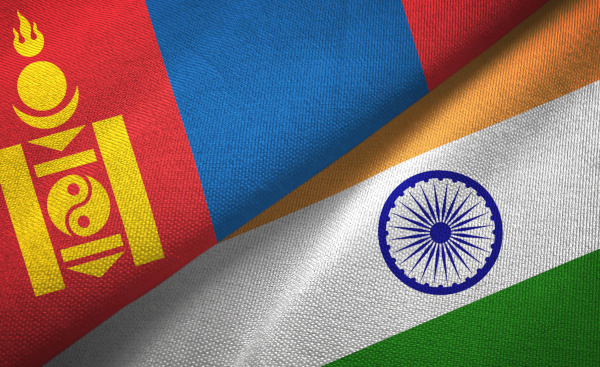
India has sent sacred Buddhist relics from Sanchi to Mongolia for a public exposition, marking a major moment in India’s cultural diplomacy and Buddhist heritage outreach. The relics are associated with Arahant Sariputta and Arahant Mahamoggallana, two of Lord Buddha’s foremost disciples, and will be placed for public viewing in Ulaanbaatar. The exposition is expected to draw a very large number of monks, devotees, scholars and visitors from across Mongolia.
The relics originate from the historic Buddhist heritage connected with Sanchi, one of India’s most revered Buddhist sites and a UNESCO World Heritage Site in Madhya Pradesh. Their journey to Mongolia carries spiritual meaning because Buddhism has been one of the strongest civilisational bridges between India and Mongolia for centuries. India is the land of Buddha’s enlightenment and teaching, while Mongolia has preserved a deep Buddhist tradition through its monasteries, monks, rituals and public faith.
The sacred relics were first brought from Bhopal to Delhi with state honours. They were then scheduled to be carried to Mongolia by a special Indian Air Force aircraft. In Mongolia, the exposition is being organised as a solemn religious and cultural event, allowing devotees to pay homage to relics linked with two of the most respected disciples in Buddhist history.
Sariputta and Mahamoggallana hold a special place in Buddhist tradition. Sariputta is remembered for wisdom, clarity and deep understanding of the Dhamma, while Mahamoggallana is revered for spiritual power, discipline and devotion. Their relics are therefore more than historical objects; they are living symbols of Buddhist memory, learning and faith.
The event also strengthens India’s image as the custodian of Buddhist heritage. Over the past few years, India has used Buddhist cultural diplomacy to connect with countries across Asia, including Mongolia, Thailand, Sri Lanka and Bhutan. Such initiatives bring together faith, history, tourism, scholarship and diplomacy. They also remind the world that India’s influence in Asia has long travelled through ideas, monks, scriptures, pilgrimage routes and sacred memory.
For Mongolia, the arrival of these relics is a moment of devotion and national cultural significance. Mongolia has a strong Buddhist identity, and public exposition of sacred relics can draw people from monasteries, academic institutions, rural communities and urban centres alike. Earlier reports suggest that more than ten lakh devotees and tourists are expected to visit the exposition, showing the depth of reverence attached to the event.
The initiative also fits into the broader India–Mongolia relationship. The two countries often describe each other as spiritual and cultural neighbours, despite being geographically separated. Prime Minister Narendra Modi’s 2015 visit to Mongolia was the first by an Indian Prime Minister to that country, and Buddhist heritage has remained an important pillar of the relationship since then. A 2022 PIB release had also described India and Mongolia as “spiritual neighbours” while noting earlier relic diplomacy between the two nations.
Such exchanges have a soft-power value that goes beyond ceremony. They encourage Buddhist pilgrimage to Indian sites such as Sanchi, Bodh Gaya, Sarnath, Kushinagar and Nalanda. They also create stronger people-to-people ties, support cultural tourism, and reinforce India’s civilisational role in the Buddhist world.
The sending of the sacred relics to Mongolia is therefore both a spiritual gesture and a diplomatic statement. It presents India as a country that protects ancient heritage, shares it respectfully with friendly nations, and uses culture as a bridge of trust. In a world often shaped by power politics, this journey from Sanchi to Ulaanbaatar carries a quieter but powerful message: India’s civilisational diplomacy continues to travel through peace, reverence and shared memory.
You may also like
-
India Hosts 12th BRICS Parliamentary Forum in New Delhi
-
GeM’s AABHAR Collection Showcases 294 Indigenous Products, Strengthens Market Access for Indian Artisans
-
Tushara in the Mahabharata: The Lands Beyond the Hindu Kush and the Horsemen Who Faced Arjuna
-
India Strengthens Trade Ties with Netherlands as Piyush Goyal Visits Port of Rotterdam
-
India to Train 600 Nigerian Army Soldiers in Specialised Jungle and Mountain Warfare
