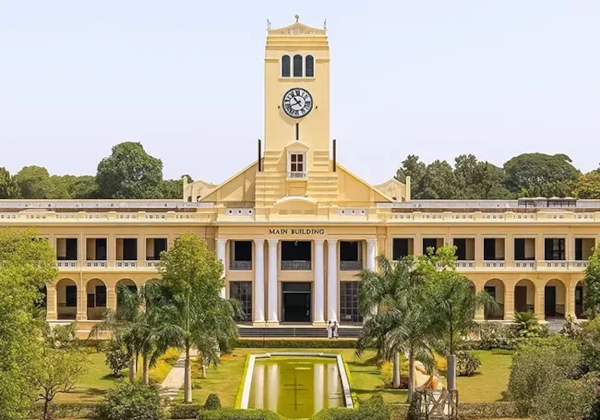
Researchers at Annamalai University have developed a nanoporous filtration membrane made from compounds extracted from marine seaweeds, opening a potential pathway towards water-treatment systems that rely on renewable biological materials instead of entirely synthetic polymers.
The research team includes Muthuvel Arumugam, Sangeswari Thirukumar, Kanchana Shanthakumar, Parthasarathy Varadarajan and Ajithkumar Thankappanpillai. Most of the inventors are associated with Annamalai University’s Centre of Advanced Study in Marine Biology, while Ajithkumar is affiliated with the ICAR–National Bureau of Fish Genetic Resources. The university is listed as the patent applicant.
The work was led by M. Arumugam, Associate Professor at the Centre of Advanced Study in Marine Biology, with financial assistance from the Tamil Nadu State Council for Higher Education. Arumugam’s research background includes marine biotechnology, seaweed-derived materials and alginate-based biomaterials.
The membrane uses two natural constituents obtained from brown seaweeds: sodium alginate and phlorotannins. Sodium alginate is a polysaccharide capable of forming films and gels, while phlorotannins are phenolic compounds naturally produced by brown algae. Together, they form the biological foundation of the proposed porous filtration material.
According to the published patent specification, sodium alginate is extracted and purified from a Padina seaweed, while the phenolic component is isolated from Turbinaria decurrens. The phlorotannin is converted into a resin-like material and combined with sodium alginate in a specified ratio. The mixture is heated, poured into moulds and dried to create the nanoporous phyto-membrane.
The term “phyto-membrane” reflects the plant-derived origin of the principal materials. Its nanoporous structure is intended to allow water to pass while retaining selected suspended or dissolved contaminants according to their size and interactions with the membrane surface.
The researchers say the membrane could support the removal of fine particles, organic pollutants and microorganisms from contaminated water. Its proposed applications include microfiltration and ultrafiltration, processes that use pressure to move water through a membrane containing extremely small pores.
Membrane filtration can provide a compact treatment system without requiring the repeated addition of large quantities of chemical agents. Its performance, however, depends on pore uniformity, water-flow rate, mechanical strength, contaminant rejection, resistance to fouling and the ease with which the membrane can be cleaned or replaced.
The use of seaweed-derived compounds gives the invention an environmental advantage at the material stage. Seaweeds are renewable marine resources that can be cultivated without agricultural land or freshwater irrigation. Converting their natural polymers into functional filtration materials could create additional value from India’s marine bioresources while reducing dependence on some petroleum-derived membrane components.
Sodium alginate is particularly suitable for film formation because it can produce flexible, biocompatible structures. Phlorotannins may add functional chemical groups capable of interacting with contaminants and could also influence the membrane’s stability and surface characteristics.
The patented process is significant because many conventional filtration membranes use synthetic polymers that require specialised manufacturing and may create disposal problems at the end of their operational life. A biologically sourced membrane could offer a more sustainable alternative, provided it achieves the durability, selectivity and production consistency required for practical deployment.
Affordability will be central to the technology’s wider value. Rural settlements, coastal communities, disaster-relief operations and small institutions often require treatment systems that are inexpensive, portable and easy to maintain. Seaweed-based membranes could potentially be incorporated into compact filtration units designed for such settings.
The technology may also be useful as one stage within a broader purification system. Water containing multiple pollutants generally requires pretreatment, filtration and disinfection rather than dependence on a single barrier. A phyto-membrane could remove suspended and microscopic contaminants before water proceeds to activated carbon treatment, ultraviolet disinfection or another polishing stage.
The patent strengthens the emerging field of marine biomaterials, in which compounds from algae and other marine organisms are converted into products for healthcare, agriculture, packaging, energy and environmental remediation. Annamalai University’s coastal location and specialised marine-biology centre provide access to scientific expertise in seaweed diversity, chemistry and biotechnology.
The development is especially relevant as population growth, urbanisation and industrial activity increase pressure on freshwater sources. Pollution from sewage, agricultural runoff, industrial discharge and solid waste has created a need for treatment technologies that combine efficiency with lower material and energy costs.
The seaweed-derived membrane now offers a platform for further engineering, field trials and industrial collaboration. With adequate testing and scale-up, the technology could contribute to low-cost water-treatment systems while demonstrating how India’s marine resources can support environmentally responsible innovation.
Reference
Annamalai University. “A Process of Preparation of Nanoporous Phyto-Membrane from Seaweeds for Water Ultrafiltration and Product Thereof.” Indian Patent Application No. 202341088442 A, filed 23 December 2023 and published in The Patent Office Journal No. 03/2024 on 19 January 2024.
https://annamalaiuniversity.ac.in/download/2024/patent-2024/202341088442A.pdf
You may also like
-
IIT Hyderabad Develops Lung-Derived Bioink for 3D Bioprinting and Regenerative Medicine
-
Indian Scientists Discover Molecular Switch That Can Regulate Cellular Autophagy
-
Scientists Map Earliest Glow of Hydrogen, Opening A New Window to the Universe
-
Indian Researchers Study RAD51 DNA-Repair Gene Variant in Prostate Cancer
-
TDB Backs Multi Nano Sense With ₹37.51 Crore to Build Indigenous Multi-Gas Sensor Platform
