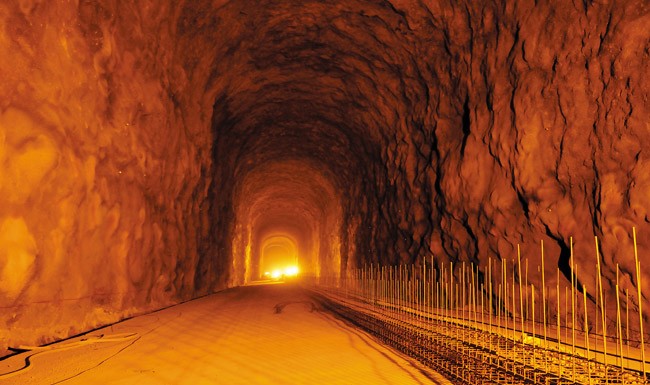
India is preparing a major expansion of its emergency crude-oil storage capacity, with state-owned Oil and Natural Gas Corporation planning to invest around ₹7,000 crore in a new 1.75-million-tonne strategic petroleum reserve at Mangalore in Karnataka. The underground storage project will be capable of holding roughly 13 million barrels of crude oil, strengthening India’s ability to withstand disruptions to international energy supplies.
ONGC Chairman Arun Kumar Singh disclosed the investment plans in New Delhi on 31 August 2026, confirming that the company has already secured the land required for the project and that construction is expected to begin shortly. The ₹70-billion investment forms part of ONGC’s wider strategy to strengthen India’s domestic energy security while expanding the company’s role beyond conventional oil and gas exploration.
The development is particularly important because India remains heavily dependent on imported crude oil. Disruptions in major producing regions, shipping routes or international energy markets can therefore quickly affect domestic fuel availability, refinery operations, inflation and the country’s overall import bill. Building larger strategic reserves provides India with an emergency buffer that can be released when normal crude supplies are interrupted.
Mangalore to Become an Even Larger Strategic Oil Hub
Mangalore already hosts one of India’s three existing strategic petroleum reserve facilities. The present underground cavern complex operated by Indian Strategic Petroleum Reserves Limited has a capacity of 1.5 million tonnes, equivalent to around 11 million barrels of crude oil. It consists of two underground compartments of approximately 750,000 tonnes each and was commissioned in October 2016.
ONGC’s proposed 1.75-million-tonne expansion would therefore be larger than the existing Mangalore strategic storage facility itself.
Once completed, the additional reserve would raise the combined strategic storage capacity associated with Mangalore to about 3.25 million tonnes, equivalent to roughly 24 million barrels of crude oil, assuming the new ONGC facility is integrated into India’s broader strategic reserve architecture.
Mangalore’s location is particularly advantageous because it sits close to India’s western seaboard and major refining and port infrastructure. Imported crude arriving by tanker can be transferred into underground storage and subsequently supplied to refineries when required.
India Currently Has About 39 Million Barrels of Strategic Storage
India’s existing first phase of strategic petroleum reserves consists of three underground facilities at Visakhapatnam, Mangalore and Padur with a combined capacity of 5.33 million tonnes, or approximately 39 million barrels.
Visakhapatnam can hold 1.33 million tonnes, Mangalore 1.5 million tonnes and Padur 2.5 million tonnes. These underground rock caverns were developed specifically to provide the country with a sovereign crude-oil buffer during severe supply disruptions.
The proposed ONGC project alone would increase physical strategic storage capacity by roughly one-third compared with India’s existing 5.33-million-tonne network. Adding 1.75 million tonnes to the existing system would take the combined capacity to approximately 7.08 million tonnes, or around 52 million barrels, before accounting for other planned reserve projects.
This would represent a substantial expansion, although India’s emergency crude reserves would still remain relatively modest when measured against the scale of the country’s oil consumption and import requirements.
Underground Caverns Offer Secure Large-Scale Storage
India’s strategic crude reserves have predominantly been constructed in underground rock caverns rather than conventional above-ground storage tanks.
These facilities are created deep within suitable geological formations, where large excavated chambers can store millions of tonnes of crude oil. ISPRL describes underground rock caverns as one of the safest methods of storing hydrocarbons, while their large capacity and relatively limited surface footprint make them particularly suitable for long-duration strategic reserves.
The existing Mangalore reserve occupies about 104.7 acres and incorporates crude-receipt systems, pumps, pipelines, automation, firefighting systems and equipment for maintaining and withdrawing stored oil.
The proposed ONGC development is expected to extend India’s ability to use this type of protected underground storage for maintaining emergency crude supplies.
Strategic Reserves Have Become More Important Amid Global Instability
The rationale for larger reserves has become increasingly evident as geopolitical conflicts have repeatedly disrupted global energy markets.
India imports most of the crude oil required by its refineries. Consequently, instability in the Persian Gulf, West Asia, the Red Sea or other important energy-producing and maritime regions can create risks extending far beyond short-term fluctuations in international oil prices.
A disruption affecting production, tanker traffic or critical shipping routes can potentially reduce physical supplies reaching Indian refineries. Strategic reserves provide the government with crude oil that can be released temporarily while alternative supplies and transportation arrangements are organised.
The reserves can therefore serve as an energy-security insurance mechanism, reducing India’s immediate vulnerability to events beyond its control.
Existing Mangalore Reserve Has International Participation
Mangalore’s existing strategic reserve has already played an important role in India’s attempts to develop new models for maintaining emergency crude stocks.
India previously entered into an arrangement with the Abu Dhabi National Oil Company, under which ADNOC stored crude in one of the Mangalore caverns at its own expense. While part of that crude could be commercially traded under agreed conditions, the Government of India retained the right to use the available oil during an emergency.
Such arrangements allow India to combine strategic storage requirements with commercial participation by international energy companies, potentially reducing the enormous financial cost involved in keeping millions of barrels of crude permanently stored underground.
The ONGC project introduces another dimension by involving India’s largest domestic upstream oil and gas producer directly in expanding strategic storage capacity.
India Is Planning Additional Strategic Reserves
The Mangalore development is separate from the broader expansion already envisaged under Phase II of India’s Strategic Petroleum Reserve programme.
The government approved the development of another 6.5 million tonnes of commercial-cum-strategic storage capacity at Padur in Karnataka and Chandikhol in Odisha. The proposed Padur expansion has a planned capacity of 2.5 million tonnes, while Chandikhol is intended to provide another 4 million tonnes.
These projects are intended to use a commercial-cum-strategic model under which part of the capacity can potentially be operated commercially while preserving the government’s ability to access stored crude during an emergency.
Taken together with the ONGC Mangalore project, these initiatives could eventually transform India’s strategic crude-storage capacity from the relatively limited network established during the first phase into a substantially larger national energy-security system.
ONGC Also Plans Global Oil Trading Operation
The strategic reserve project forms part of a broader shift underway at ONGC.
The company is also planning to establish an international oil and gas trading operation, potentially in either Dubai or Singapore, in partnership with an international company. ONGC Chairman Arun Kumar Singh said the proposed trading platform could ultimately handle around 50 million tonnes of crude oil, petroleum products and natural gas annually, including third-party volumes.
The trading operation would give ONGC greater involvement in procurement, marketing and price-risk management rather than limiting its international activities primarily to upstream oil and gas production.
Combining overseas trading capabilities with expanded domestic storage could eventually give the company greater flexibility in deciding where and when crude is purchased, stored and sold.
Part of a Much Larger ONGC Investment Push
ONGC is simultaneously embarking on a major expansion of domestic exploration.
The company plans to invest approximately ₹1 lakh crore over five years in deepwater and ultra-deepwater exploration, including drilling around 87 wells by March 2031. The effort is intended to identify new domestic hydrocarbon resources and counter the long-term decline in India’s indigenous oil and gas production.
The combination of upstream exploration, strategic storage and international trading reflects a broader effort to strengthen India’s energy security at several levels.
Increasing domestic production reduces dependence on imports. A global trading capability can improve procurement flexibility. Larger strategic reserves provide insurance when normal supply channels fail.
A Major Addition to India’s Energy-Security Buffer
ONGC’s proposed ₹7,000-crore Mangalore strategic petroleum reserve is therefore more than another storage project. Its 1.75-million-tonne capacity would by itself be equivalent to almost one-third of India’s present national strategic crude-storage network.
The project will also reinforce Karnataka’s position as the centre of India’s strategic petroleum storage system. Mangalore already holds 1.5 million tonnes, while Padur near Udupi contains India’s largest existing facility at 2.5 million tonnes, or around 18.37 million barrels.
With the new Mangalore facility, the proposed Padur expansion and further national projects, India is gradually building a larger buffer between its rapidly expanding economy and the uncertainties of international oil markets.
For a country whose transport system, industries, military logistics and wider economy remain heavily dependent on petroleum, additional strategic storage represents something that cannot easily be created once a crisis has already begun. The decision to build capacity in advance therefore represents a long-term investment in India’s energy resilience and strategic autonomy.
You may also like
-
India’s E-Commerce Platforms Record ₹24,000 Crore Festive Sales in Two Days as Meesho Reports 75% Surge in Orders
-
India’s Economic Warfare Challenge: Strategic Autonomy, Energy Security and the Rise of a Global Power
-
India-US Trade Deal Stalemate: Why Washington’s Tariff Pressure Has Failed to Secure an Agreement
-
US Double Standards in Foreign Policy: 16 Recent Cases Involving India, Russia, China and Global Trade
-
India’s Arctic Energy Ambitions: Russian Oil, LNG and a New Sea Route to Indian Ports
