GI Produce of India | Nagaland | Spices and Agricultural Heritage
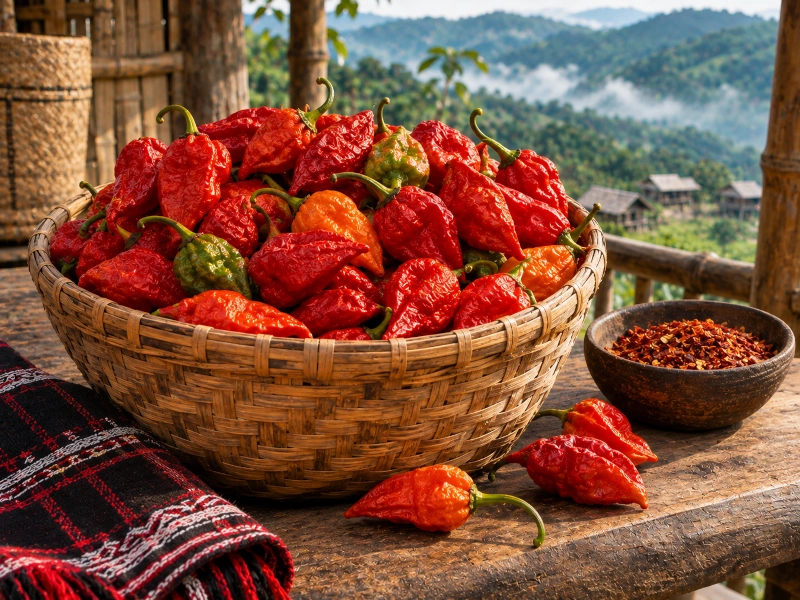
Naga Mircha, one of India’s most distinctive indigenous chilli varieties, represents the agricultural traditions, culinary heritage, and cultural identity of Nagaland. Widely known as Raja Mircha, King Chilli, and Naga King Chilli, this exceptionally pungent spice has earned international recognition for its extraordinary heat, characteristic fruity aroma, and close association with the traditional food culture of the Naga communities.
Cultivated across the hills and valleys of Nagaland, Naga Mircha has been an important part of local agriculture for generations. Its intense pungency has made it famous among chilli enthusiasts worldwide, while its traditional importance extends far beyond its reputation as an exceptionally hot spice. For Naga communities, the chilli is a familiar household ingredient, an agricultural commodity, and an important part of regional food traditions.
The chilli’s reputation has also contributed to the wider recognition of northeastern India’s agricultural biodiversity. Its adaptation to the region’s climatic conditions, traditional cultivation practices, and distinctive geographical origin led to its recognition under India’s Geographical Indications system. Naga Mircha received its GI registration certificate on 2 December 2008, formally recognising its connection with Nagaland.
Historical Origins and the Agricultural Heritage of Nagaland
The history of Naga Mircha is closely connected with the agricultural traditions of the Naga Hills, where communities have cultivated a wide range of crops adapted to the region’s mountainous terrain and climatic conditions. Although chillies originated in the Americas and entered the Indian subcontinent through historical trading networks, Naga Mircha developed its distinctive regional identity through generations of cultivation and selection in northeastern India.
The traditional agricultural systems of Nagaland have long depended on locally adapted crops, including rice, millets, vegetables, tubers, and spices. Chilli cultivation became an important component of these farming systems because the crop could be grown alongside other agricultural products and provided a valuable ingredient for household consumption.
Over generations, local communities preserved chilli varieties exhibiting desirable characteristics such as intense pungency, distinctive aroma, and suitability for the region’s growing conditions. The exceptional heat of Naga Mircha gradually established its reputation beyond the villages where it was traditionally cultivated.
The chilli became closely associated with Naga culinary traditions, particularly the preparation of fermented foods, meat dishes, chutneys, and preserved vegetables. Its use in traditional cooking contributed to the development of a distinctive regional food identity in which strong flavours, indigenous ingredients, and traditional preservation methods occupy an important place.
The historical importance of Naga Mircha therefore lies not merely in its pungency but in the accumulated agricultural knowledge and food traditions that established its reputation. The crop represents the adaptation of chilli cultivation to the ecological and cultural landscape of Nagaland.
Geographical Origin and the Agricultural Landscape of the Naga Hills
Naga Mircha is cultivated in several districts of Nagaland, with the traditional production regions including Kohima, Peren, Mon, and Dimapur. The geographical landscape encompasses mountainous terrain, hill slopes, valleys, and agricultural settlements where farmers cultivate crops under varying soil and climatic conditions.
Nagaland experiences a predominantly humid subtropical to temperate highland climate, depending on elevation. Seasonal monsoon rainfall, warm growing conditions in lower elevations, and the region’s varied agricultural soils provide suitable environments for chilli cultivation.
The state’s mountainous landscape creates considerable variation in temperature, rainfall, and soil conditions. Farmers have traditionally adapted their cultivation practices to these local differences, selecting suitable growing sites and managing crops according to seasonal weather patterns.
Naga Mircha is cultivated in both traditional shifting-cultivation systems and more settled agricultural fields. In areas where jhum cultivation remains practised, chillies may form part of mixed cropping systems that include other food crops. Farmers also cultivate the chilli in kitchen gardens and dedicated agricultural plots.
The geographical identity of Naga Mircha is closely connected with this combination of local environmental conditions, traditional farming practices, and the preservation of planting material by agricultural communities.
What Makes Naga Mircha Unique?
The most remarkable characteristic of Naga Mircha is its extraordinary pungency, which places it among the world’s exceptionally hot chilli varieties. Unlike commercial chillies cultivated primarily for colouring properties or moderate heat, Naga Mircha is distinguished by its intense capsaicinoid content and characteristic fruity aroma.
The chilli is associated with the Capsicum chinense group, which includes several exceptionally pungent chilli varieties. The fruits generally possess a subconical to conical shape, with a finely wrinkled outer surface and relatively thin flesh.
According to the Spices Board’s documented characteristics, Naga Mircha fruits typically measure approximately 4.5–8.54 centimetres in length and 2.5–2.95 centimetres in width near the shoulders. Individual fruits generally weigh around 12–16 grams, although size and weight can vary according to cultivation conditions and genetic characteristics.
The fruits are initially green and gradually develop shades of orange and red as they mature. Their outer surface becomes increasingly textured, while the characteristic aroma and pungency develop as the fruit approaches full maturity.
Naga Mircha is particularly distinguished by its pungency, which has been documented at approximately 1,001,304 Scoville Heat Units (SHU). This measurement reflects the extraordinary concentration of compounds responsible for the chilli’s heat and explains its reputation as one of the world’s exceptionally pungent chillies.
The Scoville scale measures the pungency of chillies and related products. In modern laboratory testing, heat intensity is commonly assessed by measuring capsaicinoid concentrations and converting the results into Scoville Heat Units.
Actual pungency varies among individual fruits and cultivated populations because of genetic differences, environmental conditions, soil characteristics, and crop maturity. The widely reported figure therefore represents a documented heat measurement rather than a fixed value for every Naga Mircha fruit.
Capsaicin and the Science Behind Naga Mircha’s Extreme Heat
The extraordinary pungency of Naga Mircha is associated with capsaicinoids, a group of naturally occurring compounds found in chilli fruits. Capsaicin and dihydrocapsaicin are among the principal compounds responsible for the intense burning sensation experienced when consuming highly pungent chillies.
These compounds interact with sensory receptors known as TRPV1 receptors, which respond to heat and certain chemical stimuli. When capsaicin activates these receptors, the nervous system produces a sensation of burning heat even though the chilli itself is not physically hot.
Naga Mircha’s exceptional capsaicinoid concentration makes it significantly more pungent than many commonly cultivated Indian chilli varieties. Its intensity requires careful handling and appropriate quantities during food preparation.
The chilli’s aroma is another important distinguishing characteristic. Despite its extreme pungency, Naga Mircha possesses characteristic fruity notes that contribute to its culinary identity. These aromatic qualities make it valuable in traditional preparations where small quantities provide both flavour and considerable heat.
Capsaicin also has commercial applications in specialised pharmaceutical formulations and other regulated products. However, such uses require controlled concentrations, appropriate processing, and compliance with relevant safety standards.
The scientific importance of Naga Mircha therefore extends beyond its culinary reputation, providing opportunities for research into chilli genetics, capsaicinoid production, plant adaptation, and specialised agricultural processing.
Traditional Cultivation and Farming Practices
Naga Mircha cultivation is closely associated with the traditional agricultural knowledge of Nagaland’s farming communities. Farmers generally select suitable planting material from healthy plants and cultivate the crop in fields, mixed agricultural plots, or household gardens.
The crop is commonly raised from seeds, with seedlings initially grown in prepared nursery beds before being transplanted into suitable growing areas. Healthy seedling development is important because young chilli plants can be sensitive to excessive moisture, poor drainage, and adverse weather conditions.
Naga Mircha requires warm growing conditions, adequate sunlight, and suitable soil moisture. Although the crop benefits from regular rainfall, prolonged waterlogging can damage root systems and increase susceptibility to disease. Farmers therefore select cultivation sites and manage soil conditions according to local experience.
Traditional cultivation often involves the use of locally available organic materials, manual weeding, and careful observation of crop development. In mixed farming systems, chilli plants may be cultivated alongside vegetables and other agricultural crops, reflecting the diversity of traditional agricultural practices.
The crop can be affected by pests and diseases, including aphids, thrips, mites, and fungal infections. Effective crop management requires attention to plant health, drainage, field sanitation, and appropriate pest-control practices.
Agricultural extension programmes and horticultural research can help improve productivity through better nursery management, improved planting material, balanced nutrition, and scientific crop protection. These improvements are particularly important as Naga Mircha cultivation expands beyond household consumption into more organised commercial production.
Harvesting, Drying, and Traditional Processing
Harvesting Naga Mircha requires careful attention to fruit maturity because the chilli’s colour, aroma, and commercial characteristics change as it ripens. Farmers generally collect mature fruits after they develop their characteristic red or orange-red colour, although green fruits are also used in certain traditional preparations.
The harvesting period varies according to planting schedules, elevation, rainfall, and local growing conditions. Individual plants may produce fruits over an extended period, allowing farmers to undertake several rounds of harvesting during the growing season.
Fresh Naga Mircha is highly perishable because of its moisture content and delicate fruit structure. Proper handling after harvesting is therefore essential to maintain quality and reduce losses during transportation and marketing.
Traditional processing includes drying the chillies for later household consumption and commercial use. Dried Naga Mircha can be stored for longer periods when adequately dehydrated and protected against moisture and contamination.
The chilli is also processed into powders, pastes, pickles, and other preserved products. These preparations help extend shelf life while retaining the characteristic pungency and flavour associated with Naga Mircha.
Modern processing methods increasingly emphasise hygienic handling, controlled drying, moisture management, suitable packaging, and food-safety testing. Such practices are important for maintaining product quality and meeting the requirements of organised domestic and international markets.
Culinary Importance in Naga Food Traditions
Naga Mircha occupies a distinctive place in the traditional cuisine of Nagaland, where chillies are widely used to enhance the flavour of meat, vegetables, fermented ingredients, and preserved foods. Its extraordinary pungency means that relatively small quantities can transform the character of a preparation.
Traditional Naga cuisine is known for its use of locally available ingredients, smoked and fermented foods, and cooking methods that preserve the natural flavours of agricultural produce. Naga Mircha complements these traditions by contributing intense heat and a distinctive aroma.
The chilli is frequently used in chutneys prepared with tomatoes, garlic, fermented ingredients, and other local seasonings. These accompaniments are commonly served with rice, vegetables, and meat preparations.
Naga Mircha also features in traditional pork and other meat dishes, where its pungency complements smoked meat, bamboo shoots, and fermented soybean preparations. Its use is generally carefully measured because excessive quantities can overwhelm the other flavours in a dish.
The chilli is also preserved through drying, pickling, and preparation of sauces or pastes. These methods allow households to use the spice beyond the fresh harvesting season and contribute to the continuity of traditional food practices.
Its culinary importance demonstrates that Naga Mircha is not simply an exceptionally hot chilli but an agricultural product deeply connected with the food culture and everyday life of Nagaland.
Naga Mircha and the Agricultural Biodiversity of Northeast India
Northeastern India is recognised for its remarkable biological diversity, varied agricultural landscapes, and traditional crop resources. The region contains numerous locally adapted varieties of rice, vegetables, fruits, spices, and other agricultural plants that have been maintained through generations of cultivation.
Naga Mircha is an important example of this agricultural diversity. Its distinctive characteristics reflect the interaction between genetic resources, local environments, and traditional farming practices.
The preservation of locally adapted chilli varieties is particularly important because genetic diversity provides material for agricultural research and crop improvement. Different populations may exhibit variations in fruit shape, colour, pungency, aroma, and tolerance to environmental conditions.
Traditional farming communities play a central role in conserving this diversity through seed selection and continued cultivation. Their agricultural knowledge contributes to the survival of crop characteristics that might otherwise be lost through the widespread adoption of uniform commercial varieties.
Research into Naga Mircha can help improve understanding of capsaicinoid production, plant genetics, crop productivity, and adaptation to different growing conditions. Such studies can support agricultural development while preserving the distinctive characteristics that give the chilli its geographical identity.
Geographical Indication Recognition and the GI Tag Journey
Naga Mircha received formal protection under India’s Geographical Indications framework in recognition of its distinctive characteristics and established association with Nagaland.
The application was submitted by the Secretary, Department of Horticulture and Agriculture, Government of Nagaland, on 22 August 2007. The application was filed under Class 31, covering agricultural products, and identified Nagaland as the geographical area associated with the product.
Following examination and the prescribed registration process, the application was published in Geographical Indications Journal No. 25, made available on 11 August 2008. The Geographical Indications Registry subsequently issued Certificate No. 99 on 2 December 2008, formally recognising Naga Mircha as a registered geographical indication.
The registration provided legal recognition to the geographical name and the distinctive characteristics associated with the chilli. It also established a framework for protecting the product against unauthorised commercial use and misrepresentation of geographical origin.
The Department of Horticulture and Agriculture, Government of Nagaland, is the registered proprietor of the geographical indication. The registration is recorded under Application No. 109, with its current term of protection extending until 21 August 2027.
The GI recognition marked an important development in the formal protection of Nagaland’s agricultural heritage and contributed to wider awareness of the state’s distinctive horticultural products.
Protecting Authenticity and Supporting Farming Communities
The Geographical Indication designation establishes an important connection between Naga Mircha and its geographical origin, but protecting the product’s reputation requires continued attention to authenticity, quality, and traceability.
The commercial value of Naga Mircha depends on its distinctive characteristics, including exceptional pungency, characteristic fruit appearance, and established geographical identity. Maintaining these qualities is important as cultivation and processing become increasingly commercialised.
The GI framework allows eligible producers to seek authorised-user registration under the applicable legal provisions. Such recognition supports the legitimate use of the geographical indication and helps distinguish authentic products from commercially similar chillies originating elsewhere.
Producer groups, agricultural cooperatives, and farmer-producer organisations can contribute to strengthening product identity by encouraging improved cultivation practices, collective marketing, and appropriate quality-control measures.
Better documentation of geographical origin and production methods can also improve buyer confidence, particularly in specialised markets where consumers seek authentic regional agricultural products.
For farming communities, effective GI protection provides an opportunity to preserve the agricultural knowledge associated with Naga Mircha while developing stronger commercial connections.
Mate, this is the exact GI format we’ll follow for our series: a historical and chronological GI Tag Journey table, followed by a comprehensive GI Details at a Glance table.
Below are the two sections for Naga Mircha — Nagaland, verified against the official Geographical Indications Registry.
GI Tag Journey of Naga Mircha
The Geographical Indication recognition of Naga Mircha reflects the formal protection of one of northeastern India’s most distinctive agricultural products. Its journey combines generations of traditional chilli cultivation in the Naga Hills, the preservation of indigenous farming knowledge, and modern efforts to safeguard the geographical identity of an exceptionally pungent spice.
The registration process began in 2007 when the Government of Nagaland sought legal protection for Naga Mircha. Following examination, consultative proceedings, and publication in the Geographical Indications Journal, the chilli received its registration certificate in December 2008. Subsequent renewal has ensured the continuation of its geographical protection.
| Period / Date | Milestone |
|---|---|
| Historical period | Chilli cultivation became established in the Naga Hills following the introduction of chillies into the Indian subcontinent. Farming communities developed and preserved locally adapted varieties through traditional cultivation practices. |
| Generations of traditional cultivation | Naga Mircha became an important component of Naga food traditions, particularly in the preparation of chutneys, meat dishes, fermented foods, and preserved agricultural products. |
| Modern agricultural development | Naga Mircha acquired wider recognition for its exceptional pungency, distinctive fruit characteristics, and association with Nagaland’s agricultural biodiversity. |
| 22 August 2007 | The Department of Horticulture and Agriculture, Government of Nagaland, filed GI Application No. 109 for Naga Mircha under Class 31. |
| 24 August 2007 | The Geographical Indications Registry recorded its formality check report concerning the application. |
| 13 November 2007 | The GI Registry recorded a consultative group meeting concerning the Naga Mircha application. |
| 14 November 2007 | The Registry issued documentation concerning the constitution of the consultative group, together with the circular and agenda for further proceedings. |
| 16 November 2007 | Consultative group proceedings were held, with the meeting and its minutes recorded in the official application documents. |
| 18 March 2008 | The Geographical Indications Registry issued its examination report concerning the Naga Mircha application. |
| 16 May 2008 | The applicant submitted its response to the examination report. |
| 11 August 2008 | The application appeared in Geographical Indications Journal No. 25, according to the Registry’s official availability record. |
| 2 December 2008 | Naga Mircha received GI Certificate No. 99, formally recognising its geographical identity and association with Nagaland. |
| 25 June 2010 | M/s Naga Indigenous Foods filed an authorised-user application associated with Naga Mircha, marking an early stage in the commercial implementation of its GI protection. |
| 27 June 2017 | The GI Registry recorded renewal documentation for Naga Mircha, maintaining the continuity of its legal protection. |
| 28 July 2021 | The Government of India announced the first export consignment of fresh Raja Mircha from Nagaland to London, facilitated by APEDA in collaboration with the Nagaland State Agricultural Marketing Board. |
| 21 August 2027 | The current GI registration remains valid until this date, subject to further renewal. |
The registration timeline demonstrates the role of the Government of Nagaland in obtaining formal recognition for Naga Mircha and protecting its distinctive agricultural identity. The renewal recorded in June 2017 ensured the continuation of geographical protection, while the export milestone of July 2021 illustrated the growing commercial opportunities available to GI-recognised agricultural products from northeastern India.
Naga Mircha’s recognition also highlights the importance of preserving traditional crop varieties and agricultural knowledge. By connecting its historical cultivation practices with modern legal protection and organised marketing, the GI framework provides an opportunity to strengthen the relationship between regional agricultural heritage and commercial development.
GI Details at a Glance
| Particular | Details |
|---|---|
| Geographical Indication | Naga Mircha |
| State | Nagaland |
| Other Names | Raja Mircha, Naga King Chilli, King Chilli |
| Botanical Name | Capsicum chinense Jacq. |
| Botanical Family | Solanaceae |
| Product Category | Agricultural |
| GI Class | 31 |
| Application Number | 109 |
| Date of Filing | 22 August 2007 |
| Registered Proprietor | The Secretary, Department of Horticulture and Agriculture, Government of Nagaland |
| Registered Proprietor’s Address | Department of Horticulture and Agriculture, Government of Nagaland, Police Station – Kohima (South), Kohima, Nagaland |
| GI Journal | No. 25 |
| GI Journal Availability Date | 11 August 2008 |
| Certificate Number | 99 |
| GI Certificate Date | 2 December 2008 |
| Geographical Area | Nagaland |
| Principal Cultivation Districts | Kohima, Peren, Mon and Dimapur, as identified in GI reference documentation |
| Fruit Shape | Subconical to conical, with a characteristically wrinkled surface |
| Fruit Colour | Green when immature, turning orange to red upon maturity |
| Fruit Length | Approximately 4.5–8.54 cm |
| Fruit Width | Approximately 2.5–2.95 cm near the shoulders |
| Average Fruit Weight | Approximately 12–16 grams |
| Pungency | Approximately 1,001,304 Scoville Heat Units in documented testing; actual values vary |
| Principal Pungent Compounds | Capsaicin and dihydrocapsaicin |
| Characteristic Aroma | Distinctive fruity aroma accompanied by extreme pungency |
| Traditional Uses | Chutneys, pickles, meat preparations, fermented foods and dried chilli products |
| Commercial Applications | Fresh chillies, dried chillies, chilli powders, sauces, pickles and processed spice products |
| Current GI Status | Registered |
| Latest Renewal Record | 27 June 2017 |
| Registration Valid Until | 21 August 2027 |
The registration details are based on the official records of the Geographical Indications Registry, Intellectual Property India, while the geographical and product characteristics are supported by government and institutional publications concerning Naga Mircha.
Economic Importance and Livelihood Opportunities
Naga Mircha cultivation contributes to the agricultural economy of Nagaland by providing farmers with a commercially valuable crop that can be sold fresh or processed into different products.
The chilli is cultivated by farming households across several districts, where agriculture remains an important source of livelihood. Its commercial value creates opportunities for income generation through cultivation, harvesting, processing, packaging, and marketing.
The growing reputation of Naga Mircha has encouraged interest in value-added products such as chilli sauces, pickles, powders, dried chillies, and specialised spice preparations. These products can provide additional commercial opportunities beyond the sale of fresh fruits.
Small-scale food-processing enterprises and agricultural entrepreneurs can benefit from the chilli’s distinctive identity by developing products that emphasise its geographical origin and traditional culinary significance.
However, commercial expansion also presents challenges. Fresh Naga Mircha is highly perishable, and inadequate handling or transportation can result in post-harvest losses. Farmers may also face difficulties related to market access, fluctuations in prices, limited processing facilities, and the costs associated with maintaining consistent quality.
Improved storage, packaging, transport connectivity, and local processing infrastructure can help address these challenges while supporting the development of a more organised agricultural value chain.
Naga Mircha Enters International Markets
An important milestone in the commercial development of Naga Mircha occurred on 28 July 2021, when the Government of India announced the first export consignment of fresh Raja Mircha from Nagaland to London.
The consignment was sourced from Tening in Peren district and transported through Guwahati by air. The export was facilitated by the Agricultural and Processed Food Products Export Development Authority in collaboration with the Nagaland State Agricultural Marketing Board.
The chillies were packed at an APEDA-assisted packhouse in Guwahati, following preparatory work that included sample testing and coordination with exporters. The initiative demonstrated the possibility of connecting farmers cultivating distinctive agricultural products in northeastern India with international buyers.
Exporting fresh Naga Mircha presented particular challenges because of the crop’s perishable nature. Careful handling, suitable packaging, efficient transportation, and compliance with importing-country requirements were essential for maintaining product quality.
The shipment represented an important development in efforts to promote GI-protected agricultural products from northeastern India. It also demonstrated how recognised geographical identity, institutional support, and export-oriented infrastructure could help regional agricultural products reach specialised international markets.
Agricultural Research and Quality Improvement
Agricultural research has an important role in improving Naga Mircha cultivation while preserving its distinctive characteristics. Research into crop genetics, seed quality, plant nutrition, disease management, and post-harvest processing can help farmers improve productivity and maintain commercial standards.
The exceptional pungency of Naga Mircha makes it particularly interesting for scientific studies of capsaicinoid production. Researchers can examine how genetic characteristics, environmental conditions, and agricultural practices influence the concentration of pungent compounds in chilli fruits.
Improved nursery management and the development of healthy planting material can help reduce crop losses and support more consistent production. Research into soil moisture management, pest protection, and nutrient requirements can also improve cultivation efficiency.
Post-harvest research is especially important because fresh Naga Mircha deteriorates relatively quickly. Improved drying technologies, hygienic processing methods, suitable packaging, and scientific storage can help extend shelf life and protect product quality.
Food-safety testing and standardised processing methods are also important for developing export-oriented products. Such improvements can strengthen the competitiveness of Naga Mircha while supporting the preservation of its traditional agricultural identity.
Preserving Traditional Knowledge and Regional Agricultural Identity
The heritage of Naga Mircha is closely associated with the knowledge accumulated by farming communities over generations. Traditional growers understand the importance of selecting healthy planting material, identifying suitable cultivation sites, managing seasonal rainfall, and harvesting fruits at the appropriate stage of maturity.
This knowledge has contributed to the preservation of locally adapted chilli populations and the distinctive characteristics associated with the product. The continued cultivation of Naga Mircha also reflects the close relationship between agriculture, household food practices, and community traditions in Nagaland.
Traditional processing methods, including drying and preparing preserved chilli products, form an important part of this agricultural knowledge. These practices allow households to maintain access to the spice beyond the fresh harvesting season and contribute to the continuity of regional culinary traditions.
As commercial production expands, preserving locally adapted planting material becomes increasingly important. The introduction of new commercial varieties and changing agricultural practices may affect the continued cultivation of traditional chilli populations.
The GI framework provides an opportunity to strengthen the recognition of this heritage while encouraging appropriate documentation, quality assurance, and conservation of traditional agricultural practices.
Future Prospects for Naga Mircha
The future of Naga Mircha lies in combining its established geographical reputation with improved cultivation, processing, and market development. The chilli’s extraordinary pungency, distinctive aroma, and association with Nagaland provide opportunities for specialised agricultural products aimed at domestic and international consumers.
Investment in hygienic processing facilities, scientific drying technologies, suitable packaging, and improved transportation can help reduce post-harvest losses and increase the value of harvested produce. These improvements are particularly important for farmers seeking access to markets beyond their immediate production areas.
The development of chilli sauces, pastes, powders, pickles, and other processed products offers opportunities for small-scale enterprises and agricultural entrepreneurs. Such value addition can help create employment and retain a greater share of commercial activity within Nagaland.
Farmer-producer organisations and agricultural cooperatives can support collective marketing, access to technical services, and the maintenance of product quality. Greater awareness of the GI designation can also help distinguish authentic Naga Mircha from similar products marketed under the broader names of ghost pepper or king chilli.
At the same time, preserving traditional seed resources and agricultural knowledge will remain essential to maintaining the product’s distinctive geographical identity. Combining regional heritage with scientific research and responsible commercial development can strengthen the long-term prospects of Naga Mircha cultivation.
Naga Mircha — The Fiery Agricultural Heritage of Nagaland
Naga Mircha represents one of the most distinctive examples of India’s regional agricultural heritage. Its extraordinary pungency, characteristic fruity aroma, unusual fruit appearance, and close association with traditional Naga cuisine distinguish it from many other chilli varieties cultivated across the country.
The geographical indication recognises the enduring relationship between the chilli and the farming communities of Nagaland, whose agricultural knowledge and cultivation practices have preserved its distinctive identity over generations.
For Nagaland, Naga Mircha is more than a spice celebrated for its exceptional heat. It represents local agricultural biodiversity, traditional food culture, rural livelihoods, and the growing commercial potential of northeastern India’s indigenous agricultural products.
By preserving its authenticity, strengthening scientific cultivation and processing, and supporting farming communities, Naga Mircha can continue to represent the agricultural heritage of the Naga Hills while contributing to India’s wider spice economy.
References
The principal official references for this article include the Geographical Indications Registry, Intellectual Property India, which records Naga Mircha under Application No. 109 and Certificate No. 99, issued on 2 December 2008; the Spices Board, Ministry of Commerce and Industry, Government of India, which published the agricultural and physical characteristics of Naga Mircha in its February 2023 edition of Indian Spice News; and the Agricultural and Processed Food Products Export Development Authority, which maintains records of India’s registered geographical indications.
Additional references include the Press Information Bureau, Ministry of Commerce and Industry, particularly its official announcement dated 28 July 2021 concerning the first export consignment of Nagaland’s Raja Mircha to London, and government agricultural publications addressing horticultural production, crop improvement, and regional agricultural development in northeastern India.
You may also like
-
BRIC Targets USD 300 Billion Indian Bioeconomy by 2030 and USD 1 Trillion by 2047
-
AERB Approves First Approach to Criticality for Rajasthan Nuclear Reactor Unit 8
-
Voltas and Atomberg Sign ₹200 Crore Joint Venture Agreement for Indigenous AC Compressors
-
Rossell Techsys Secures ₹50 Crore-Plus Overseas Order for Satellite Electrical Systems
-
India’s Core Industries Grow 10.9% in October, Led by Iron Ore, Coal and Power
