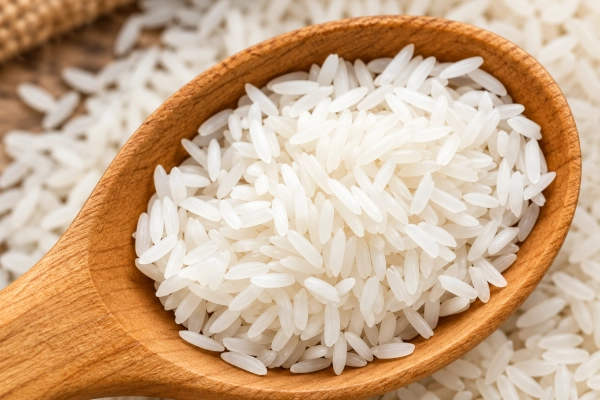
In the forested and undulating landscape of northern Chhattisgarh, farmers have preserved an aromatic rice whose tiny slender grains resemble cumin seeds. Known as Jeeraphool, the rice is closely associated with the Surguja region and has long been valued for its fragrance, delicate texture and distinctive flavour. The name itself reflects the appearance of the grain, with “Jeera” referring to cumin and the fine grains resembling cumin seeds in shape.
Yet appearance is only one part of its identity. Jeeraphool is known for a pronounced natural aroma, softness after cooking and a characteristic taste that has made it a preferred grain for traditional dishes, festive meals and sweets. It belongs to the wider heritage of indigenous aromatic rice varieties cultivated across Chhattisgarh, a state whose remarkable diversity of traditional paddy has earned it a reputation as one of India’s important rice-growing regions. Its connection with local geography, farmer knowledge and traditional cultivation eventually led to formal recognition under India’s Geographical Indications system.
A Rice Named After Cumin
Jeeraphool is immediately distinguishable from many ordinary rice varieties because of its grain shape. The kernels are fine, short and slender, giving them a resemblance to cumin seeds, from which the variety derives its name. Government descriptions of the rice identify it as an indigenous scented variety characterised by strong aroma, softness and distinctive flavour after cooking.
The grain remains delicate and pleasant in texture, while its fragrance becomes particularly noticeable during preparation. This combination of aroma, grain form and eating quality has allowed Jeeraphool to retain a specialised place in local food traditions even as modern high-yielding rice varieties became widespread. Its survival reflects the continuing value placed by local communities on taste, texture and cultural suitability rather than yield alone.
The Rice of Surguja
Jeeraphool is closely associated with the Surguja region of northern Chhattisgarh, where it has been cultivated and preserved by local farming communities for generations. The GI applicant itself is based at Banshajhal village in Batauli block of Surguja district, reflecting the variety’s strong connection with this particular agricultural landscape.
The Surguja region differs considerably from the broad irrigated plains usually associated with large-scale rice production. Much of the area consists of plateaus, valleys, low-lying fields and forested uplands, while seasonal rainfall, local soils and traditional water-management practices have shaped the types of rice cultivated here. Jeeraphool evolved within this environment and became adapted to the particular conditions of the region.
Its identity therefore comes from more than the seed alone. It represents the interaction of variety, soil, climate and farmer practice, which is precisely the kind of relationship that geographical indications are intended to recognise and protect.
Grown in Low-Lying Fields
Traditional Jeeraphool cultivation has been associated particularly with carefully prepared low-lying paddy fields. Official descriptions of the GI indicate that the variety has traditionally been cultivated in bottom-hill and low-lying areas of Surguja, where farmers historically relied on organic manures and traditional cultivation techniques to preserve the grain’s aroma, texture and varietal purity.
Maintaining purity is especially important in aromatic rice because cross-mixing with other varieties can gradually alter grain characteristics and reduce the uniformity that gives a heritage rice its identity. Farmers therefore traditionally exercised considerable care in seed selection, cultivation and post-harvest handling. The continued existence of Jeeraphool owes much to this farmer-led conservation.
Unlike modern commercial varieties developed primarily around yield and uniformity, Jeeraphool survived because communities valued characteristics such as fragrance, taste, texture and suitability for traditional foods. Its cultivation therefore represents a quality-oriented agricultural tradition that persisted alongside the spread of high-yielding varieties.
Aroma That Defines the Variety
The natural fragrance of Jeeraphool is one of its most important characteristics. Even before cooking, the grain possesses a noticeable aroma, and once heated that fragrance becomes stronger and contributes significantly to the sensory character of the finished dish. The rice is also valued because the cooked grains remain soft and delicate while retaining their individuality.
Official descriptions note that Jeeraphool retains a pleasant texture even after cooling, making it useful across several traditional preparations. Its fine grain also behaves differently from many ordinary coarse rice varieties, particularly in dishes where softness and aroma are central to the eating experience.
These qualities help explain why farmers continued to grow it despite competition from varieties capable of producing larger harvests. For heritage rice, value often lies not in maximum yield but in qualities that cannot easily be reproduced by conventional commercial grains.
Jeeraphool and Kheer
Among the dishes most strongly associated with Jeeraphool is kheer. The fine grains soften readily during slow cooking in milk, producing a naturally creamy texture, while the inherent fragrance of the rice complements milk and sugar without requiring the grain to be overwhelmed by additional flavourings.
This makes Jeeraphool particularly suitable for traditional rice puddings and festive sweets. Government descriptions of the variety also identify kheer and pulao among its important culinary uses, reinforcing its role in both everyday and ceremonial cooking.
In pulao, its fragrance allows relatively simple preparations to acquire considerable flavour from the rice itself. This is one of the defining characteristics of premium aromatic varieties, where the grain is not merely a neutral carrier for spices but becomes a central source of flavour.
Basi Bhat and the Food Traditions of Surguja
Jeeraphool also belongs to the everyday cuisine of local communities, where it has traditionally been used in basi bhat, a simple preparation in which cooked rice is kept and consumed later. Such foods developed naturally in farming societies where cooked grains needed to remain useful beyond a single meal and where rice formed the core of daily nutrition.
Official promotional material notes Jeeraphool’s suitability for basi bhat and describes its ability to retain desirable texture after cooling. This gives the grain a practical as well as culinary advantage, because a rice that remains pleasant after cooling can be used in a broader range of household preparations than varieties whose texture deteriorates quickly.
Jeeraphool therefore represents both festive cuisine and everyday food culture. Its survival is tied not only to special occasions but also to ordinary household habits that kept the variety relevant across generations.
Rice Flour and Traditional Foods
The culinary usefulness of Jeeraphool extends beyond whole cooked grains. Its rice flour produces a smooth dough and can be used in several regional preparations, including chausela, anarsa, fara, rice roti and cheela, all of which form part of the broader food traditions of Chhattisgarh.
These foods demonstrate how traditional rice varieties historically served multiple functions within rural households. Rice was boiled, fermented, flattened, ground into flour, turned into breads and snacks, or used in sweets according to season and occasion, allowing a single crop to support a wide range of food practices.
Jeeraphool’s value consequently lies not only in its aroma but also in its versatility. Preserving such a grain therefore helps preserve a wider culinary system built around it.
An Indigenous Variety Preserved by Farmers
Jeeraphool is an indigenous rice rather than a recently introduced commercial cultivar. For generations, farmers selected seeds from desirable plants and retained them for the following season, gradually preserving the grain’s characteristic aroma, appearance and cooking qualities through repeated local selection.
This farmer-led process is central to understanding traditional Indian rice diversity. Historically, farming communities maintained numerous cultivars because each served a different purpose, with some suited to deep-water fields, others to uplands, drought-prone areas, festivals, sweets, flattened rice or particular seasons.
Modern agriculture greatly increased productivity, but the spread of standardised high-yielding varieties also reduced the cultivation of many local landraces. Jeeraphool survived because its culinary and cultural value remained strong enough to justify continued cultivation.
The GI Journey
The effort to formally protect Jeeraphool was led by Jaivik Krishi Utpadak Sahkari Samiti Maryadit, a producer organisation based in Banshajhal village of Batauli block in Surguja district.
The application sought recognition of the rice’s distinctive characteristics and its long association with the agricultural landscape and farming traditions of Chhattisgarh.
Geographical Indication: Jeeraphool
GI Application Number: 611
Category: Agricultural
Class: 30
State: Chhattisgarh
Applicant/Registered Proprietor: Jaivik Krishi Utpadak Sahkari Samiti Maryadit
Applicant Location: Banshajhal Village, Batauli Block, Surguja District
Date of Filing: 15 February 2018
GI Journal: No. 114
Journal Availability Date: 9 November 2018
Certificate Number: 343
Certificate Date: 14 March 2019
Current Registration Valid Until: 14 February 2028
The registration formally recognised Jeeraphool as a geographically identified agricultural product and provided a legal framework for protecting its name and origin. It also gave producers a stronger basis for branding the rice as a distinctive product of the Surguja region.
Why GI Protection Matters
GI protection is particularly important for heritage rice varieties because their commercial value depends heavily upon reputation. If ordinary rice grown elsewhere is marketed under the Jeeraphool name, consumers may struggle to distinguish genuine produce from imitation, and over time inconsistent quality can weaken the reputation built by the original farming community.
A geographical indication helps establish a legal link between the name and the recognised origin. For farmers, this can provide the basis for improved branding, traceability and premium pricing, particularly when supported by producer organisations and reliable quality-control systems.
The GI alone does not automatically guarantee higher income. Producer organisation, quality control, packaging, marketing and consumer awareness remain essential, but legal recognition creates the foundation upon which a specialised market can be built.
A Valuable Crop for Small Farmers
Traditional aromatic rice can offer farmers an alternative to competing purely on production volume. High-yielding varieties generally dominate commodity markets because of their lower unit cost, while heritage varieties such as Jeeraphool have the potential to compete on quality, geographical identity and culinary value.
That difference becomes increasingly significant as consumers seek distinctive regional foods and traceable agricultural products. If organised effectively, GI rice can support farmers through premium retail markets, speciality food channels, institutional procurement and exports.
Jeeraphool is therefore economically relevant not because it can replace mass-market rice but because it can occupy a different segment altogether. Its value lies in the ability to command recognition and premium pricing as a culturally rooted aromatic grain.
Chhattisgarh — A Reservoir of Rice Diversity
Jeeraphool also represents something larger than one premium rice variety. Chhattisgarh possesses extraordinary genetic diversity in paddy, developed over generations by farmers who adapted varieties to different soils, rainfall patterns, elevations, culinary requirements and cultural traditions.
Some varieties were aromatic, while others were suited to drought, deep water, festivals, medicinal traditions or particular forms of processing. This diversity represents a valuable agricultural resource rather than merely a collection of old cultivars.
As climate conditions become more variable, indigenous varieties may also contain genetic traits useful for breeding future crops capable of tolerating heat, water stress, pests or unusual growing environments. Protecting traditional rice therefore has significance beyond food heritage alone.
Jeeraphool and Nagri Dubraj
Chhattisgarh now has more than one nationally recognised aromatic rice tradition. Alongside Jeeraphool stands Nagri Dubraj, another GI-tagged rice from the state, yet the two varieties should not be treated as interchangeable.
Jeeraphool is particularly associated with Surguja and is distinguished by its short, fine, cumin-shaped grain and characteristic fragrance, while Nagri Dubraj belongs to a different geographical and agricultural tradition. Together they demonstrate how different parts of the same state developed their own specialised rice cultures.
Rather than representing a single homogeneous “Chhattisgarhi rice”, they reveal a mosaic of local agricultural identities. This diversity is precisely what gives the state’s rice heritage its richness.
From Local Grain to Premium Market
Jeeraphool now faces the same opportunity confronting many of India’s GI agricultural products. The rice already possesses what modern speciality-food markets value: a recognisable origin, traditional cultivation history, distinctive flavour, unusual grain appearance and a strong regional story.
The challenge is converting those qualities into sustainable economic value. That requires maintaining seed purity, establishing consistent grading, improving processing, creating attractive packaging and ensuring that consumers can reliably identify authentic Jeeraphool.
Producer organisations will remain critical because without organised farmer participation, much of the premium generated by a heritage product can be captured further along the supply chain rather than reaching the cultivators who preserved it. Effective GI use therefore depends as much on local organisation as on legal registration.
Export Potential for a Heritage Rice
India’s non-Basmati rice exports have expanded enormously, but much of that trade remains volume driven. GI varieties such as Jeeraphool offer a different possibility by allowing producers to position rice as a premium origin-specific grain rather than competing principally through price.
APEDA has highlighted Jeeraphool among Chhattisgarh’s GI-tagged agricultural products with potential for wider market development. This creates scope for the rice to reach national and international consumers seeking distinctive, traceable and region-specific food products.
For such an export strategy to succeed, however, authenticity must remain central. Jeeraphool’s value ultimately comes from the qualities that farmers spent generations preserving, and any expansion that compromises those qualities would weaken the very identity that gives the rice its market advantage.
Preserving Seed, Knowledge and Cuisine Together
The story of Jeeraphool illustrates why conserving indigenous rice cannot be separated from conserving the communities and food traditions surrounding it. A seed variety does not survive for centuries simply because it exists in a field; farmers must choose to sow it, families must continue to cook it, local markets must value it and seed must be selected carefully and passed between generations.
Remove those connections and even genetically preserved rice can cease to function as a living agricultural tradition. Jeeraphool remains alive because its fragrance, taste and usefulness continue to matter to the people who grow and consume it.
GI recognition strengthens that relationship by giving the grain a formal identity in the modern marketplace. It protects not merely a name, but the continuity of an agricultural tradition.
Surguja’s Fragrance in a Grain of Rice
Jeeraphool is a small grain carrying a surprisingly large story. Its cumin-like appearance gave it a memorable name, its fragrance made it desirable, its texture made it suitable for kheer, pulao, basi bhat and numerous rice-flour preparations, and the farmers of Surguja ensured that the seed survived through generations of agricultural change.
Today, the GI tag gives that inheritance legal recognition, but the true significance of Jeeraphool lies beyond the certificate. It represents a landscape, a body of farmer knowledge and a food culture that developed together over generations.
When a pot of Jeeraphool begins to release its characteristic fragrance, it carries with it something of the fields and forests of Surguja. It is a reminder that India’s rice heritage is measured not only by how much grain a field can produce, but also by the extraordinary diversity of flavour, knowledge and tradition that a single grain can preserve.
You may also like
-
PM Dhan-Dhaanya Krishi Yojana Completes One Year: Gaya, Nagaur and Umaria Emerge as Best-Performing Districts
-
Political Protests in India: Economic Losses, Export Disruptions and the Impact on Investor Confidence
-
India’s E-Commerce Platforms Record ₹24,000 Crore Festive Sales in Two Days as Meesho Reports 75% Surge in Orders
-
India’s Economic Warfare Challenge: Strategic Autonomy, Energy Security and the Rise of a Global Power
-
India-US Trade Deal Stalemate: Why Washington’s Tariff Pressure Has Failed to Secure an Agreement
