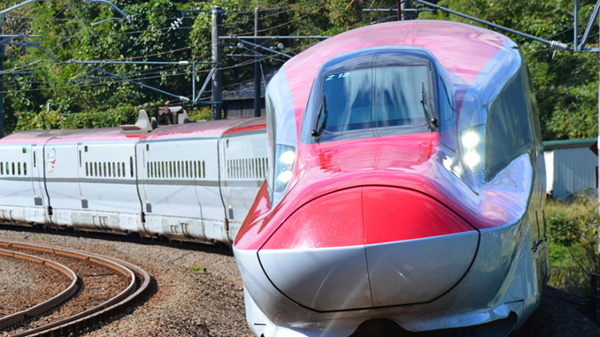
India’s high-speed railway programme has reached two important milestones, with the design of the country’s first indigenously developed bullet train completed and the government announcing a Northern Bullet Train Corridor connecting Delhi with Guwahati through Siliguri. The developments, announced by Union Minister for Railways Ashwini Vaishnaw and reported on 1 November 2026, reflect India’s parallel efforts to develop domestic high-speed train manufacturing capabilities and expand advanced railway connectivity across the country.
During an inspection of Bharat Earth Movers Limited (BEML) facilities in Bengaluru on 1 November, Vaishnaw confirmed that the design of India’s first indigenous high-speed train had been completed and manufacturing activities were progressing. Separately, the Minister announced in Varanasi on 31 October that Prime Minister Narendra Modi had approved the proposed Northern Bullet Train Corridor, extending approximately 1,500 kilometres from Delhi to Guwahati. The corridor is intended to connect major urban and economic centres across northern and eastern India while significantly reducing travel times.
The two developments are closely connected to the government’s wider high-speed rail strategy. While the indigenous train programme seeks to establish domestic capabilities in rolling stock design, propulsion systems and advanced manufacturing, the expansion of railway corridors is intended to create the infrastructure necessary for high-speed passenger operations across different regions. Together, these initiatives represent an effort to develop an integrated Indian high-speed railway ecosystem rather than relying exclusively on imported technologies and equipment.
India’s First Indigenous Bullet Train Design Completed
Railway Minister Ashwini Vaishnaw announced the completion of the indigenous bullet train design following his inspection of models, components and systems being developed at BEML’s Bengaluru facility. The train, designated B28, is being developed through collaboration involving BEML and the Integral Coach Factory (ICF), with the objective of establishing India’s domestic manufacturing capabilities for high-speed rolling stock.
According to the Minister, the programme has achieved an important engineering milestone, with manufacturing progressing across essential train systems, including propulsion equipment, electronics, bogies and structural components. These systems are being developed in accordance with international engineering standards, while testing and validation activities are being undertaken to assess their operational performance, reliability and safety.
The B28 trainsets are being designed for speeds of up to 280 kilometres per hour, representing a significant technological advancement in indigenous railway manufacturing. The programme builds on India’s experience in developing modern trainsets under the Vande Bharat initiative while addressing the substantially greater technical requirements associated with high-speed rail operations.
Vaishnaw indicated that the first prototype could be ready in early 2027, subject to manufacturing progress and technical validation. The prototype will provide an important platform for evaluating the performance of the train’s integrated systems before subsequent stages of testing and certification. Completion of the design therefore represents a major development milestone, but the train has not yet entered operational passenger service.
Advanced Engineering and Safety Testing Underway
The development of an indigenous bullet train requires engineering solutions capable of maintaining structural integrity, passenger safety and operational stability at speeds substantially higher than those of conventional railway services. During his Bengaluru inspection, the Railway Minister highlighted the technical challenges associated with aerodynamic pressure, coach construction and the integration of mechanical and electronic systems.
At high speeds, airflow and changing pressure conditions exert significant forces on railway vehicles, particularly when trains enter tunnels or encounter other high-speed trains. The design and manufacturing processes must therefore ensure that coach structures, welded joints and other critical components can withstand the loads experienced during operation without unacceptable deformation or deterioration.
The Minister explained that specialised testing procedures are being used to evaluate the structural strength of the train’s components. Manufacturing processes, welding techniques and material specifications are being assessed alongside the performance of propulsion systems and bogies to ensure that the completed trainsets meet the required standards.
The BEML-led development programme is also examining the integration of these systems into a complete high-speed trainset. Successful validation will be essential before the indigenous rolling stock can be deployed commercially, making the ongoing engineering and testing phase an important stage in India’s effort to establish domestic high-speed railway technology.
BEML’s Bengaluru Facility Becomes a Centre for High-Speed Rail Manufacturing
The indigenous train programme is supported by specialised manufacturing infrastructure established at BEML’s Bengaluru facilities. In April 2026, the Ministry of Railways inaugurated the Aditya complex at BEML’s Tippasandra campus, creating a dedicated facility for developing high-speed railway coaches and associated manufacturing capabilities.
The complex was established to support the development of B28 high-speed trainsets and strengthen India’s ability to manufacture technologically sophisticated railway equipment domestically. Its facilities are intended to support precision engineering, specialised production processes and the integration of advanced railway systems, including components requiring considerably higher manufacturing tolerances than conventional rolling stock.
The Ministry of Railways has identified indigenous manufacturing as an important element of its long-term high-speed rail strategy. By developing domestic expertise in train design, equipment production and testing, Indian Railways aims to reduce dependence on imported systems while establishing a manufacturing base capable of supporting future railway projects. The programme also creates opportunities for Indian engineering companies, component manufacturers and technical institutions to participate in the development of advanced transportation technologies.
Delhi–Guwahati Bullet Train Corridor to Cover Approximately 1,500 Kilometres
Alongside the progress in indigenous train manufacturing, the government has announced a major expansion of India’s proposed high-speed rail network through the Northern Bullet Train Corridor. Railway Minister Ashwini Vaishnaw disclosed the approval during his visit to Varanasi on 31 October 2026, where he flagged off the Varanasi–New Delhi Vande Bharat Sleeper Express.
The proposed corridor will extend approximately 1,500 kilometres from Delhi to Guwahati through Siliguri, creating a high-speed railway connection across several important cities in northern and eastern India. According to the Minister, the route is expected to serve Delhi, Agra, Kanpur, Lucknow, Ayodhya, Varanasi, Prayagraj, Patna, Siliguri and Guwahati, linking major administrative, industrial, educational and commercial centres.
The project is intended to improve connectivity between the national capital and northeastern India while providing faster passenger transportation across Uttar Pradesh, Bihar, West Bengal and Assam. Its proposed alignment would also integrate several important regional cities into a wider high-speed transportation network, potentially strengthening economic interactions between regions that currently depend on considerably longer railway journeys.
The Minister indicated that the corridor could reduce the journey between Delhi and Siliguri from approximately 20 hours to six hours. He also stated that passenger fares were intended to remain economical and substantially lower than airfares, although detailed ticket pricing and operating arrangements have not yet been announced.
High-Speed Connectivity Expected to Support Regional Economic Development
The proposed Northern Bullet Train Corridor is intended to improve passenger mobility while creating opportunities for economic development across the regions it serves. By substantially reducing travel times between major cities, high-speed rail connectivity could improve access to employment centres, educational institutions, commercial markets and tourism destinations.
The corridor’s passage through Uttar Pradesh and Bihar would connect several important urban centres with the national capital and eastern India. Cities such as Agra, Kanpur, Lucknow, Varanasi, Prayagraj and Patna have established industrial, educational, tourism and commercial activities that could benefit from improved intercity transportation. Faster rail connections could also facilitate business travel, expand access to specialised services and encourage greater interaction between regional economies.
The extension through Siliguri towards Guwahati would be particularly significant for northeastern connectivity. Siliguri occupies an important geographical position as a transportation gateway between mainland India and the northeastern states, while Guwahati serves as a major commercial, educational and transportation centre in Assam. A high-speed connection linking these cities with northern India could improve accessibility and create additional opportunities for trade, tourism and investment.
Vaishnaw also identified small-scale industries, young people, local artisans and middle-income households among the groups expected to benefit from the proposed network. However, the actual economic outcomes will depend on the corridor’s final alignment, station locations, service frequency, passenger demand, ticket affordability and successful completion of the required infrastructure.
Mumbai–Ahmedabad Project Provides the Foundation for Future High-Speed Rail Corridors
India’s wider high-speed railway strategy is being developed around the experience gained from the Mumbai–Ahmedabad High-Speed Rail Corridor, the country’s first dedicated bullet train project. The approximately 508-kilometre corridor is being constructed using Japanese Shinkansen technology, incorporating advanced railway infrastructure, signalling, electrification, train control and safety systems. Designed for a maximum speed of 350 kilometres per hour and an operational speed of 320 kilometres per hour, the project is intended to establish the technical and operational foundation for subsequent high-speed railway development.
According to a Ministry of Railways backgrounder published on 3 July 2026, the government is developing standardised engineering designs and construction methods for future corridors. The proposed approach includes common standards for viaducts, railway tracks, station structures, overhead electrification and signalling systems, while allowing foundations and other location-specific infrastructure to be adapted to local geological conditions.
The Ministry has also highlighted the growing role of Indian companies in manufacturing specialised railway components, track materials, construction equipment and high-speed rail infrastructure. Research institutions, including Indian Institutes of Technology, are contributing to the development of engineering expertise, while experience gained through cooperation with Japanese railway specialists is helping strengthen domestic technical capabilities. This combination of international technology partnerships and indigenous industrial development is expected to support future expansion of India’s high-speed rail network.
Seven High-Speed Rail Corridors Form Part of India’s Expansion Strategy
The government had already identified seven additional high-speed railway corridors in the Union Budget for 2026–27, covering approximately 4,000 kilometres and representing a proposed investment opportunity of around ₹16 lakh crore. These corridors include Delhi–Varanasi, Varanasi–Siliguri, Mumbai–Pune, Pune–Hyderabad, Hyderabad–Bengaluru, Hyderabad–Chennai and Chennai–Bengaluru.
The proposed Northern Bullet Train Corridor connecting Delhi with Guwahati through Siliguri builds upon this wider expansion strategy. The Delhi–Varanasi and Varanasi–Siliguri sections were among the corridors previously identified by the Ministry of Railways, while the latest announcement presents a longer high-speed connection extending towards Assam. This represents an important development in the government’s stated objective of improving transportation links between northern India, eastern India and the Northeast.
The Ministry of Railways has previously clarified that high-speed railway projects are highly capital-intensive and require detailed assessments of technical feasibility, financial viability, land requirements and available funding. Consequently, the identification or announcement of a proposed corridor does not necessarily mean that construction has commenced or that all statutory and financial approvals have been completed.
Indigenous Manufacturing and Network Expansion Mark a New Phase for Indian Railways
The completion of the B28 train design and the announcement of the Delhi–Guwahati corridor represent two complementary aspects of India’s long-term high-speed railway development programme. The indigenous train initiative seeks to establish the engineering and industrial capabilities required to manufacture advanced rolling stock domestically, while the proposed new corridor reflects the government’s ambition to extend high-speed passenger connectivity beyond the country’s existing railway development centres.
The B28 programme is particularly important because rolling stock development involves specialised expertise in propulsion, electronics, vehicle dynamics, structural engineering and safety certification. Building these capabilities within India could support domestic component manufacturing, create opportunities for specialised suppliers and strengthen the technological foundation required for future railway projects.
At the same time, the proposed 1,500-kilometre Northern Bullet Train Corridor has the potential to reshape long-distance passenger connectivity between Delhi, the Gangetic plains, eastern India and Assam. Its economic and transportation benefits will ultimately depend on detailed project planning, infrastructure investment, successful construction and the introduction of reliable high-speed passenger services.
With indigenous train manufacturing progressing in Bengaluru and new high-speed corridors being planned across the country, Indian Railways is pursuing a strategy that combines domestic technological development with the expansion of modern transportation infrastructure. The successful transition from completed designs and announced corridors to certified trains and operational railway services will determine the extent to which these developments transform India’s passenger railway network.
Official Sources and References
1. Akashvani News — 1 November 2026, 9:14 PM
India’s First Swadeshi Bullet Train Design Ready: Ashwini Vaishnaw
Official report covering the Railway Minister’s inspection at BEML Bengaluru, completion of the indigenous B28 design, ongoing manufacturing and the anticipated prototype.
2. Akashvani News — 1 November 2026, 9:27 AM
PM Modi Approves Northern Bullet Train Corridor Linking Delhi to Guwahati via Siliguri
Official report detailing the approximately 1,500-kilometre proposed corridor, major cities, anticipated travel-time reductions and the Railway Minister’s announcement.
3. Press Information Bureau — 3 July 2026
India’s High-Speed Rail Future: Building a Standardised Path for Expansion
Government backgrounder on the Mumbai–Ahmedabad project, indigenous B28 manufacturing, standardisation and seven proposed high-speed corridors.
4. Ministry of Railways — PIB, 25 April 2026
Union Minister Ashwini Vaishnaw Inaugurates Aditya Complex at BEML, Bengaluru
Official announcement concerning the establishment of specialised domestic high-speed railway manufacturing infrastructure.
5. Ministry of Railways — PIB, 22 July 2026
Parliament Question: Railway Infrastructure and High-Speed Rail Development
Government clarification regarding the proposed seven high-speed corridors and the technical and financial requirements for project sanction.
You may also like
-
Millennials Lead AI Shopping Adoption in India at 84%, Ahead of Gen Z: McKinsey
-
India’s GST Collections Surge 22.9% to ₹2.31 Lakh Crore in October 2026
-
India and Belgium Strengthen Diamond Trade Cooperation as Commerce Secretary Engages Industry Leaders in Brussels
-
India’s Coal Imports Decline 5.83% as Domestic Production and Supply Infrastructure Strengthen
-
Gobindabhog Rice of West Bengal: The GI-Tagged Aromatic Heritage of Bengal’s Sacred Culinary Traditions
