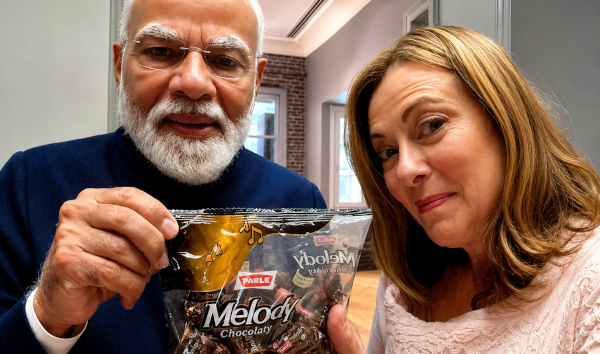
India’s confectionery exports have quietly become a sweet success story in the country’s wider processed-food and consumer-goods export push. According to figures shared by Union Commerce and Industry Minister Piyush Goyal, India’s exports of toffees, caramels and similar confectionery products rose from ₹49.68 crore in FY2013-14 to ₹132 crore in FY2025-26, marking a growth of nearly 166% over twelve years.
The numbers may look small compared with India’s large export sectors such as engineering goods, petroleum products, pharmaceuticals or electronics, but the significance lies elsewhere. Toffees and caramels are not bulk commodities; they are branded, packaged consumer products. Their export growth shows that Indian food companies are finding space in global retail shelves, ethnic stores, supermarkets and diaspora-linked markets where taste, price, packaging and brand familiarity all matter.
The development gained wider public attention after Prime Minister Narendra Modi gifted Melody toffees to Italian Prime Minister Giorgia Meloni during his visit to Rome. The gesture became a light diplomatic moment, but it also highlighted something larger: Indian consumer brands are no longer confined to the domestic market. They are slowly gaining recognition abroad as part of India’s expanding soft-power and food-export profile.
This rise in confectionery exports reflects the broader strengthening of India’s processed-food ecosystem. Over the past decade, Indian manufacturers have improved packaging, shelf life, food-safety standards, flavour consistency and supply-chain reach. Products that were once familiar mainly to Indian households are now being positioned for global consumers, especially in markets with strong Indian communities and growing curiosity about Indian flavours.
The toffee export story also fits into a larger “Made in India” branding shift. Earlier, Indian exports were often associated mainly with raw materials, agricultural commodities or industrial goods. Now, more finished consumer products — from snacks and sweets to ready-to-eat foods and personal-care items — are entering global markets. This matters because branded exports usually carry higher value, stronger customer recall and better long-term business potential than low-margin bulk trade.
For Indian confectionery makers, the opportunity is substantial. Global consumers increasingly look for affordable treats, nostalgic flavours, vegetarian-friendly products, and interesting regional taste profiles. Indian companies can build on this demand by improving international distribution, adapting packaging to foreign regulations, expanding e-commerce exports and positioning Indian sweets and confectionery as everyday global products rather than niche ethnic items.
The growth also has a positive MSME and employment angle. The processed-food sector creates value across several layers — sugar, dairy, flavours, packaging, logistics, retail distribution, branding and export services. When even a modest category like toffee grows internationally, it supports not just large FMCG companies but also smaller suppliers, packaging units, transport networks and export intermediaries.
India’s toffee exports rising 166% since FY14 may sound like a light-hearted headline, but it points to a serious economic trend. The country is learning to export not only raw produce and industrial goods, but also packaged experiences, familiar tastes and consumer brands. In that sense, every Made-in-India toffee sold abroad is more than a sweet; it is a small symbol of India’s growing confidence in the global marketplace.
You may also like
-
Government Guarantees Zero Charges on UPI Payments Up to ₹2,000 Under New Notification
-
India Remains World’s Largest Remittance Recipient as Inflows Reach $151 Billion: IFAD
-
China Welcomes Modi’s Strategic Autonomy Message as India–China Ties Move Toward Wider Engagement
-
India–Canada CEPA Talks Enter Fourth Round as Both Sides Target Deal by End of 2026
-
CarbonCraft Design Turns Industrial Carbon and Construction Waste Into Building Materials
