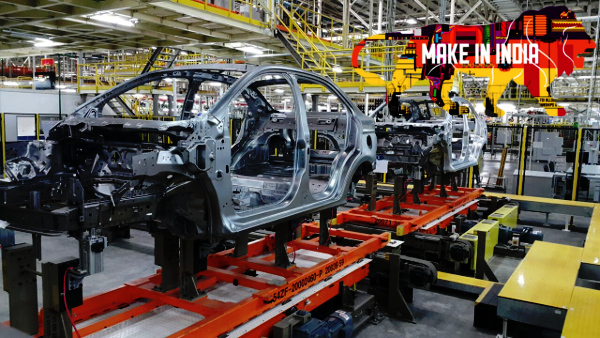
India’s automobile retail market delivered a strong performance in May 2026, with total vehicle registrations rising to 25,31,067 units, a 9.55% year-on-year increase from 23,10,451 units in May 2025. The rise came during a seasonally softer month marked by heatwave conditions, fuel-price pressure and global supply-chain uncertainty. The month also became the strongest May on record for passenger vehicles, three-wheelers, tractors and overall registrations, showing that vehicle demand remains broad-based across India’s consumption economy.
Passenger vehicles emerged as the biggest growth driver. Retail sales in this segment rose 23.25% year-on-year to 4,02,591 units, supported by strong rural buying, new launches, healthy booking pipelines, a revival in small cars and sustained demand for SUVs. Rural passenger vehicle sales grew 30.35%, far ahead of the 18.80% growth recorded in urban markets. This is an important signal because it shows that India’s smaller towns and rural districts are now shaping the country’s car market with increasing force.
Two-wheelers continued to dominate volumes, with 18,44,947 units sold in May, registering 7.54% year-on-year growth. Urban two-wheeler sales grew 11.75%, while rural sales rose 4.74%. Marriage-season purchases, commuter demand and affordability benefits supported this segment. The two-wheeler market remains the clearest indicator of mass mobility demand, especially in semi-urban and rural India where motorcycles and scooters are linked directly with daily livelihood, farm access, small business activity and household mobility.
Tractors also delivered a healthy performance, rising 11.17% year-on-year to 83,092 units. This segment is closely tied to rural liquidity, crop expectations and farm investment sentiment. With the Kharif season approaching, tractor sales show that agricultural households are preparing for field activity and capital spending. Rural tractor growth was stronger than urban tractor growth, underlining the importance of farm economics in the auto market’s next phase.
Commercial vehicles posted a moderate but important increase, with sales rising 5.29% to 83,823 units. Rural commercial vehicle demand grew 8.10%, compared with 2.62% in urban markets. Light commercial vehicles led the segment with 7.66% growth, pointing to stronger last-mile goods movement, rural freight, e-commerce delivery and replacement demand. This matters because commercial vehicles usually reflect the movement of goods, construction materials, farm produce and local trade.
The shift towards cleaner and fuel-efficient mobility gained pace in May. Electric two-wheelers reached 9.25% of two-wheeler registrations, up from 6.11% a year earlier. Electric passenger vehicles reached 6.63%, while CNG passenger vehicles rose to 23.34% of the segment. Overall alternative-fuel share in passenger vehicles crossed 38%, showing that buyers are increasingly looking at lower running costs, fuel security and cleaner mobility options.
The broader electric vehicle trend also became stronger across categories. EV penetration crossed 11% for the first time, making May 2026 the strongest month for EV adoption in overall retail vehicle registrations. This rise is especially important in a month when fuel-price pressure influenced consumer behaviour. Buyers are now looking beyond the upfront purchase price and giving more weight to monthly running cost, charging access, CNG availability and long-term savings.
The May numbers also show a clear seasonal pattern. Compared with April 2026, total vehicle registrations fell 6.75%, from 27,14,382 units to 25,31,067 units. Two-wheelers, passenger vehicles and commercial vehicles all saw month-on-month softness, while tractors rose 5.96% and three-wheelers rose 1.29%. This suggests that the annual demand base remains strong, even as month-to-month sales moved with summer heat, delayed monsoon progress and the pre-sowing calendar.
Inventory is one of the main areas to watch. Passenger vehicle inventory rose to 31–33 days at the end of May from 28–30 days at the end of April. This is higher than the preferred 21-day benchmark for a healthier dealer channel. Strong retail demand is helpful, but disciplined dispatches from manufacturers will remain important during the softer June window so that showrooms are not burdened with excess stock ahead of the next demand cycle.
The near-term outlook is tied closely to the monsoon. Dealer sentiment for June remained positive, with 50.52% expecting growth, 39.90% expecting a flat market and only 9.59% expecting a decline. Confidence improves further for the June-July-August period, with 59.07% expecting growth. The reason is simple: good rainfall supports sowing, sowing supports rural cash flow, and rural cash flow supports two-wheelers, tractors, entry-level cars and small commercial vehicles.
The southwest monsoon reached Kerala on 4 June 2026, three days later than usual, and began advancing into southern and eastern regions. For the auto industry, the spread and quality of rainfall matter more than the starting date alone. A well-distributed monsoon can lift rural confidence, improve crop planning and strengthen purchases after the early sowing phase. A weak or uneven monsoon can slow discretionary buying in farm-linked regions.
India’s macroeconomic background is also supporting the sector. The economy grew 7.8% in the January-March 2026 quarter, with full-year FY26 growth estimated at 7.7%. The Reserve Bank of India kept the repo rate unchanged at 5.25% in June 2026, which supports stability in vehicle finance, EMI planning and dealer working capital. Gross GST collections in May stood above ₹1.94 lakh crore, indicating continued economic activity.
India’s retail auto market is therefore entering the monsoon quarter with momentum, caution and structural change at the same time. Rural India is giving strength to passenger vehicles, tractors and commercial vehicles. Two-wheelers remain the volume backbone. EVs and CNG vehicles are moving from niche preference to practical buying choices. The next test will come from rainfall distribution, fuel prices, financing speed and inventory discipline. If rural incomes improve with Kharif activity and the festive build-up begins on a steady base, the auto sector can carry May’s resilience into a stronger second quarter
You may also like
-
ICAR Scientists Develop Indigenous Protective Gloves for Cotton Farmers, Sign Commercial Manufacturing Agreement
-
BHEL–Coal India Joint Venture Begins Construction of ₹25,016 Crore Indigenous Coal Gasification Project in Odisha
-
PM Modi to Inaugurate RBI’s Tier IV Data Centre and Cybersecurity Training Institute in Bhubaneswar
-
India Creates 11 Crore Digital Farmer IDs Five Months Ahead of Target, Strengthening AgriStack Infrastructure
-
Chak-Hao Black Rice of Manipur and Nagaland: The Aromatic Purple Heritage Grain with GI Recognition
