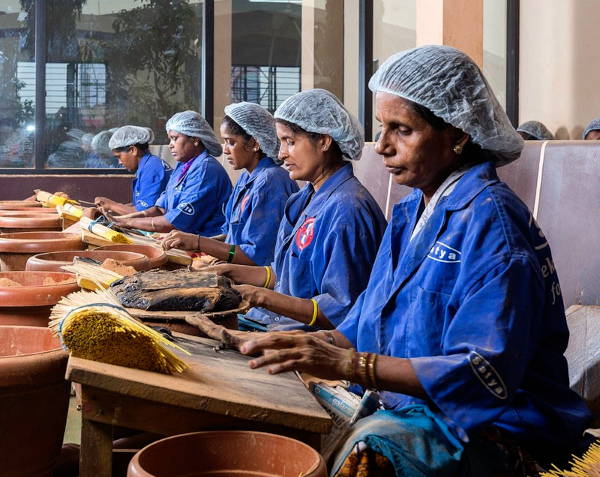
India’s smallest businesses are beginning to find a bigger marketplace through the Ministry of MSME’s TEAM Initiative, a digital commerce support programme designed to help micro and small enterprises move beyond local selling and enter nationwide e-commerce networks. The initiative, implemented by the National Small Industries Corporation under the World Bank-supported RAMP programme, is focused on giving small entrepreneurs practical support to participate in the Open Network for Digital Commerce ecosystem.
For many artisans, home-based businesses, farmer producer organisations, small manufacturers and local retailers, the challenge has never been only production. It has often been market access. A walnut grower in a hill district, a food processor in the North-East or a small household enterprise may have a good product, but limited reach, weak buyer connectivity, poor digital visibility, high platform costs and logistical hurdles can prevent them from scaling. TEAM is aimed at solving precisely this gap by helping such enterprises with onboarding, cataloguing, packaging, logistics and customer management.
The larger idea is simple but powerful: small businesses should not be excluded from digital commerce merely because they lack technical capacity or cannot afford expensive marketplace entry. Through the ONDC-enabled model, the initiative seeks to lower entry barriers and reduce commission-related pressures, making online commerce more accessible to enterprises that have traditionally depended on local markets, middlemen or seasonal footfall.
The impact is already visible in remote regions. Baba Sankari Farmer Producer Organization, based in Village Pachari in Udhampur district of Jammu and Kashmir, has used the initiative to take its premium walnuts to buyers across the country. Before joining the programme, the FPO faced the usual constraints of geographical isolation and limited direct access to customers. Within two months of onboarding under TEAM, it processed more than 100 orders from different parts of India. Digital payment integration also helped reduce settlement delays, giving farmers better visibility, quicker payments and improved income opportunities.
A similar story is emerging from Manipur. Kanglei Foods, based in Bishnupur and led by Koijam Sanahal, has used the programme’s logistics and doorstep shipment support to expand beyond the North-East. By connecting with logistics service providers under the initiative, the enterprise has begun receiving regular monthly orders from multiple states while also serving customers in remote areas within Manipur. This shows how digital commerce, when backed by last-mile logistics, can convert regional products into national brands.
TEAM is especially important because it recognises that digital transformation for small businesses is not just about creating a website or listing a product online. A complete e-commerce journey requires product photography, catalogue building, pricing support, inventory readiness, packaging standards, shipping coordination, payment systems and after-sales communication. For a small entrepreneur handling production, family responsibilities and local sales at the same time, these steps can be intimidating. By offering structured support, the initiative helps turn digital commerce from a distant concept into a workable business channel.
The programme also fits into India’s wider MSME modernisation agenda under RAMP, which was launched to strengthen MSME performance through better market access, digitisation, innovation, greener practices and stronger Centre-State collaboration. RAMP is being implemented over the 2022-23 to 2026-27 period and targets support for 5.5 lakh MSMEs during its five-year implementation cycle.
The TEAM Initiative’s biggest promise lies in its ability to democratise opportunity. India’s small businesses are not short of skill, product diversity or entrepreneurial energy. What they often need is a bridge between production and demand. A walnut producer in Udhampur, a food brand in Manipur, a craft unit in Rajasthan, a coir enterprise in Kerala or a home-based seller in Uttar Pradesh can all benefit when digital commerce becomes less platform-dependent and more open, interoperable and affordable.
If implemented at scale, TEAM can help create a new class of digitally visible rural and semi-urban enterprises. This can improve incomes, reduce dependence on local intermediaries, strengthen women-led and home-based businesses, and bring regional products into national consumer baskets. It also supports the broader vision of an inclusive digital economy, where technology does not remain concentrated in large companies and metropolitan markets but reaches the producer, artisan and small trader at the grassroots.
The success stories from Jammu and Kashmir and Manipur show that the initiative is not merely a policy announcement. It is beginning to function as a practical market-access mechanism for businesses operating from difficult geographies. By combining ONDC’s open digital architecture with institutional handholding from the MSME ecosystem, TEAM can become an important driver of small-business confidence in the digital age.
For India’s MSMEs, the next phase of growth will depend not only on manufacturing more, but on selling smarter, reaching farther and building trusted digital identities. The TEAM Initiative is a step in that direction — helping small enterprises move from local shelves to national screens, and from limited visibility to wider economic participation.
You may also like
-
India Advances Trade Diplomacy at G20 Ministerial in Milwaukee
-
Kokasa Launches to Build Indigenous Mission-Critical Systems for Su-30MKI, MiG-29 and T-72
-
Tata Projects and MDS Aero Partner to Build Advanced Aero-Engine Test Infrastructure in India
-
Flying Wedge Defence Partners With Portugal’s Keydef to Manufacture Kaal Bhairava and YAMA Drones in Europe
-
Armenia Conducts Live-Fire Exercise With Indo-French TRAJAN 155 mm Howitzers Manufactured in India
