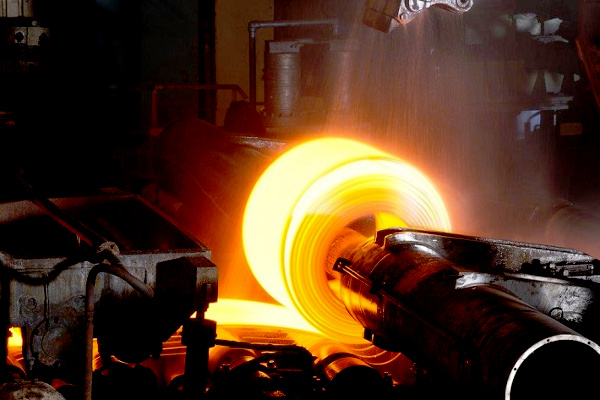
India’s steel sector maintained a positive growth trajectory during the first four months of the 2026–27 financial year, supported by higher domestic consumption, increased production and a strong expansion in both exports and imports.
Provisional data released by the Ministry of Steel show that India produced 56.3 million tonnes of crude steel between April and July 2026, representing an increase of 2.6% over the 54.9 million tonnes produced during the corresponding period of the previous year. Finished-steel production grew at a faster rate of 4%, rising from 52.2 million tonnes to 54.3 million tonnes. Hot-metal production increased by 1.5% to 31.6 million tonnes.
The figures demonstrate continued expansion across the principal segments of India’s steelmaking industry, even as the sector navigates changing international prices, higher trade volumes and growing domestic requirements.
July production remains positive
The steel sector also registered year-on-year growth during July 2026.
Crude-steel production stood at 14.3 million tonnes during the month, compared with 14.1 million tonnes in July 2025, marking growth of 1.2%. Finished-steel production increased by 1.4% to 13.7 million tonnes, while hot-metal production rose by 1.6% to 8.1 million tonnes.
Although the monthly growth rates remained moderate, the expansion across all three production categories indicates that Indian steel plants continued to raise output amid strong domestic demand.
Domestic steel consumption rises strongly
Demand emerged as the strongest component of the sector’s performance.
India consumed approximately 55.9 million tonnes of finished steel between April and July 2026, compared with 51.9 million tonnes during the same period in 2025. This represented growth of 7.8%, considerably higher than the 4% increase recorded in finished-steel production.
Finished-steel consumption during July alone increased by 6.5%, rising from 13.5 million tonnes in July 2025 to 14.4 million tonnes in July 2026.
The rapid growth in consumption reflects continuing demand from infrastructure construction, housing, railways, automobiles, engineering industries, renewable-energy projects, capital goods and manufacturing.
Steel consumption growing faster than production also underlines the scale of India’s emerging requirements. It creates opportunities for domestic steelmakers to raise capacity utilisation, accelerate expansion projects and reduce dependence on selected categories of imported steel.
Large and smaller producers both support output
India’s annual crude-steel capacity covered by the Ministry’s production data stood at approximately 222 million tonnes.
The country’s seven leading producers accounted for 117.4 million tonnes of this annual capacity. Together, they produced 31.2 million tonnes of crude steel, 29.1 million tonnes of finished steel and 29.3 million tonnes of hot metal during April–July 2026.
The remaining producers, with combined annual crude-steel capacity of 104.6 million tonnes, contributed 25.1 million tonnes of crude steel and 25.2 million tonnes of finished steel. Their hot-metal production stood at 2.2 million tonnes.
The figures illustrate the increasingly broad structure of India’s steel industry. Large integrated companies remain central to primary steel and hot-metal production, while secondary and smaller producers make a substantial contribution to crude and finished-steel output.
Public-sector companies accounted for 15.9% of crude-steel production, 13.5% of finished-steel production and 30.5% of hot-metal production during the period.
Steel exports register a sharp recovery
India’s finished-steel exports expanded strongly during the first four months of the financial year.
Export volumes increased by 35%, from approximately 1.70 million tonnes during April–July 2025 to 2.29 million tonnes during April–July 2026. The value of these exports rose by 29.4% to ₹18,105.4 crore.
The export momentum strengthened further in July. India exported 699,300 tonnes of finished steel during the month, an increase of 44.1% over the 485,400 tonnes exported in July 2025. Export value increased by 33.4% to ₹5,630.2 crore.
The rise suggests improving overseas demand for Indian steel products and greater opportunities for domestic producers in international markets.
Imports also increase as India remains a net importer
Imports, however, continued to grow alongside exports.
India imported approximately 2.77 million tonnes of finished steel between April and July 2026, an increase of 36.6% over the 2.02 million tonnes imported during the corresponding period of the previous year. The value of imports rose by 43.1% to ₹28,330.8 crore.
During July, finished-steel imports increased by 9.5% to 702,300 tonnes. Their value rose by 40.5% to ₹8,116.3 crore.
Imports exceeded exports by approximately 474,000 tonnes during the April–July period, leaving India as a net importer of finished steel in quantity terms.
The simultaneous expansion of imports and domestic consumption suggests that part of the increase was driven by India’s rapidly growing market. Nevertheless, the widening import bill also highlights the need to strengthen domestic production of specialised, high-grade and value-added steels that are still sourced from overseas.
Monthly prices ease but remain above last year
Domestic steel prices moderated during July compared with June, providing some relief to steel-consuming industries.
The average price of 10-millimetre TMT bars declined by 5.6% month-on-month to ₹56,698 per tonne. Hot-rolled coil prices fell by 0.4% to ₹69,828 per tonne, while cold-rolled coil prices declined by 0.6% to ₹76,583 per tonne. Galvanised plain-sheet prices decreased marginally by 0.1% to ₹86,415 per tonne.
Despite the monthly correction, all four products remained more expensive than a year earlier. TMT prices were 3.7% higher year-on-year, while hot-rolled coil, cold-rolled coil and galvanised plain-sheet prices were higher by 13.3%, 14.7% and 18.9%, respectively. The prices include GST and are based on averages from Delhi, Mumbai, Chennai and Kolkata.
The data indicate that immediate price pressures softened during July, although the broader annual price environment remained firm.
Raw-material costs decline during July
Several important domestic steelmaking inputs also became cheaper during the month.
The price of NMDC’s Baila iron-ore lumps declined by 4.4% from ₹5,700 per tonne in June to ₹5,450 per tonne in July. Iron-ore fines fell by 3.1% to ₹4,700 per tonne.
MOIL manganese-ore lump prices decreased by 5% to ₹18,529 per tonne, while HMS-II scrap prices declined by 5.1% to ₹38,580 per tonne.
Lower raw-material prices, combined with the monthly moderation in finished-steel prices, could help stabilise production costs. However, the actual impact on steelmakers will depend on factors such as coking-coal prices, energy expenses, logistics costs, product mix and plant efficiency.
SAIL strengthens financial and defence-steel performance
Steel Authority of India Limited reported a strong performance during the first quarter of FY 2026–27. The public-sector steelmaker’s net profit increased by more than 138% year-on-year to ₹1,636 crore, while revenue from operations stood at ₹26,246 crore.
SAIL also received a Licensing Agreement for Transfer of Technology from the Defence Metallurgical Research Laboratory under the Defence Research and Development Organisation.
The agreement will enable SAIL to manufacture DMR-249A, DMR-249B and DMR-249BK grades of specialised steel used in naval ships and submarines. The development strengthens India’s indigenous defence-material ecosystem and can reduce dependence on imported naval-grade steel.
Producing specialised steel domestically is strategically important because modern warships and submarines require materials capable of withstanding demanding operating conditions, including high pressure, structural stress, fatigue and corrosive marine environments.
NMDC records its strongest July production
State-owned iron-ore producer NMDC registered its best-ever July production performance, producing 4.06 million tonnes during July 2026. This represented year-on-year growth of 31%.
NMDC’s cumulative production during FY 2026–27 reached 19.16 million tonnes by the end of July, while cumulative sales stood at 15.15 million tonnes.
The company also held discussions with senior officials in Argentina to explore investment and partnership opportunities in copper and other strategic minerals. Such overseas partnerships could help India diversify access to critical mineral resources required by the steel, electrical, renewable-energy and advanced-manufacturing sectors.
Steel industry advances circular production
The sector also recorded progress in recycling steelmaking waste.
SAIL inaugurated its first micro-pellet plant at the Rourkela Steel Plant in July 2026. The 0.18-million-tonne-per-annum facility will process steelmaking waste and convert it into value-added micro pellets that can be reused as raw material.
The project is expected to reduce waste disposal, improve raw-material recovery and lower the volume of process residues sent to landfills. It also strengthens Rourkela Steel Plant’s raw-material self-sufficiency by bringing recoverable materials back into the production cycle.
Such circular-economy initiatives will become increasingly important as India expands steel capacity while working to reduce the sector’s environmental footprint.
Outlook for India’s steel sector
The April–July 2026 figures present a broadly positive picture for India’s steel industry. Crude and finished-steel production continued to rise, domestic consumption expanded strongly and exports registered substantial growth.
At the same time, the faster increase in imports and India’s net-import position demonstrate that the country must continue expanding both capacity and technological capability. Future competitiveness will depend not only on producing more steel, but also on manufacturing higher-grade products for defence, automobiles, electrical equipment, energy infrastructure and advanced engineering.
The decline in raw-material and finished-steel prices during July may offer near-term support to consuming industries. Strong domestic demand, specialised defence-steel production, improved mineral availability and greater recycling of industrial waste could provide the foundation for sustained long-term growth.
India’s steel-sector expansion is therefore becoming increasingly connected with the country’s wider infrastructure programme, manufacturing ambitions, defence indigenisation and transition towards resource-efficient industrial production.
Reference
Press Information Bureau, Government of India
Ministry of Steel
“April–July 2026: India’s Steel Sector Exhibits Growth Trend”
Published: 6 August 2026
Release ID: 2295350
Data source: Provisional Joint Plant Committee data for July 2026.
You may also like
-
India’s Economic Warfare Challenge: Strategic Autonomy, Energy Security and the Rise of a Global Power
-
India-US Trade Deal Stalemate: Why Washington’s Tariff Pressure Has Failed to Secure an Agreement
-
US Double Standards in Foreign Policy: 16 Recent Cases Involving India, Russia, China and Global Trade
-
India’s Arctic Energy Ambitions: Russian Oil, LNG and a New Sea Route to Indian Ports
-
India and Russia Explore Joint Icebreaker Construction as Maritime Industrial Cooperation Expands
