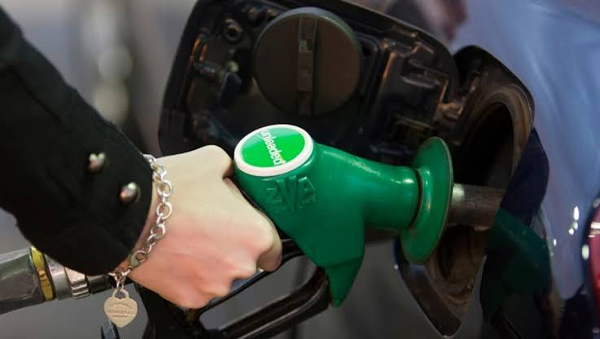
India’s Ministry of Petroleum and Natural Gas has confirmed that all 893 samples of E20 petrol tested across 27 states and Union Territories complied with prescribed fuel-quality specifications. The findings, released on November 7, 2026, demonstrate the effectiveness of quality-monitoring mechanisms employed by public-sector oil marketing companies to maintain the prescribed ethanol-blending levels in petrol distributed across the country.
The nationwide testing exercise covered fuel samples collected from depots and retail outlets operated by Indian Oil Corporation Limited (IOCL), Bharat Petroleum Corporation Limited (BPCL) and Hindustan Petroleum Corporation Limited (HPCL). All samples were found to contain ethanol within the permitted range of 19 to 21 per cent, in accordance with the Bureau of Indian Standards specification IS 17021.
The announcement follows concerns raised by the Karnataka government regarding ethanol concentrations at certain petrol outlets. While state authorities reported ethanol levels exceeding prescribed limits, the central government stated that tests conducted under established technical procedures had found E20 petrol supplied by public-sector companies compliant with national standards.
Nationwide Testing Confirms Compliance with E20 Fuel Standards
The testing exercise was conducted under the Quality Coordination Cell programme involving public-sector oil marketing companies and the Centre for High Technology (CHT), an organisation functioning under the Ministry of Petroleum and Natural Gas.
A total of 893 E20 petrol samples were collected from depots and retail outlets across 27 states and Union Territories. These included 330 samples from Indian Oil Corporation, 280 from Bharat Petroleum Corporation and 283 from Hindustan Petroleum Corporation.
All samples were examined at refinery and oil-company quality-control laboratories using the testing procedure specified under Annex C of IS 17021. The results confirmed that the ethanol content in every sample remained within the prescribed range of 19 to 21 per cent.
The findings provide a substantial set of quality-control observations covering different regions and fuel-distribution networks. They also demonstrate the role of regular sampling and laboratory analysis in maintaining consistency across India’s expanding ethanol-blended petrol supply system.
The Ministry emphasised that ethanol blending is undertaken through controlled processes at refineries and depots, supported by calibrated equipment and established quality-assurance procedures.
All 56 Samples Tested in Karnataka Meet Specifications
The Ministry separately highlighted the results of fuel-quality testing conducted in Karnataka, where concerns had been raised regarding ethanol concentrations at certain retail outlets.
According to the official announcement, all 56 samples collected from different locations in Karnataka met the prescribed E20 specifications. The samples, drawn from facilities associated with all three public-sector oil marketing companies, contained ethanol concentrations ranging from 19 to 20 per cent.
The average ethanol concentration recorded in these samples was 19.30 per cent, placing it within the permissible range specified under IS 17021.
The findings differed from results reported by Karnataka’s Department of Food, Civil Supplies, Consumer Affairs and Legal Metrology, which had claimed that petrol sold at certain retail outlets contained between 26 and 31 per cent ethanol.
The central government stated that the reported higher concentrations required verification through recognised testing procedures. The oil marketing companies also sought access to the original sampling records, laboratory reports and retained samples to facilitate independent examination of the findings.
Government Highlights Importance of Standardised Testing Procedures
The Ministry explained that the testing of petrol sold through retail outlets must comply with established statutory and technical requirements.
The Motor Spirit and High Speed Diesel (Regulation of Supply, Distribution and Prevention of Malpractices) Order, 2005, together with the Marketing Discipline Guidelines 2024, establishes procedures for collecting, retaining, testing and reporting petroleum samples.
Under these procedures, six one-litre samples are collected during an inspection. Two samples are provided to the dealer, two are retained by the oil company or department, and the remaining two are forwarded to an authorised laboratory.
The samples must be appropriately labelled and jointly authenticated, with testing results communicated to the concerned parties within the prescribed timeframe. These safeguards are intended to ensure transparency, traceability and the availability of material for independent verification.
The oil marketing companies stated that the October 2026 sampling exercise undertaken in Karnataka had reportedly been conducted without their representatives. They also indicated that the corresponding retained samples, complete outlet-wise information and detailed laboratory reports had not been made available for verification.
The Ministry therefore called for a transparent testing process involving all concerned authorities and the use of laboratories and procedures prescribed under the applicable regulations.
Scientific Methods Used to Determine Ethanol Content
The government also explained the technical methods prescribed for determining ethanol concentrations in E20 petrol.
Under IS 17021:2018, incorporating Amendment No. 3 issued in August 2025, ethanol content can be measured through recognised analytical methods including Fourier Transform Infrared Spectroscopy, water extraction and gas chromatography.
Fourier Transform Infrared Spectroscopy uses the interaction of infrared radiation with chemical compounds to determine their composition. Water extraction provides another means of measuring ethanol concentrations, while gas chromatography separates and analyses chemical components within a fuel sample.
The Ministry stated that gas chromatography testing under the relevant ASTM standards requires specific sample preparation procedures, including dilution with oxygenate-free petrol and correction using certified reference material.
According to the oil marketing companies, the laboratory certificates cited in Karnataka’s announcement did not identify the complete testing methodology, dilution procedure or reference material used to calculate ethanol concentrations.
The Ministry also highlighted differences between the reported density measurements and those obtained during its own quality-control surveys. These differences formed part of the technical grounds for seeking further verification of the Karnataka findings.
Automated Blending Systems Maintain Fuel Quality
India’s ethanol-blending programme relies on controlled blending systems at refineries and petroleum distribution facilities.
According to the Ministry, ethanol is blended with petrol through calibrated and automated proportioning equipment designed to maintain the required concentration. These systems operate under established fuel-quality standards and are supported by monitoring procedures throughout the distribution network.
The blending process is therefore governed by technical specifications rather than arbitrary manual additions of ethanol at retail outlets.
Quality-assurance arrangements are maintained by the oil marketing companies to monitor ethanol concentrations and other fuel characteristics before blended petrol reaches consumers.
The Ministry stated that the results obtained from the 893 samples provide evidence of compliance within the tested distribution network. The findings also support the continuing role of laboratory verification and quality-control systems in ensuring that fuel supplied to consumers meets prescribed standards.
India’s Ethanol-Blending Programme Strengthens Energy Security
The E20 petrol initiative forms part of India’s broader Ethanol Blended Petrol Programme, which seeks to reduce dependence on imported crude oil while creating additional demand for domestically produced biofuels.
India began its ethanol-blending journey through a pilot programme in 2001 and subsequently expanded the initiative through policy measures, including the National Policy on Biofuels, 2018, and the national roadmap for achieving 20 per cent ethanol blending.
The programme integrates agricultural production, ethanol manufacturing, petroleum refining and fuel distribution into a domestic energy supply chain.
According to the Ministry of Petroleum and Natural Gas, the ethanol-blending programme has generated substantial economic and environmental benefits since ethanol supply year 2014–15.
The government reported foreign-exchange savings exceeding ₹1.97 lakh crore and the substitution of approximately 316 lakh metric tonnes of crude oil. It also estimated that the programme had contributed to a reduction of approximately 952 lakh metric tonnes of carbon dioxide emissions.
Additionally, more than ₹1.66 lakh crore has been transferred to farmers through the ethanol procurement ecosystem, reflecting the programme’s contribution to agricultural value chains and rural economic activity.
These figures demonstrate the wider significance of ethanol blending beyond its immediate application in petrol production.
Ethanol Procurement and Blending Expand During 2025–26
The Ministry also released figures covering ethanol procurement and blending during ethanol supply year 2025–26, which ended on October 31, 2026.
During this period, public-sector oil marketing companies procured approximately 1,089 crore litres of ethanol and blended 1,134 crore litres with petrol. Total petrol sales during the period amounted to approximately 5,673 crore litres.
These figures reflect the scale of the infrastructure and procurement arrangements supporting India’s national ethanol-blending programme.
The initiative involves ethanol producers, agricultural suppliers, fuel refineries, transportation networks and retail distribution facilities. Its continued expansion has created an integrated supply chain linking domestic agricultural resources with the country’s petroleum consumption.
By replacing a portion of conventional petrol with domestically produced ethanol, the programme contributes to India’s efforts to strengthen energy security and diversify its transportation fuel mix.
Government Addresses Vehicle Performance and Mileage Concerns
The Ministry also addressed questions regarding the impact of E20 petrol on vehicle mileage, maintenance requirements and fuel compatibility.
The government referred to technical assessments undertaken by the Inter-Ministerial Committee and studies involving Indian Oil Corporation, the Automotive Research Association of India and the Society of Indian Automobile Manufacturers.
According to the Ministry’s earlier clarification issued in August 2025, vehicles calibrated for E20 fuel may experience a mileage reduction of approximately 1 to 2 per cent. Certain other vehicles may experience reductions ranging from 3 to 6 per cent, depending on vehicle design, category and engine calibration.
The government stated that vehicle-performance assessments should account for differences in engineering specifications, fuel compatibility and operating conditions.
The Ministry also questioned estimates suggesting nationwide consumer losses of ₹62,000 crore from reduced mileage and ₹39,000 crore in vehicle repairs. It stated that such calculations required supporting evidence from actual vehicle-performance data, technical studies and documented repair costs.
The government’s position emphasises the importance of evaluating the effects of ethanol-blended petrol through established scientific methods and vehicle-specific technical evidence.
Oil Marketing Companies Seek Joint Testing with Karnataka Authorities
Following the differences between the testing results, Indian Oil, Bharat Petroleum and Hindustan Petroleum have requested Karnataka authorities to provide the complete documentation associated with the reported high ethanol concentrations.
The requested information includes sampling records, outlet-wise laboratory reports, details of the analytical methods employed and access to retained samples.
The companies have also proposed joint sampling and independent testing at authorised laboratories using prescribed methods. Such testing would involve representatives of both the state government and the oil marketing companies.
The proposed exercise is intended to establish a common technical basis for examining the reported discrepancies and ensuring that any confirmed deviations are addressed under the applicable regulations.
The Ministry reiterated its commitment to maintaining petroleum product quality, regulatory compliance and consumer protection through established monitoring arrangements.
Strengthening Confidence in India’s E20 Fuel Programme
The confirmation that all 893 tested E20 petrol samples complied with prescribed ethanol-content standards represents an important quality-monitoring result for India’s ethanol-blending programme.
The findings demonstrate compliance across the samples collected from public-sector oil marketing company depots and retail outlets in 27 states and Union Territories. They also highlight the importance of standardised laboratory procedures and transparent verification in maintaining confidence in fuel-quality monitoring.
As India continues to expand the use of domestically produced biofuels, the integration of automated blending systems, regular quality testing and established regulatory standards remains central to the programme.
The November 7 announcement reinforces the government’s emphasis on maintaining consistent ethanol concentrations while advancing the broader objectives of energy security, agricultural development and reduced dependence on imported petroleum.
You may also like
-
IIT Kanpur-Incubated ScaNxt Secures Investment to Expand AI-Powered Soil Testing and Precision Agriculture
-
Indore Agritech Startup Pragyanik AI Develops Autonomous Agricultural Robot for Precision Weeding and Spraying
-
Kashmir Saffron of Jammu & Kashmir: The GI-Tagged Heritage of India’s Precious Golden Spice
-
ONGC Reports Two New Hydrocarbon Discoveries in Assam and Gujarat, Strengthening India
-
Guyana Offers to Supply Up to 20% of India’s Crude Oil Needs, Eyes Deeper Energy Partnership
