GI Produce of India | Telangana | Spices and Agricultural Heritage
Warangal Chapata Chilli, one of Telangana’s distinctive traditional agricultural products, represents the farming heritage, indigenous crop diversity, and spice-growing traditions of the historic Warangal region. Recognised for its brilliant red colour, unusual flattened appearance, thick outer covering, and comparatively mild pungency, this chilli has established a distinctive identity in India’s agricultural and food-processing sectors.
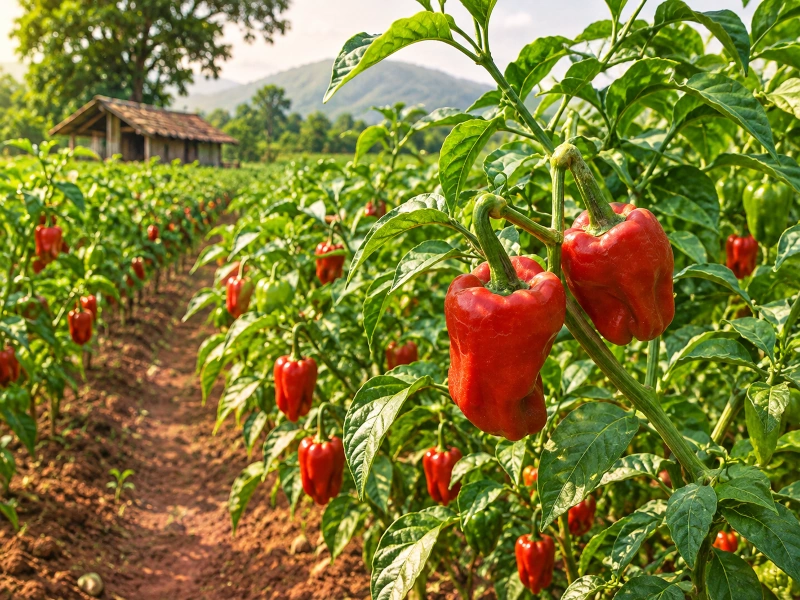
Popularly known as Tomato Mirchi because of its broad, flattened, tomato-like appearance, Warangal Chapata Chilli differs considerably from the long and slender varieties commonly associated with commercial chilli cultivation. Its distinctive physical characteristics, colouring properties, and traditional agricultural history have made it an important regional crop, particularly for farmers producing chillies for pickling and natural colour extraction.
Traditionally cultivated across the Warangal agricultural belt, the chilli has been preserved through generations of farmer selection and seed exchange. Its cultivation is associated with the districts of Warangal, Hanamkonda, Mulugu, Jayashankar Bhupalpally, and adjoining areas of Telangana, where agricultural communities have maintained locally adapted varieties suited to regional growing conditions.
Recognising its geographical identity and distinctive characteristics, the Government of India granted Warangal Chapata Chilli Geographical Indication recognition on 28 March 2025, under Application No. 984. The registration marked an important milestone in the formal protection of Telangana’s traditional horticultural products and acknowledged the contribution of local farmers to preserving the variety.
Historical Origins and the Agricultural Heritage of Warangal
The history of Warangal Chapata Chilli is closely connected with the development of chilli cultivation in the agricultural landscapes of Telangana. Chillies originated in the Americas and entered the Indian subcontinent through maritime trading networks during the early modern period. Over subsequent centuries, the crop spread across different regions of India, where farmers developed varieties adapted to local climatic conditions, soil characteristics, and culinary requirements.
The Warangal region possesses a long agricultural history shaped by the development of irrigation systems, village farming communities, and regional trade. During the Kakatiya period, Warangal emerged as an important political and economic centre, while the surrounding countryside developed extensive agricultural traditions. Although chilli cultivation was introduced to India much later, the established agricultural landscape provided the foundation for the development of distinctive regional crops.
Warangal Chapata Chilli is associated with a history of cultivation extending back several generations. Accounts connected with its geographical indication documentation trace the cultivation of this distinctive chilli to villages in the wider Warangal region, including agricultural settlements associated with Nadikuda and Nagaram. Farmers preserved and distributed planting material through traditional seed-sharing networks, allowing the variety to spread gradually to neighbouring cultivation areas.
The chilli’s characteristic flattened shape, bright-red colour, and comparatively low pungency made it particularly valuable for traditional food preparations. Farmers continued cultivating the variety because of its suitability for pickling and its commercial appeal to traders seeking chillies with strong colouring properties.
Over time, Warangal Chapata Chilli developed a distinct reputation within Telangana’s agricultural markets. Its continued cultivation demonstrates the importance of farmer-led selection and the preservation of locally adapted crop varieties.
Geographical Origin and the Agricultural Landscape of Telangana
Warangal Chapata Chilli is principally associated with the agricultural belt of eastern Telangana, particularly the districts of Warangal, Hanamkonda, Mulugu, and Jayashankar Bhupalpally. Sri Konda Laxman Telangana Horticultural University also identifies Khammam among the districts where the crop is cultivated.
The region experiences a predominantly tropical climate, with hot summers, seasonal monsoon rainfall, and relatively dry conditions during important stages of crop maturity and harvesting. These climatic characteristics influence planting schedules, irrigation requirements, fruit development, and post-harvest processing.
The agricultural landscape includes extensive areas of red and black soils, with differences in soil texture, fertility, drainage, and moisture-retention capacity. These soils support a variety of crops, including rice, cotton, pulses, turmeric, and chillies.
The characteristics of Warangal Chapata Chilli are associated with the interaction between locally adapted planting material, agricultural soils, climatic conditions, and generations of crop-management practices. Farmers traditionally select suitable growing areas and manage irrigation, plant nutrition, and harvesting according to local agricultural experience.
The Warangal region also possesses an established agricultural marketing network, providing farmers with access to traders, processing establishments, and commercial buyers. This infrastructure has contributed to the development of chilli cultivation as an important component of the regional agricultural economy.
The geographical identity of Warangal Chapata Chilli therefore reflects both the environmental conditions of Telangana’s eastern agricultural belt and the traditional knowledge preserved by its farming communities.
What Makes Warangal Chapata Chilli Unique?
The most distinctive characteristic of Warangal Chapata Chilli is its unusual fruit shape. Unlike conventional elongated chilli varieties, the fruits are relatively small, broad, flattened, and thick-walled, giving them an appearance resembling a small tomato. This characteristic explains the popular local name Tomato Mirchi.
The chilli belongs to the species Capsicum annuum, which includes numerous cultivated varieties differing in fruit shape, size, colour, and pungency. Warangal Chapata represents a locally adapted form distinguished by its characteristic morphology and strong colouring properties.
According to Sri Konda Laxman Telangana Horticultural University’s official horticultural documentation, the fruits possess a thick outer covering and a characteristic depression or cavity near the point where the stalk attaches to the fruit. This feature contributes to the chilli’s distinctive physical appearance.
Another important characteristic is its intense red colour. The fruits develop an attractive red pigmentation upon maturity, making them particularly suitable for culinary preparations and industrial applications requiring natural colouring ingredients.
Warangal Chapata Chilli is also distinguished by its comparatively mild pungency. The documented heat intensity ranges from approximately 3,100 to 6,500 Scoville Heat Units, considerably below that of several commercial Indian chilli varieties cultivated primarily for intense heat.
Its combination of low pungency and strong colouring characteristics gives the variety a particular advantage in food processing. Manufacturers can use the chilli to obtain desirable red colouring without introducing excessive heat into the finished product.
These characteristics have established Warangal Chapata Chilli as a distinctive agricultural commodity with applications extending beyond conventional household cooking.
Traditional Varieties of Warangal Chapata Chilli
Warangal Chapata Chilli is traditionally associated with three locally recognised fruit types known as Single Patti, Double Patti, and Odalu. These types reflect the diversity of locally cultivated material and the agricultural knowledge developed by farmers over generations.
Single Patti and Double Patti are commonly associated with the flattened, broad-fruited characteristics that distinguish Chapata Chilli from conventional elongated chilli varieties. Differences in fruit structure and appearance contribute to the local classification of the crop and influence its commercial identification.
Odalu represents another recognised type within the traditional Chapata chilli-growing system. The continued cultivation of these locally identified forms demonstrates the importance of maintaining crop diversity through seed selection and farmer knowledge.
The preservation of different traditional types is particularly valuable because locally adapted planting material may possess characteristics suited to specific growing conditions and commercial requirements. Differences in fruit appearance, colour intensity, and crop performance can influence the preferences of farmers, traders, and processors.
Agricultural research institutions can support the conservation of these traditional forms through systematic characterisation, suitable seed-production practices, and documentation of their distinctive characteristics.
Maintaining this diversity is important to the long-term preservation of Warangal Chapata Chilli’s geographical identity.
Capsaicin, Colour, and the Scientific Characteristics of Warangal Chapata Chilli
The commercial importance of Warangal Chapata Chilli is closely connected with the chemical compounds responsible for its pungency and colouring characteristics.
Capsaicinoids are naturally occurring substances responsible for the pungency of chillies, with capsaicin and dihydrocapsaicin among the principal compounds. These substances interact with sensory receptors in the human body, producing the characteristic sensation of heat.
Warangal Chapata Chilli possesses comparatively low capsaicinoid-related pungency, with documented measurements ranging from 3,100 to 6,500 Scoville Heat Units. Actual values may vary according to the cultivated type, growing conditions, fruit maturity, and processing methods.
The chilli is particularly valued for its strong red pigmentation. Sri Konda Laxman Telangana Horticultural University records colour values of approximately 130–150 ASTA, indicating substantial extractable colouring characteristics.
ASTA colour measurements are widely used in the spice industry to evaluate the extractable red colour of chilli products. Higher values generally indicate greater colouring strength under the prescribed testing conditions.
The red pigmentation of mature chilli fruits is associated with carotenoid compounds, particularly capsanthin and capsorubin. These naturally occurring pigments contribute to the appearance of red chillies and the colour of extracts obtained during processing.
Warangal Chapata Chilli has also been reported to possess oleoresin content of approximately 6.37–6.75%, contributing to its commercial suitability for extraction and processing.
The combination of strong colour and relatively low pungency distinguishes Warangal Chapata from chilli varieties primarily cultivated for capsaicin extraction.
Traditional Cultivation and Farming Practices
Warangal Chapata Chilli cultivation is closely associated with the agricultural knowledge developed by farming communities across Telangana’s eastern agricultural belt. Farmers have traditionally preserved the variety through seed selection and continued cultivation under conditions suited to the region’s seasonal climate.
Cultivation generally begins with the preparation of agricultural land and the raising of healthy seedlings in nursery beds. Once the seedlings reach an appropriate stage of development, they are transplanted into prepared fields, where suitable spacing supports plant growth and facilitates irrigation and crop management.
The crop requires adequate sunlight, balanced nutrition, and appropriate soil moisture throughout its growth period. Irrigation management is particularly important during flowering and fruit development, while excessive waterlogging can adversely affect plant health.
Farmers traditionally rely on their understanding of seasonal rainfall, soil conditions, and crop behaviour when managing cultivation. Regular field observation helps identify potential problems involving pests, diseases, nutrient deficiencies, or moisture stress.
Chilli crops are vulnerable to several pests and diseases, including thrips, mites, fruit borers, viral infections, and fungal diseases. Effective crop management requires suitable planting material, field sanitation, appropriate irrigation, and scientifically recommended pest-management practices.
Modern agricultural extension services increasingly encourage soil testing, balanced fertilisation, efficient irrigation systems, and integrated pest management. These practices can improve productivity while helping farmers maintain the desirable characteristics of traditional Chapata Chilli.
Harvesting, Drying, and Traditional Processing
Harvesting plays an important role in determining the commercial quality of Warangal Chapata Chilli because colour development and fruit maturity directly influence its market value.
Farmers generally harvest the fruits when they reach the appropriate stage of maturity. Fully mature red fruits are particularly desirable for drying and colour extraction, while fresh fruits are also used in traditional pickle production.
Harvesting may take place in several rounds because fruits do not always mature simultaneously. Careful handling is important to prevent physical damage, especially when the chillies are intended for fresh marketing or processing.
The thick outer covering of Warangal Chapata Chilli contributes to its distinctive texture and suitability for pickling. However, the same characteristic requires careful attention during drying because moisture must be reduced adequately to prevent spoilage.
Traditional drying methods involve exposing harvested fruits to sunlight under suitable conditions. Modern processing increasingly incorporates improved drying surfaces, controlled moisture management, and hygienic handling.
The quality of dried chillies depends on maintaining their red colour while preventing fungal contamination, deterioration, and excessive moisture retention.
Once adequately dried, the chillies can be sorted, graded, packed, and transported to processing facilities or agricultural markets.
Improved drying and storage systems can help preserve the colouring characteristics that make Warangal Chapata Chilli commercially valuable.
Culinary Importance in Telangana’s Food Traditions
Warangal Chapata Chilli occupies a distinctive place in Telangana’s culinary traditions because of its attractive red colour, relatively mild heat, and thick-walled fruit structure.
The chilli is particularly suitable for traditional pickles, where the texture and size of the fruit contribute to its culinary appeal. Its comparatively low pungency allows preparations to develop a characteristic chilli flavour without the extreme heat associated with highly pungent varieties.
Pickling is an important method of food preservation across Telangana and neighbouring regions. Traditional preparations commonly use salt, oil, tamarind, garlic, mustard, fenugreek, and other ingredients to preserve vegetables and chillies while developing distinctive flavours.
Warangal Chapata Chilli can also be used in spice powders and masala preparations requiring pronounced red colour. Its colouring properties make it useful for balancing mixtures containing more pungent chilli varieties.
The chilli’s appearance and flavour distinguish it from conventional elongated red chillies commonly used in household cooking.
Its culinary importance therefore reflects the relationship between traditional agricultural varieties and regional food practices, particularly those involving pickles and preserved agricultural products.
Natural Colour and the Industrial Importance of Warangal Chapata Chilli
One of the most commercially significant characteristics of Warangal Chapata Chilli is its suitability for producing natural red colouring extracts.
The chilli’s high ASTA colour values indicate substantial colouring potential, making it an attractive raw material for spice processors and oleoresin manufacturers.
Oleoresins are concentrated extracts obtained from agricultural products through appropriate industrial processing. Chilli oleoresins contain colouring, flavouring, and other naturally occurring compounds that can be used in food manufacturing.
Warangal Chapata Chilli is particularly suitable for paprika-type colour extraction because of its combination of strong pigmentation and relatively low pungency.
Food manufacturers can use suitably processed natural colouring ingredients in applications where consistent red colour is required. Such extracts must comply with applicable food-safety and processing standards.
The chilli also offers opportunities for manufacturing dried chilli products, spice powders, pickles, pastes, and other value-added foods.
The development of modern processing infrastructure can help farmers and agricultural enterprises participate in commercial activities beyond the sale of whole chillies.
These opportunities make Warangal Chapata Chilli relevant to Telangana’s wider efforts to strengthen horticultural processing and agricultural value addition.
Geographical Indication Recognition and the Protection of Warangal Chapata Chilli
Warangal Chapata Chilli received formal recognition under India’s Geographical Indications framework to protect its distinctive agricultural characteristics and geographical identity.
The application was submitted by Thimmampet Chilly Farmer Producer Company Limited, located in Thimmampet village, Duggondi mandal, Warangal district, Telangana.
The application was filed on 6 September 2022 under Class 30 and assigned Application No. 984.
The registration initiative received technical and institutional support from Janna Reddy Venkat Reddy Horticultural Research Station at Malyal in Mahabubabad district and Sri Konda Laxman Telangana Horticultural University.
The application underwent formal scrutiny, examination, submission of supporting documentation, and publication in the Geographical Indications Journal.
The application was published in Geographical Indications Journal No. 197 on 27 November 2024, marking an important stage in the registration process.
The Geographical Indications Registry subsequently issued Certificate No. 665 on 28 March 2025, formally recognising Warangal Chapata Chilli as a registered geographical indication.
The registration acknowledges the relationship between the chilli’s distinctive characteristics, traditional cultivation practices, and geographical origin.
The current GI registration remains valid until 5 September 2032, subject to renewal under the applicable provisions of India’s geographical indications legislation.
GI Tag Journey of Warangal Chapata Chilli
The Geographical Indication recognition of Warangal Chapata Chilli reflects the formal protection of a traditional agricultural variety preserved by farming communities in eastern Telangana. Its journey combines generations of local chilli cultivation, the development of farmer-led seed-selection practices, scientific documentation of its distinctive characteristics, and modern efforts to protect regional agricultural products.
The registration process began in September 2022 when Thimmampet Chilly Farmer Producer Company Limited sought geographical indication protection for the chilli. Following formal examination, submission of supporting documentation, and publication in the Geographical Indications Journal, the product received its registration certificate in March 2025.
| Period / Date | Milestone |
|---|---|
| Historical period | Chilli cultivation became established in the Telangana region following the introduction of chillies into the Indian subcontinent. Farming communities gradually developed locally adapted varieties suited to regional agricultural conditions. |
| Twentieth century | Traditional accounts trace Chapata Chilli cultivation to villages in the wider Warangal region, including Nadikuda and Nagaram, where farmers preserved its distinctive characteristics through seed selection. |
| Generations of traditional cultivation | Farmers maintained locally recognised Chapata Chilli types, including Single Patti, Double Patti, and Odalu, through traditional cultivation and seed-sharing practices. |
| Modern agricultural development | Warangal Chapata Chilli developed a commercial reputation for its unusual tomato-like appearance, bright-red colour, low pungency, and suitability for pickling and natural colour extraction. |
| 6 September 2022 | Thimmampet Chilly Farmer Producer Company Limited filed GI Application No. 984 for Warangal Chapata Chilli under Class 30. |
| 16 September 2022 | The Geographical Indications Registry issued its formality check report concerning the application. |
| 31 March 2023 | The applicant submitted its response to the formality check report, together with authorisation documentation relating to the registration proceedings. |
| 30 October 2024 | The Geographical Indications Registry issued its examination report concerning the Warangal Chapata Chilli application. |
| 26 November 2024 | The applicant submitted its response to the examination report, completing another important stage in the registration process. |
| 27 November 2024 | The application appeared in Geographical Indications Journal No. 197, formally publishing the proposed registration of Warangal Chapata Chilli. |
| 28 March 2025 | Warangal Chapata Chilli received GI Certificate No. 665, formally recognising its geographical identity and association with Telangana. |
| April 2025 | The registration received wider public recognition as Telangana’s first GI-protected horticultural product, highlighting the contribution of local farmers and horticultural research institutions. |
| 2025 | Sri Konda Laxman Telangana Horticultural University documented Warangal Chapata Chilli’s distinctive agricultural and commercial characteristics in its Perspective Plan for Horticulture in Telangana–2035. |
| 5 September 2032 | The current GI registration remains valid until this date, subject to further renewal. |
The registration timeline demonstrates the important role played by Thimmampet Chilly Farmer Producer Company Limited in obtaining legal recognition for Warangal Chapata Chilli. The involvement of Janna Reddy Venkat Reddy Horticultural Research Station and Sri Konda Laxman Telangana Horticultural University highlights the importance of cooperation between farmer organisations and scientific institutions in protecting traditional agricultural products.
The certificate issued in March 2025 represents an important milestone in Telangana’s horticultural development. The registration provides a legal foundation for protecting the geographical identity of Warangal Chapata Chilli while creating opportunities for greater recognition of its distinctive agricultural and commercial characteristics.
GI Details at a Glance
| Particular | Details |
|---|---|
| Geographical Indication | Warangal Chapata Chilli |
| State | Telangana |
| Traditional Region | Warangal agricultural belt |
| Principal Cultivation Districts | Warangal, Hanamkonda, Mulugu, Jayashankar Bhupalpally, and Khammam |
| Other Names | Tomato Mirchi, Tomato Chilli, Desi Mirchi |
| Botanical Name | Capsicum annuum L. |
| Botanical Family | Solanaceae |
| Product Category | Agricultural |
| GI Class | 30 |
| Application Number | 984 |
| Date of Filing | 6 September 2022 |
| Registered Applicant | Thimmampet Chilly Farmer Producer Company Limited |
| Applicant’s Address | H. No. 3-6, Thimmampet Village, Duggondi Mandal, Warangal District, Telangana – 506331 |
| Supporting Institutions | Janna Reddy Venkat Reddy Horticultural Research Station and Sri Konda Laxman Telangana Horticultural University |
| GI Journal | No. 197 |
| GI Journal Availability Date | 27 November 2024 |
| Certificate Number | 665 |
| GI Certificate Date | 28 March 2025 |
| Registered Geographical Area | Telangana, with traditional production centred on the Warangal region |
| Principal Traditional Types | Single Patti, Double Patti, and Odalu |
| Fruit Shape | Small, broad, flattened, and tomato-like |
| Fruit Surface | Comparatively thick outer covering, with a characteristic cavity near the pedicel |
| Fruit Colour | Bright red at maturity |
| Pungency | Approximately 3,100–6,500 Scoville Heat Units |
| ASTA Colour Value | Approximately 130–150 |
| Reported Oleoresin Content | Approximately 6.37–6.75% |
| Characteristic Flavour | Relatively mild pungency with characteristic chilli flavour |
| Traditional Culinary Applications | Pickles, chilli preparations, spice powders, and regional masalas |
| Commercial Applications | Natural colouring extracts, paprika-type oleoresins, dried chillies, chilli powders, and pickles |
| Current GI Status | Registered |
| Latest Renewal Record | No renewal recorded; original registration remains within its first ten-year term |
| Registration Valid Until | 5 September 2032 |
The registration particulars are based on the official Geographical Indications Registry, Intellectual Property India. The botanical identification, growing regions, traditional types, pungency, and colour characteristics are supported by Sri Konda Laxman Telangana Horticultural University’s technical documentation and the product’s geographical indication records.
Protecting Authenticity and Supporting Farming Communities
The Geographical Indication designation establishes a legally recognised connection between Warangal Chapata Chilli and its traditional production region. However, maintaining the product’s commercial reputation requires continued attention to authenticity, traceability, and appropriate quality standards.
The distinctive characteristics of Warangal Chapata Chilli, particularly its flattened fruit shape, thick outer covering, bright-red colour, and relatively mild pungency, provide important features for differentiating it from other chilli varieties.
The GI framework allows eligible producers to seek authorised-user registration under the applicable legal provisions. Such registration supports legitimate commercial use of the protected geographical indication and helps distinguish authentic products from those originating outside the registered production area.
Thimmampet Chilly Farmer Producer Company Limited can play an important role in strengthening farmer participation, collective marketing, and the development of quality-oriented production practices.
Cooperation with horticultural research institutions can also help improve cultivation standards, seed conservation, and post-harvest management.
Improved documentation of geographical origin, appropriate grading, and better packaging can strengthen buyer confidence and support the development of specialised commercial markets.
The registration therefore provides an opportunity to connect the preservation of traditional agricultural knowledge with modern systems of product identification and market development.
Economic Importance and Rural Livelihoods
Warangal Chapata Chilli cultivation contributes to the agricultural economy of eastern Telangana by providing farmers with a distinctive crop valued for its colouring characteristics and suitability for processing.
At the time of its GI recognition in April 2025, contemporary reporting identified approximately 6,700 acres under cultivation, with annual production estimated at around 10,951 metric tonnes and approximately 20,574 farmers associated with the crop.
These figures indicate the scale of cultivation reported during the registration period and should not be interpreted as independently verified production totals for subsequent agricultural seasons.
The chilli’s commercial importance extends beyond the sale of fresh or dried fruits. Its strong colouring properties create demand from processors manufacturing natural colouring extracts, chilli powders, pickles, and specialised food ingredients.
Agricultural marketing activities also support employment in harvesting, sorting, grading, transportation, storage, and processing.
However, chilli farmers remain vulnerable to variations in rainfall, crop productivity, pest incidence, production costs, and market prices. Excessive market arrivals or reductions in processing demand can affect the prices received by growers.
Scientific storage facilities, improved market information, collective marketing, and stronger connections with processing industries can help agricultural producers manage these challenges.
The GI designation offers an opportunity to develop a differentiated commercial identity based on the chilli’s distinctive characteristics and geographical origin.
Agricultural Research and Quality Improvement
Agricultural research plays an important role in preserving Warangal Chapata Chilli while improving its productivity, quality, and commercial competitiveness.
Sri Konda Laxman Telangana Horticultural University and its associated research institutions have contributed to documenting the variety’s distinctive characteristics and supporting its geographical indication recognition.
Research into traditional Chapata Chilli types can help identify differences in fruit shape, colour intensity, pungency, productivity, and adaptation to local growing conditions.
Improved seed selection and nursery management can contribute to healthier crops and more consistent production. Research into soil nutrition, irrigation efficiency, and pest management can also support farmers seeking to improve yields.
Post-harvest research is particularly important because the thick-walled fruits require suitable drying and storage practices to maintain quality.
The university’s horticultural development planning identifies fruit rotting as a concern in Chapata Chilli cultivation and highlights the need for improved fertilisation practices.
These priorities demonstrate the importance of combining traditional farmer knowledge with scientific crop-management techniques.
Research into processing technologies, natural colour extraction, and product standardisation can further strengthen the commercial value of Warangal Chapata Chilli.
Preserving Traditional Knowledge and Agricultural Biodiversity
The agricultural heritage of Warangal Chapata Chilli is closely associated with generations of farmers who preserved the variety through local seed selection and continued cultivation.
Traditional agricultural knowledge has contributed to maintaining its distinctive fruit shape, colouring characteristics, and adaptation to the growing conditions of eastern Telangana.
The preservation of locally recognised forms, including Single Patti, Double Patti, and Odalu, reflects the importance of maintaining diversity within traditional agricultural systems.
As commercial production expands, preserving suitable planting material becomes increasingly important. The introduction of uniform commercial varieties can create challenges for traditional crop conservation if locally adapted seed resources are neglected.
Farmer-producer organisations, agricultural universities, and horticultural extension programmes can help document traditional practices while encouraging scientifically appropriate improvements.
The geographical indication provides a formal mechanism for recognising the relationship between the product, its geographical origin, and the agricultural knowledge of farming communities.
Protecting this heritage contributes to the wider conservation of India’s regional agricultural biodiversity.
Future Prospects for Warangal Chapata Chilli
The future of Warangal Chapata Chilli lies in combining its traditional agricultural reputation with improved cultivation, scientific processing, and greater market recognition.
Its strong colouring properties and relatively low pungency offer opportunities for natural food-colouring ingredients, paprika-type oleoresins, pickles, and specialised spice products.
Investment in processing facilities, hygienic drying systems, suitable storage, and quality-testing infrastructure can help farmers and commercial enterprises increase value addition.
Greater participation by farmer-producer organisations can strengthen collective marketing and improve access to technical services and organised procurement systems.
The geographical indication can also support product differentiation, particularly when combined with traceability and consistent quality standards.
Scientific research into traditional Chapata Chilli types can help preserve desirable crop characteristics while improving agricultural productivity.
At the same time, maintaining traditional seed resources and farmer knowledge will remain essential to protecting the product’s distinctive geographical identity.
By integrating regional agricultural heritage with modern horticultural development, Telangana can strengthen the long-term commercial prospects of Warangal Chapata Chilli.
Warangal Chapata Chilli — The Brilliant Red Agricultural Heritage of Telangana
Warangal Chapata Chilli represents the transformation of a traditional agricultural variety into a product of regional identity, culinary significance, and commercial value.
Its unusual flattened shape, bright-red colour, comparatively mild pungency, and strong colouring properties distinguish it from many other Indian chilli varieties
You may also like
-
ISRO Successfully Tests Indigenous Gas Generator for Next-Generation Methane Rocket Engine
-
Indian and Russian AI Agents Conduct First Cross-Border Trade Deal on SBER Platform
-
Hetero Begins Exporting Generic HIV Prevention Medicine to Africa
-
Chariot AI Launches Indigenous Foundation Models Under IndiaAI Mission
-
Walchandnagar Industries Secures ₹18.46 Crore Universal Vertical Launcher Order
