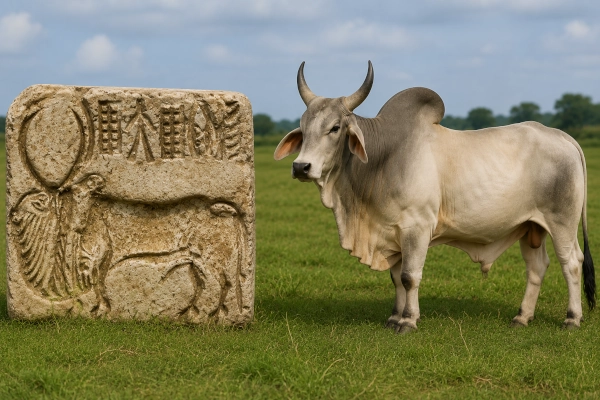
Indian zebu cattle are among the oldest and most influential domesticated animal groups in the world. Recognisable by their prominent shoulder hump, loose skin, developed dewlap and remarkable tolerance of tropical conditions, these cattle have supported Indian agriculture, transport, dairy production and village life for thousands of years.
Known scientifically as Bos indicus, and also described in some classifications as Bos taurus indicus, zebu cattle originated in South Asia. India’s many zebu breeds developed within distinct landscapes, from the deserts of Rajasthan and the dry plains of Gujarat to the humid coasts of Kerala, the black-soil tracts of the Deccan and the high-altitude valleys of Ladakh.
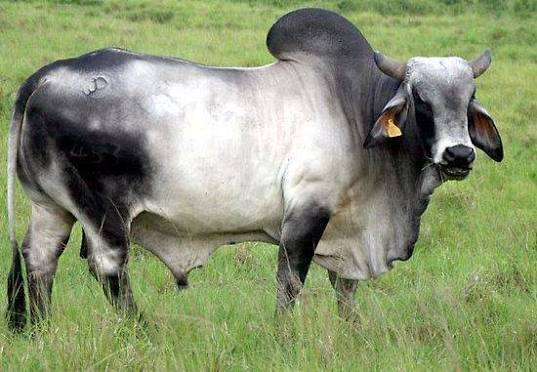
Each breed reflects generations of selection by farmers, pastoralists and cattle-keeping communities who preserved animals suited to local climate, fodder, soil, work and household requirements. Indian zebu cattle therefore represent a vast living archive of ecological knowledge and rural civilisation.
Origins in the Indian Subcontinent
Genetic and archaeological research identifies the greater Indus Valley as a major centre for the domestication of zebu cattle. Studies suggest that indicine cattle were domesticated in South Asia around 8,000 to 9,000 years ago and subsequently spread across the subcontinent and into other parts of Asia.
Genome research distinguishes this South Asian domestication history from the development of humpless taurine cattle in the Near East. The two groups share ancient ancestry in wild aurochs, while their long separation and adaptation produced clearly different physical and physiological characteristics.
Zebu cattle appear prominently in the agricultural history of the subcontinent. Their strength, endurance and ability to survive on seasonal fodder made them valuable as draught animals, while selected populations developed strong dairy qualities. Their dung supported soil fertility and household energy needs, creating an integrated relationship between cattle, crops and village settlements.
How to Identify Zebu Cattle
The shoulder hump is the most visible feature of Indian zebu cattle. It consists of muscle, connective tissue and varying amounts of fat. Its shape and size differ according to breed, age and sex, with bulls generally possessing a larger and more muscular hump.
Most zebu cattle also have a developed dewlap hanging beneath the neck, a prominent brisket, loose and flexible skin, relatively long legs and a body structure suited to movement across warm landscapes. Their ears may be upright or pendulous, while horn shape ranges from the short, thick horns of some breeds to the long, sweeping horns of Kankrej and Hallikar cattle.
The coat displays extraordinary diversity. Gir cattle may carry red, white and mottled patterns. Sahiwal animals are generally reddish brown. Tharparkar cattle are usually white or light grey. Ongole cattle are known for their powerful white or grey bodies, while Red Sindhi and Red Kandhari carry distinctive reddish coats.
Indian zebu cattle also vary greatly in size. Compact breeds such as Vechur, Punganur and Malnad Gidda developed in regions where smaller animals could thrive on limited land and fodder. Large breeds such as Ongole, Krishna Valley and Kankrej developed the strength required for heavy agricultural work and long-distance movement.
Built for India’s Climate
The defining strength of zebu cattle lies in their adaptation to heat. Their skin, coat, body structure, sweating capacity and metabolic responses help them regulate temperature under tropical conditions.
Loose skin increases the surface area available for heat exchange. A short coat can assist the release of body heat, while skin pigmentation offers protection from intense solar radiation. Zebu cattle also tend to maintain body temperature more effectively than many temperate cattle when exposed to high environmental temperatures.
Many Indian breeds developed within areas affected by drought, high humidity, seasonal fodder scarcity, insects and parasites. Their ability to walk long distances, use coarse vegetation and remain functional under low-input conditions made them especially valuable to small farmers and pastoral communities.
These characteristics are becoming increasingly relevant as livestock systems face rising temperatures, water stress and changing disease patterns. Indigenous genetic resources can support future breeding programmes focused on climate resilience, animal health and sustainable production.
India’s Extraordinary Breed Diversity
The ICAR–National Bureau of Animal Genetic Resources currently lists 55 registered indigenous cattle breeds, along with Frieswal as a synthetic cattle breed. These native breeds are associated with clearly defined home tracts across India.
Indian zebu breeds are commonly described according to their principal traditional utility: dairy, draught or dual-purpose. These categories often overlap because cattle frequently supported several household and agricultural needs.
Dairy Breeds
India’s best-known dairy zebu breeds include Gir, Sahiwal, Red Sindhi and Rathi.
Gir cattle, originating in Gujarat, are known for their curved forehead, long pendulous ears and strong milk-producing ability. Their genetics have become internationally important, particularly in Brazil and other tropical dairy regions.
Sahiwal cattle, associated with Punjab and Rajasthan, are valued for milk production, heat tolerance and calm temperament. The breed has been introduced into several countries for tropical dairying and crossbreeding.
Red Sindhi cattle carry a deep red to reddish-brown coat and are widely recognised for their dairy qualities and environmental adaptability.
Rathi cattle, native to Rajasthan, are well suited to dry regions and combine dairy performance with the hardiness required in desert-edge farming systems.
Powerful Draught Breeds
Several Indian zebu breeds were developed primarily for speed, endurance and agricultural work.
Hallikar cattle of Karnataka are among the celebrated Mysore-type draught breeds. They possess a compact, muscular body, strong limbs and long horns.
Amritmahal cattle, also from Karnataka, became famous for stamina, speed and their ability to move supplies and equipment across long distances.
Kangayam cattle of Tamil Nadu are hardy, powerful animals suited to dry conditions and farm work.
Khillar cattle, associated with Maharashtra and Karnataka, are agile draught animals adapted to the Deccan plateau.
Nagori cattle of Rajasthan are renowned for fast movement and were traditionally used for transport and agricultural operations across arid landscapes.
Dual-Purpose Breeds
Dual-purpose cattle combine useful milk production with strong draught ability.
Kankrej cattle, native to Gujarat and Rajasthan, have a large frame, lyre-shaped horns and strong walking ability. Their genetics contributed to the development of Guzerat cattle abroad and influenced the American Brahman.
Hariana cattle developed across Haryana, Uttar Pradesh and Rajasthan. Cows are valued for milk, while bullocks traditionally served in agriculture and transport.
Tharparkar cattle originated in Rajasthan’s arid zone and possess the ability to remain productive under dry and hot conditions.
Deoni cattle, associated with Maharashtra and Karnataka, combine dairy capacity with a strong working frame.
Ongole cattle of Andhra Pradesh are large, muscular and highly heat tolerant. Their descendants became internationally influential, particularly through Brazil’s Nelore population and the development of Brahman cattle in the United States.
Regional Breeds Shaped by Distinct Landscapes
India’s zebu diversity extends far beyond the most famous breeds.
The small Vechur cattle of Kerala developed within a humid tropical landscape where household-level dairying and limited fodder favoured compact animals. Kasargod-type and Malnad Gidda cattle similarly reflect farming systems based on small landholdings and locally available vegetation.
Punganur cattle of Andhra Pradesh are another compact indigenous population. Their small size makes them distinctive within India’s cattle heritage.
Bargur and Pulikulam cattle of Tamil Nadu are strongly associated with mobile and extensive livestock traditions. Their agility and alert temperament reflect life in demanding terrain.
Badri cattle belong to the hill regions of Uttarakhand, while Himachali Pahari cattle developed in the western Himalayan environment.
Ladakhi cattle survive in high-altitude areas marked by cold temperatures, limited vegetation and short growing seasons. Siri cattle, associated with Sikkim and West Bengal, are also adapted to Himalayan conditions.
This diversity demonstrates that the Indian zebu represents a family of regionally specialised breeds rather than a uniform type.
Cattle and the Traditional Rural Economy
For much of Indian agricultural history, cattle served as the principal source of farm power. Bullocks ploughed fields, transported harvests, drew water and carried goods between villages and markets.
The animals converted grasses, crop residues and other plant material into milk, manure and working energy. Their manure restored nutrients to farmland and supported traditional composting systems. Dried dung also served as household fuel in areas where firewood remained scarce.
This relationship created a circular agricultural economy. Crops fed cattle, cattle supported cultivation, and their manure returned fertility to the soil. Indigenous breeds were especially suitable for this system because they could remain useful under the modest inputs available to village households.
Mechanisation transformed many of these functions, particularly in irrigated and commercially farmed regions. Yet indigenous cattle continue to support dairy households, natural farming systems, pastoral livelihoods and small-scale agriculture across large parts of the country.
Cultural and Civilisational Importance
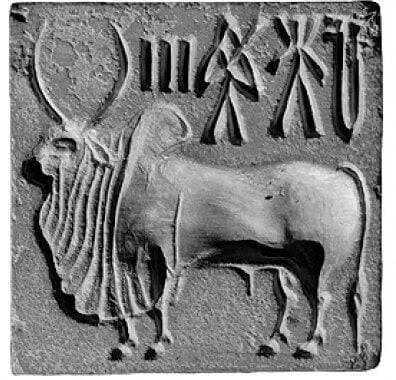
Cattle occupy a special position in Indian civilisation. The cow became associated with nourishment, motherhood, abundance and agricultural prosperity, while the bull represented strength, fertility and productive energy.
Humped cattle appear in the archaeological and artistic record of the subcontinent, including ancient seals, terracotta figures, sculptures and temple traditions. Regional festivals celebrating cattle continue in several states, reflecting the animal’s deep connection with cultivation, pastoral life and seasonal cycles.
Breeds such as Kangayam, Hallikar, Pulikulam, Bargur and Amritmahal also carry the memory of particular communities and landscapes. Their preservation protects cultural history alongside biological diversity.
India’s Zebu Legacy Across the World
Indian zebu cattle transformed livestock production in many tropical and subtropical countries.
Gir cattle became the foundation of Brazil’s Gyr dairy population. Ongole cattle travelled overseas and contributed to the Nelore breed, now one of the dominant cattle populations in Brazil. Kankrej genetics became associated with the Guzerat, while Indian breeds including Gir, Ongole, Kankrej and Krishna Valley contributed to the development of the American Brahman.
Sahiwal and Red Sindhi cattle spread through parts of Asia, Africa and the Pacific, where they were used for dairy production and for improving the heat tolerance of local herds.
The international success of Indian zebu genetics rests on qualities developed within India: heat tolerance, efficient use of variable fodder, resistance to harsh environments, longevity and reproductive ability under tropical conditions.
Crosses combining zebu and taurine ancestry have also produced influential breeds such as Brangus, Beefmaster, Braford and Simbrah. These animals unite selected production traits of European cattle with the tropical adaptability inherited from Indian zebu.
Conservation Challenges
Modern breeding systems have often favoured a narrow range of high-output animals. Mechanisation reduced demand for draught bullocks, while indiscriminate crossbreeding weakened some locally adapted populations. Changes in grazing land, farming systems and rural labour have placed further pressure on traditional breeds.
The ICAR–NBAGR Breed Watchlist 2022 classified Belahi, Khariar, Krishna Valley and Pulikulam cattle as endangered. Mewati, Ponwar, Punganur, Siri and Vechur were placed in the vulnerable category based on factors including population size, breeding populations, effective population and inbreeding.
The loss of a breed represents the disappearance of a unique genetic combination developed over generations. Traits connected with heat tolerance, disease response, feed efficiency, fertility and adaptation may become increasingly valuable under future climatic conditions.
Conservation therefore carries agricultural, economic, scientific and cultural importance.
Protecting India’s Zebu Heritage
Effective conservation begins in the breed’s native region. Farmers and pastoralists remain the principal custodians of indigenous cattle, making viable livelihood opportunities essential for long-term preservation.
Breed societies, organised milk collection, performance recording, selective breeding and access to quality indigenous semen can increase the value of native animals. Region-specific dairy and agricultural programmes can encourage farmers to retain breeds suited to their environment.
ICAR–NBAGR documents and registers native livestock populations, conducts genetic characterisation and maintains germplasm through the National Gene Bank. The institution has also developed semen and somatic-cell collections to safeguard indigenous animal genetic resources.
Conservation must preserve diversity within each breed as well as visible breed characteristics. Maintaining sufficient numbers of unrelated breeding males and females helps protect genetic health and reduces inbreeding.
Research can also create new opportunities by identifying valuable traits connected with climate resilience, milk quality, disease tolerance and low-input production.
A Living Genetic Heritage
Indian zebu cattle embody thousands of years of partnership between people, animals and landscape. Their diversity reflects the intelligence of farming and pastoral communities who shaped cattle for deserts, forests, river valleys, mountains, plateaus and coastal plains.
The modern world often measures livestock through immediate output. Indian zebu breeds carry a wider value: resilience, genetic diversity, cultural memory and the ability to function within demanding environments.
From the Gir and Kankrej of Gujarat to the Ongole of Andhra Pradesh, the Hallikar of Karnataka, the Kangayam of Tamil Nadu, the Vechur of Kerala and the Ladakhi cattle of the Himalayas, every breed represents a distinct chapter in Bharat’s rural history.
Protecting these cattle preserves more than an agricultural resource. It safeguards one of India’s oldest living contributions to global civilisation and tropical livestock development.
References
ICAR–National Bureau of Animal Genetic Resources. “Cattle Breeds of India.” Government of India.
https://nbagr.res.in/cattle-breed
ICAR–National Bureau of Animal Genetic Resources. “Breed Watchlist 2022: Indigenous Livestock and Poultry Breeds of India.”
https://nbagr.res.in/sites/default/files/2025-06/BREED_WATCHLIST_POSTER%20%281%29%20%287%29_compressed.pdf
ICAR–National Bureau of Animal Genetic Resources. “Salient Achievements: Characterisation, Registration and Conservation of Indigenous Animal Genetic Resources.”
https://nbagr.res.in/salient%20achievements
Food and Agriculture Organization of the United Nations. Joshi, N. R., and R. W. Phillips. “Zebu Cattle of India and Pakistan.” FAO Agricultural Studies No. 19.
https://www.fao.org/4/an469e/an469e00.pdf
Food and Agriculture Organization of the United Nations. “Types and Breeds of Tropical and Temperate Cattle.”
https://www.fao.org/4/t0095e/t0095e04.htm
Chen, N. et al. “Whole-Genome Resequencing Reveals Worldwide Ancestry and Adaptive Introgression Events of Domesticated Cattle in East Asia.” Nature Communications, 2018.
https://www.nature.com/articles/s41467-018-04737-0
Pérez-Pardal, L. et al. “Legacies of Domestication, Trade and Herder Mobility Shape Extant Male Zebu Cattle Diversity in South Asia and Africa.” Scientific Reports, 2018.
https://www.nature.com/articles/s41598-018-36444-7
Kumar, P. et al. “Admixture Analysis of South Asian Cattle.” Heredity, 2003.
https://www.nature.com/articles/6800277
You may also like
-
Satpura Tiger Reserve’s Barasingha Population Crosses 300 as Madhya Pradesh Plans New Wildlife Corridors
-
Karnataka’s Tiger Population Could Cross 700 as New Census Builds on Official Count of 563
-
Project Cheetah Expands as Veerangana Durgavati Tiger Reserve Becomes Madhya Pradesh’s Third Cheetah Habitat
-
Kashmir Markhor Population Rises to 227 as Kazinag Conservation Efforts Show Results
-
ICAR-CIFRI Pushes Conservation of Indigenous Himalayan Fish for Biodiversity and Livelihood Security
