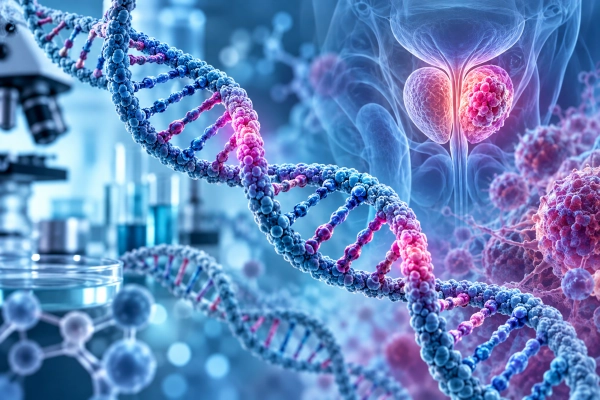
Indian researchers have reported a significant association between a variation in the RAD51 DNA-repair gene and prostate cancer in a case-control study involving patients from India. The findings add to ongoing research into how inherited genetic differences may influence susceptibility to prostate cancer, while also underlining the need for larger multicentre studies before the variant can be considered for clinical use.
The study, published online on September 28, 2026, in the World Journal of Translational Medicine, examined the RAD51 135G>C polymorphism, also known as rs1801320. Researchers compared its distribution in 50 men diagnosed with prostate cancer and 50 healthy controls.
Researchers From Multiple Indian Institutions Participate
The research involved scientists and clinicians associated with Pt. B.D. Sharma Post Graduate Institute of Medical Sciences in Rohtak, Maulana Azad Medical College in New Delhi, JSS Medical College in Mysuru, All India Institute of Medical Sciences New Delhi, Pacific Medical College and Hospital in Udaipur and Pathkind National Reference Laboratory in Gurugram.
Researchers from the Departments of Biochemistry and Radiation Oncology at Pt. B.D. Sharma PGIMS played a central role in designing and conducting the study. The research formed part of an MD thesis and received institutional ethics approval, with informed consent obtained from participants.
The multidisciplinary collaboration brought together expertise in biochemistry, radiation oncology, laboratory medicine and clinical research.
RAD51 Plays an Important Role in DNA Repair
RAD51 encodes a protein that plays a central role in repairing damaged DNA through a process known as homologous recombination.
DNA inside human cells is continuously exposed to damage caused by normal metabolic processes as well as environmental factors. Cells possess multiple repair mechanisms that identify and correct this damage before it produces harmful mutations.
RAD51 is particularly important in repairing double-strand DNA breaks, among the more serious forms of DNA damage. The protein helps cells use an intact DNA sequence as a template to restore damaged genetic material accurately.
Changes affecting RAD51 expression or function have therefore attracted considerable interest in cancer research because defective or altered DNA repair can contribute to genomic instability and tumour development.
Study Examined the RAD51 135G>C Variant
The researchers focused specifically on RAD51 135G>C, a single nucleotide polymorphism in which one DNA base differs between individuals.
Such genetic variations are common throughout the human genome and do not necessarily cause disease. However, some polymorphisms can affect how genes function or are regulated, potentially altering susceptibility to particular diseases.
The Indian study sought to determine whether the distribution of the RAD51 135G>C polymorphism differed between prostate cancer patients and healthy men.
Researchers used polymerase chain reaction-restriction fragment length polymorphism analysis to identify the different RAD51 genotypes present in blood samples.
Serum total prostate-specific antigen levels were also measured using an enzyme-linked immunosorbent assay.
GC Genotype Was Much More Frequent Among Patients
A striking difference emerged in the distribution of RAD51 genotypes between the two groups.
Among the 50 prostate cancer patients, 70 per cent had the GC genotype, while 26 per cent carried the CC genotype and only 4 per cent had the GG genotype.
Among the 50 healthy controls, the pattern was considerably different. The GG genotype was present in 76 per cent of participants, while 14 per cent carried the GC genotype and 10 per cent carried the CC genotype.
Statistical analysis found a significant association between the GC genotype and prostate cancer within the study population.
The calculated odds ratio for the GC genotype was 14.33, with a 95 per cent confidence interval ranging from 5.26 to 39.04. The CC genotype also showed an association, with an odds ratio of 3.16.
These figures describe the relationship observed within this particular study population and should not be interpreted as meaning that an individual carrying the variant has a predetermined probability of developing prostate cancer.
C Allele Was More Common in Prostate Cancer Group
The researchers also examined the frequency of individual G and C alleles rather than only complete genotypes.
The C allele occurred substantially more frequently among prostate cancer patients than among healthy controls. Statistical analysis produced an odds ratio of 7.64 for the C allele in the study population.
Conversely, the G allele was more common among healthy controls.
The findings led the authors to conclude that RAD51 polymorphism may play a role in prostate cancer susceptibility and that the GC genotype warrants further investigation.
Variant Was Not Linked to PSA Levels
An important part of the research involved determining whether the RAD51 variant was associated with established indicators of prostate cancer severity.
The researchers examined serum prostate-specific antigen levels among patients carrying different genotypes.
Median PSA levels differed numerically among the groups, but the differences were not statistically significant. The study therefore found no evidence that RAD51 genotype was associated with total PSA concentration.
This distinction is important because a genetic variant associated with susceptibility to developing cancer does not necessarily influence how advanced or aggressive the disease becomes.
No Association With Tumour Stage or Gleason Score
The study also examined whether RAD51 genotype or allele distribution was related to tumour stage or Gleason score.
No statistically significant association was observed.
The Gleason score is widely used to assess the microscopic appearance and aggressiveness of prostate cancer, while clinical staging indicates how far the disease has progressed.
The lack of association means the current results support further investigation of RAD51 primarily as a possible susceptibility factor rather than as an indicator of disease severity or progression.
Earlier International Research Produced Mixed Results
Previous research examining RAD51 variants and prostate cancer has produced conflicting findings.
Some studies involving European populations reported associations between RAD51 polymorphisms and prostate cancer susceptibility, while research conducted in other populations found little or no independent association.
Genetic associations can differ considerably between populations because allele frequencies are influenced by ancestry, population structure and other inherited characteristics.
The Indian study therefore contributes useful population-specific data to an area where relatively little information has previously been available.
Small Sample Size Remains an Important Limitation
The researchers themselves emphasised that the study involved only 100 participants, comprising 50 prostate cancer patients and 50 healthy controls.
A sample of this size is sufficient to identify patterns worthy of further investigation but is not large enough to establish a genetic variant as a reliable clinical biomarker.
The authors also noted that RAD51 protein concentrations were not measured in blood or tumour tissue because of time and financial limitations.
The researchers recommended validation through larger multicentre studies involving different sections of the Indian population. Such work would help determine whether the strong genotype differences observed in the current study remain consistent across a much larger and more geographically diverse group.
Findings Do Not Create a New Diagnostic Test
The RAD51 135G>C polymorphism should not currently be regarded as a diagnostic test for prostate cancer.
The research identifies an association rather than proving that the genetic variant directly causes the disease. Prostate cancer develops through a complex interaction of age, inherited susceptibility, hormonal influences, environmental exposures and other biological factors.
Genetic association studies can nevertheless help researchers identify biological pathways that deserve closer investigation.
If larger studies repeatedly confirm an association, RAD51 variants could eventually become one component of broader genetic-risk models used alongside established clinical information.
DNA-Repair Genetics Becomes Increasingly Important in Cancer Research
DNA-repair pathways have become a major focus of modern oncology because failures in these systems can allow mutations to accumulate within cells.
Understanding inherited differences in genes such as RAD51 can help researchers investigate why some individuals may be more susceptible to particular cancers and why tumours sometimes respond differently to treatment.
The same homologous recombination pathway involving RAD51 interacts with several other genes already important in cancer biology, making research into this mechanism relevant beyond prostate cancer alone.
Indian institutions participating in such genetic studies are therefore contributing to a broader effort to understand cancer at the molecular level and develop increasingly precise approaches to prevention, diagnosis and treatment.
A Foundation for Larger Indian Genetic Studies
The September 2026 study provides preliminary evidence that the RAD51 135G>C polymorphism, particularly the GC genotype and C allele, is associated with prostate cancer in the population examined.
Equally important, the research found no significant relationship between the variant and PSA levels, tumour stage or Gleason score, helping define the limits of the observed association.
The next step is larger, multicentre research involving diverse Indian populations and additional molecular measurements. Such studies can determine whether RAD51 becomes a useful component of future prostate cancer risk assessment while strengthening India’s growing research base in cancer genomics and precision medicine.
References
World Journal of Translational Medicine — Sanghapriya Pal, Kiran Dahiya, Kumud Dhankhar, Rajeev Atri, Rakesh Dhankhar, Saurabh Maheswari, Hemang Kumar, Aman Chauhan and Shweta Gaur, “RAD51 135G>C Genetic Polymorphism and the Risk of Prostate Cancer,” Volume 12, Issue 3, September 28, 2026
https://www.wjgnet.com/2220-6132/full/v12/i3/124005.htm
DOI — World Journal of Translational Medicine
https://doi.org/10.5528/wjtm.124005
You may also like
-
ISRO Plans Four Operational Launch Pads by 2029 to Expand India’s Space Capabilities
-
Indian Scientists Discover How Rapidly Spinning Black Holes Produce High-Frequency X-Ray Oscillations
-
ISRO Completes Historic SPADEX Mission as Both Satellites Re-enter Earth’s Atmosphere After Successful Space Docking Experiments
-
Indian Scientists Discover Rare Accretion Disk Around Neutron Star 24,000 Light-Years Away
-
BARC Scientists Develop Indigenous Technology to Recover 90% of Lithium from Seawater
