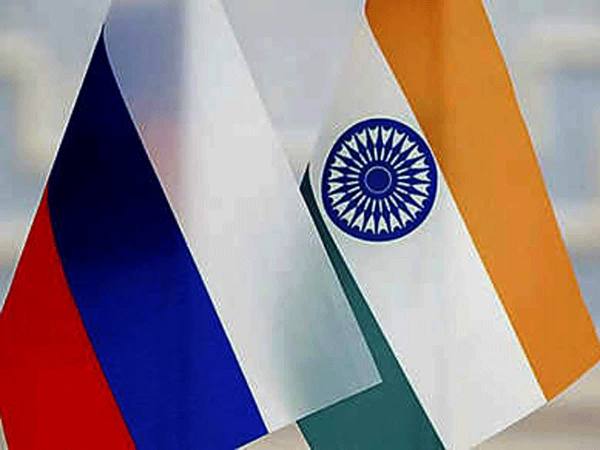
India and Russia are set to push forward their strategic and economic agenda as External Affairs Minister Dr. S. Jaishankar and Russian Foreign Minister Sergey Lavrov hold talks in New Delhi. The meeting comes just ahead of the BRICS Foreign Ministers’ Meeting on May 14–15, 2026, which India will host under its chairship.
According to the Russian Foreign Ministry, the two ministers are expected to review the progress made on agreements reached during Russian President Vladimir Putin’s official visit to India in December 2025. The talks will also cover preparations for the next round of leader-level engagement in Russia and the upcoming meeting of the Intergovernmental Russian-Indian Commission on Trade, Economic, Scientific, Technological and Cultural Cooperation.
The agenda reflects the wide span of India-Russia cooperation. Both sides are expected to discuss trade expansion, stable transport and logistics corridors, protected financial channels, energy cooperation, science and technology partnerships, and space-related collaboration. These areas have become especially important as global supply chains, energy markets and payment systems face pressure from geopolitical disruptions.
Energy is likely to remain one of the most important pillars of the discussion. India and Russia have steadily maintained strong energy ties despite changing global alignments, with New Delhi focusing on reliable supplies and Moscow looking to sustain long-term partnerships in Asia. The latest meeting gives both sides another opportunity to review how energy cooperation can be protected from external volatility while also opening room for new projects.
The ministers are also expected to exchange views on major regional and international developments, with particular focus on the Middle East. The region remains critical for India’s energy security, maritime connectivity and diaspora interests, while Russia has its own diplomatic and security stakes in West Asia. This makes the Jaishankar-Lavrov conversation important not only bilaterally, but also for wider geopolitical coordination.
Multilateral cooperation will form another key part of the dialogue. India and Russia are expected to discuss coordination within the United Nations, BRICS and G20, where both countries have often advocated a more multipolar global order and reforms in international governance. The timing is significant because India is hosting the BRICS Foreign Ministers’ Meeting immediately after Lavrov’s bilateral engagement with Jaishankar.
The Ministry of External Affairs has confirmed that India will host foreign ministers and heads of delegation from BRICS member and partner countries in New Delhi on May 14 and 15. The meeting will be chaired by Dr. Jaishankar, and participating delegations are also scheduled to call on Prime Minister Narendra Modi.
The BRICS meeting is expected to focus on global and regional issues of mutual interest, along with the theme “BRICS at 20: Building for Resilience, Innovation, Cooperation and Sustainability.” Discussions are also expected on reforming global governance and strengthening the multilateral system, making New Delhi a major diplomatic centre this week.
For India, the Lavrov-Jaishankar meeting is part of a careful balancing strategy. New Delhi continues to deepen relations with the West, the Gulf, ASEAN and other partners, while preserving its long-standing strategic partnership with Russia. This approach allows India to protect its defence, energy, trade and geopolitical interests without being locked into a single camp.
For Russia, the talks offer a chance to reinforce ties with one of its most important Asian partners at a time when Moscow faces intense pressure from the West. The Russian Foreign Ministry has described India-Russia relations as resilient and rooted in long-standing friendship, shared interests and respect for national priorities.
The meeting therefore goes beyond routine diplomatic contact. It is a review of unfinished agreements, a preparation for future leader-level talks, and a signal that India and Russia want to keep their bilateral machinery active despite a turbulent international environment. With BRICS ministers gathering in New Delhi immediately afterward, the Jaishankar-Lavrov engagement also places India at the centre of a wider conversation on multipolar diplomacy, energy security and global governance reform.
You may also like
-
India and Ghana Expand Agricultural Partnership Through New ICAR–CSIR-CRI Agreement
-
India Hands Over Three Tonnes of Anti-Tuberculosis Medicines to Sri Lanka
-
India and Austria Move to Deepen Security and Strategic Cooperation
-
India Offers Space-Based Climate Monitoring and Ocean Science Expertise to Pacific Partners at Pre-COP31
-
India and Switzerland Move to Deepen Strategic Science and Technology Partnership
