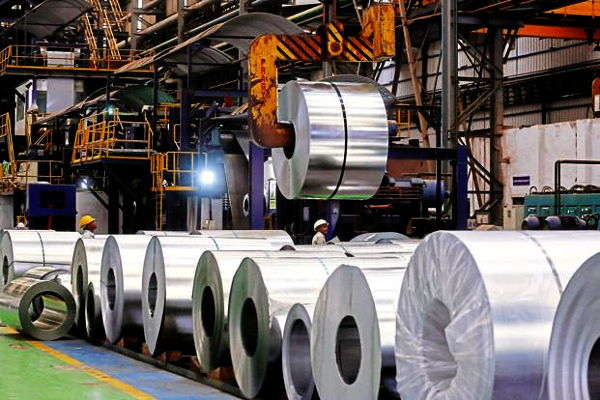
India is expected to retain its position as the world’s fastest-growing major steel market, with domestic steel demand projected to increase by 7.9% to 172.4 million tonnes in 2026 and expand by a further 8% to 186.2 million tonnes in 2027. The strong growth outlook reflects India’s expanding infrastructure, manufacturing, construction, renewable energy and automobile industries, which continue to generate substantial demand for steel.
The projections were released by the World Steel Association (worldsteel) in its October 2026 Short Range Outlook, published in New Delhi on October 12, 2026. The international industry body identified India as one of the principal drivers of global steel demand, supported by sustained investment in infrastructure and growing domestic industrial activity.
India’s projected expansion stands in contrast to the relatively subdued global steel market. Worldsteel expects worldwide steel demand to remain largely unchanged at approximately 1,722 million tonnes in 2026 before increasing by 1.7% to 1,752 million tonnes in 2027. The figures highlight India’s growing importance to the international steel industry as construction, manufacturing and industrial investment continue to expand.
India’s Steel Demand to Reach 172.4 Million Tonnes in 2026
According to the World Steel Association, India’s steel demand is expected to reach 172.4 million tonnes in 2026, representing growth of 7.9% over the previous year. The projected increase reflects continued expansion across several major steel-consuming industries, particularly construction, infrastructure development, machinery manufacturing and automobile production.
Worldsteel describes India’s growth as broad-based, indicating that demand is being supported by multiple sectors rather than a single category of economic activity. Infrastructure-led construction remains the principal contributor, while private real estate development and industrial manufacturing continue to provide additional support.
The demand outlook is particularly significant because steel serves as a fundamental material for economic development. It is used extensively in buildings, bridges, railway infrastructure, industrial machinery, vehicles, power generation equipment and manufacturing facilities. Expansion in these sectors creates direct demand for steel products and supports associated industries involved in processing, fabrication and construction.
India’s continued growth is strengthening its position as an important market for both domestic steel producers and companies supplying industrial materials, equipment and related services.
Steel Consumption Projected to Increase to 186.2 Million Tonnes in 2027
The World Steel Association expects India’s steel demand to increase by another 8% in 2027, reaching approximately 186.2 million tonnes. This represents an additional 13.8 million tonnes of projected consumption compared with the 2026 forecast.
The anticipated expansion indicates continued demand from major sectors of the Indian economy, including construction, infrastructure, manufacturing and automotive production. Investment in industrial capacity and renewable energy projects is also expected to contribute to steel consumption during the forecast period.
The two-year outlook places India among the most important growth markets for the global steel industry. Its projected demand increase is especially notable because many established steel-consuming economies are experiencing slower growth or declining consumption.
Sustained expansion in domestic demand can create opportunities for steel manufacturers to increase production, improve capacity utilisation and develop specialised products for different industries. It can also encourage investment in supporting infrastructure, including raw material transportation, steel processing and downstream manufacturing.
Infrastructure Development Remains the Largest Driver of Steel Demand
Infrastructure-led construction continues to be the principal factor supporting India’s steel consumption, according to worldsteel’s October 2026 outlook. The country’s ongoing development of transportation networks, urban infrastructure and industrial facilities requires substantial quantities of structural steel, reinforcing bars, plates and other steel products.
Railway infrastructure, road networks, bridges, metro systems and industrial projects all depend on steel for construction and engineering applications. The development of such infrastructure supports economic activity while generating demand for materials supplied by the domestic steel industry.
India’s infrastructure investment programme also creates opportunities for manufacturers of construction equipment, machinery and fabricated steel components. Large projects typically require coordinated supplies of different steel products, supporting activity across integrated steel plants, rolling mills and downstream processing facilities.
Worldsteel’s assessment indicates that infrastructure investment will remain central to India’s steel demand growth during 2026 and 2027. Continued development of transportation and industrial infrastructure provides a substantial foundation for the industry’s expansion.
Private Real Estate Construction Strengthens Domestic Steel Consumption
Private real estate activity is another important contributor to India’s steel demand outlook. The World Steel Association identified robust private real estate demand as a supporting factor behind the country’s strong consumption projections.
Residential and commercial construction require steel for reinforcement, structural frameworks, building components and associated infrastructure. Growth in housing development, office buildings and commercial facilities therefore contributes to demand across several categories of steel products.
Urban development also generates requirements for supporting infrastructure, including roads, utility networks and public facilities. These projects create additional opportunities for steel producers and construction material suppliers.
The combination of infrastructure-led development and private real estate activity provides India with a diversified construction market. This is particularly important because construction remains one of the largest steel-consuming sectors worldwide.
India’s relatively strong construction outlook contrasts with conditions in several other major markets, where weaker property investment has affected steel demand.
Manufacturing Expansion Drives Demand for Engineering and Machinery Steel
India’s expanding manufacturing sector is expected to contribute significantly to steel consumption over the next two years. Worldsteel highlighted continued investment in manufacturing capacity as an important factor supporting demand for electrical and mechanical machinery.
Industrial expansion requires steel for factory buildings, production equipment, machinery components and supporting infrastructure. New manufacturing facilities also generate demand for fabricated steel products, industrial structures and equipment used in material handling and production processes.
Mechanical engineering industries depend on different categories of steel, including structural products, alloy steels and specialised grades designed for demanding industrial applications. Electrical equipment manufacturing also requires suitable steel products for machinery, motors, transformers and associated systems.
Worldsteel expects healthy manufacturing growth to support continued demand across these sectors. The expansion of manufacturing capacity creates opportunities for domestic steel producers to supply both conventional industrial materials and higher-value specialised products.
Greater manufacturing activity also strengthens connections between the steel industry and India’s wider industrial economy, supporting the development of domestic supply chains.
Renewable Energy Projects Create Additional Demand for Steel
India’s substantial pipeline of renewable energy projects is another important factor contributing to the steel demand outlook. The World Steel Association identified renewable energy development as a source of growing demand for electrical and mechanical machinery.
Renewable energy infrastructure requires steel in several applications, including wind turbine towers, solar panel mounting structures, transmission equipment and supporting industrial facilities. The construction of renewable energy installations also generates demand for machinery and equipment used in project development.
Wind energy projects require large structural components capable of supporting turbines and associated mechanical systems. Solar energy installations use steel in mounting structures, support frames and other infrastructure components, depending on project design and material selection.
Expansion of the electricity network also requires substantial engineering infrastructure to transmit and distribute power. These activities contribute to demand for steel products used in electrical equipment, transmission structures and industrial machinery.
Worldsteel’s forecast indicates that continued investment in renewable energy and related manufacturing capacity will support India’s steel consumption during 2026 and 2027.
Automobile Industry Supports Growth in Steel Consumption
India’s automotive industry is expected to remain an important contributor to domestic steel demand. The World Steel Association identified domestic vehicle demand, export momentum and supportive policies as factors strengthening automotive production.
Steel is widely used in automobile manufacturing, including vehicle bodies, chassis structures, suspension systems and various mechanical components. Different vehicle categories require specialised steel grades designed to meet requirements for strength, durability, weight and manufacturing performance.
India’s automotive manufacturing industry serves both domestic customers and international markets. Growth in vehicle production creates demand for steel products supplied to automobile manufacturers and component producers.
The expansion of automotive manufacturing also supports industries involved in metal forming, casting, fabrication and precision engineering. These activities contribute to the wider demand for steel and other industrial materials.
Worldsteel expects the combination of domestic consumption, exports and industrial policy support to sustain automotive-related steel demand, reinforcing the sector’s contribution to India’s overall consumption growth.
Global Steel Demand Expected to Remain Flat in 2026
While India’s steel market continues to expand, global demand is expected to remain largely unchanged during 2026. The World Steel Association forecasts worldwide steel consumption of approximately 1,722 million tonnes, reflecting subdued growth across several major markets.
The October forecast represents a downward revision from worldsteel’s April 2026 outlook, which had anticipated modest global demand growth during the year.
The international steel industry continues to experience uneven demand conditions, with growth in some developing economies offset by weakness in major established markets.
China’s contracting steel consumption remains an important factor influencing the global outlook. Regional instability in the Middle East has also affected investment and construction activity, contributing to weaker demand in parts of the region.
Worldsteel expects global demand to recover gradually in 2027, increasing by 1.7% to approximately 1,752 million tonnes. The projected improvement will be supported by stronger industrial activity outside China, including increased investment in infrastructure, energy and manufacturing.
China’s Steel Demand Projected to Decline in 2026 and 2027
China, the world’s largest steel-consuming economy, is expected to experience another period of declining demand. Worldsteel forecasts a 2% contraction in Chinese steel consumption during 2026, followed by a further decline of 1% in 2027.
The association attributes the weakness primarily to the continuing downturn in China’s real estate sector. Property investment has remained subdued, while infrastructure activity has provided less support than previously anticipated.
Although Chinese manufacturing has benefited from strong exports, the resulting demand has not been sufficient to offset weakness in construction and infrastructure.
Worldsteel expects the decline in Chinese real estate activity to moderate during 2027, although the sector is projected to remain under pressure. The country’s cautious approach to infrastructure spending and uncertainty surrounding international trade also influence the demand outlook.
China’s contraction is particularly significant because of its large share of global steel consumption. Changes in Chinese demand can therefore influence global steel production, trade flows and market conditions.
India’s projected growth presents a contrasting pattern, supported by infrastructure expansion, private construction and manufacturing development.
United States Steel Demand to Grow 2% in 2026
The United States is expected to record 2% growth in steel demand during 2026, supported by investment in data centres, energy infrastructure and selected manufacturing industries.
According to worldsteel, the expansion of data centre infrastructure is contributing to non-residential construction activity. Such projects require steel for buildings, equipment structures and supporting infrastructure.
Investment in electricity generation, renewable energy, oil and gas infrastructure, and industrial manufacturing also supports demand for steel products.
The association expects US steel consumption to grow by approximately 1.5% in 2027. Demand is projected to remain concentrated in non-residential construction and major industrial projects, while residential construction continues to face challenges associated with financing costs and housing affordability.
The American market therefore presents a moderate growth outlook compared with India’s projected expansion.
European Union Steel Market Expected to Recover in 2027
The European Union’s apparent steel consumption is projected to decline by 0.3% in 2026 before recovering by 3.1% in 2027.
Worldsteel attributes the weaker near-term outlook to a slower-than-expected construction recovery and continued challenges in the automotive sector. Residential construction activity remains subdued, while industrial demand has yet to regain stronger momentum.
The association expects conditions to improve during 2027 as infrastructure investment, defence spending and energy-related projects support activity across steel-consuming industries.
Improving household incomes and investment in civil engineering projects are also expected to contribute to the recovery.
Despite the projected improvement, Europe’s steel demand outlook remains more moderate than India’s. The difference reflects contrasting conditions in construction, manufacturing and infrastructure investment.
Gulf Steel Market Forecast to Rebound 11.3% in 2027
The Gulf Cooperation Council region is expected to experience significant changes in steel consumption during the forecast period.
Worldsteel projects that steel demand in the Gulf will decline by approximately 11% during 2026, following strong growth of 17.7% in 2025.
The association attributes the contraction to regional conflict and uncertainty affecting construction projects, investment decisions and supply chains. These conditions have delayed project awards, construction starts and financing arrangements across parts of the region.
Steel demand is forecast to rebound by 11.3% in 2027 under worldsteel’s scenario of easing uncertainty and improving supply-chain conditions.
The expected recovery would bring regional demand back towards its 2025 level, supported by infrastructure and construction activity associated with economic diversification programmes.
The Gulf outlook demonstrates how geopolitical conditions can influence industrial investment and steel consumption, even in regions with substantial long-term infrastructure requirements.
Steel Demand Outside China Expected to Accelerate in 2027
The World Steel Association expects steel demand outside China to grow by 1.5% in 2026 before accelerating to 4% in 2027.
The projected improvement reflects stronger activity across developing economies and a gradual recovery in established industrial markets.
Developing economies excluding China are forecast to record steel demand growth of 1.9% in 2026 and 5.1% in 2027. The acceleration is expected to be supported by developing Asian economies and recovering demand in the Middle East.
Developed economies are projected to record growth of 1% in 2026 and 2.2% in 2027, supported by investment in artificial intelligence infrastructure, defence, energy development and selected industrial sectors.
The projected expansion outside China indicates that global steel demand is becoming increasingly influenced by a wider group of economies. India occupies an important position within this trend because of the scale and pace of its expected consumption growth.
India’s Steel Industry Gains Importance in Global Manufacturing
India’s projected steel demand growth reflects the increasing scale of its industrial and infrastructure development. The country is already one of the world’s leading steel-producing economies, supported by major integrated steel manufacturers and an extensive network of secondary producers, rolling mills and downstream processing facilities.
Higher domestic steel consumption can support investment in production capacity, industrial modernisation and specialised steel manufacturing. It also creates opportunities for associated industries involved in mining, transportation, machinery production and engineering services.
The expanding requirements of automotive manufacturing, renewable energy projects and electrical equipment production are particularly relevant to the development of higher-value steel products.
As industrial applications become more technologically demanding, steel manufacturers must increasingly focus on product quality, manufacturing efficiency and specialised grades suited to different engineering requirements.
India’s strong demand outlook provides an encouraging foundation for the continued development of these capabilities, while also reinforcing the importance of reliable raw material supplies and efficient transportation infrastructure.
India Positioned to Drive Global Steel Demand Growth Through 2027
The World Steel Association’s October 2026 Short Range Outlook confirms India’s position as the world’s fastest-growing major steel market, with demand projected to increase to 172.4 million tonnes in 2026 and 186.2 million tonnes in 2027.
The forecasts reflect broad-based growth across infrastructure, construction, private real estate, manufacturing, renewable energy and automotive production. These sectors are expected to generate sustained requirements for structural steel, industrial materials, machinery components and specialised products.
India’s projected growth stands out against a global market expected to remain largely unchanged in 2026 before recovering moderately in 2027. While China continues to experience declining steel consumption, India is benefiting from expanding industrial capacity and a substantial pipeline of infrastructure and manufacturing projects.
The anticipated increase in domestic demand creates opportunities for Indian steel producers to strengthen manufacturing capabilities, develop higher-value products and expand participation in industrial supply chains.
With steel consumption projected to reach 186.2 million tonnes by 2027, India is reinforcing its position as a major growth engine for the global steel industry. Sustained infrastructure investment, industrial expansion and rising domestic demand are providing a strong foundation for the country’s continued economic and manufacturing development.
References
1. World Steel Association — Official Press Release
worldsteel Short Range Outlook October 2026
Published: October 12, 2026
New Delhi, India
https://worldsteel.org/media/press-releases/2026/worldsteel-short-range-outlook-october-2026/
2. World Steel Association — Official Press Release
worldsteel Short Range Outlook April 2026
Published: April 14, 2026
https://worldsteel.org/media/press-releases/2026/worldsteel-short-range-outlook-april-2026/
3. World Steel Association — Official Website
Global steel demand forecasts, industry statistics and economic outlook publications.
https://worldsteel.org/
You may also like
-
Ramanadu Chithiraikar Rice of Tamil Nadu: The GI-Tagged Heritage of Ramanathapuram’s Traditional Red Rice
-
Russia Proposes Local Production of PD-8 Aircraft Engines in India as HAL–UAC Cooperation Advances
-
Zen Technologies Plans Annual Production Capacity of 1.8 Lakh HyperStrike Interceptor Drones
-
India’s Solar Manufacturing Industry Could Generate 32.3 Lakh Jobs and Attract $89 Billion Investment by 2047: ISMA
-
India Reportedly Evaluates 52 Russian Pantsir Air-Defence Systems with Domestic Manufacturing
