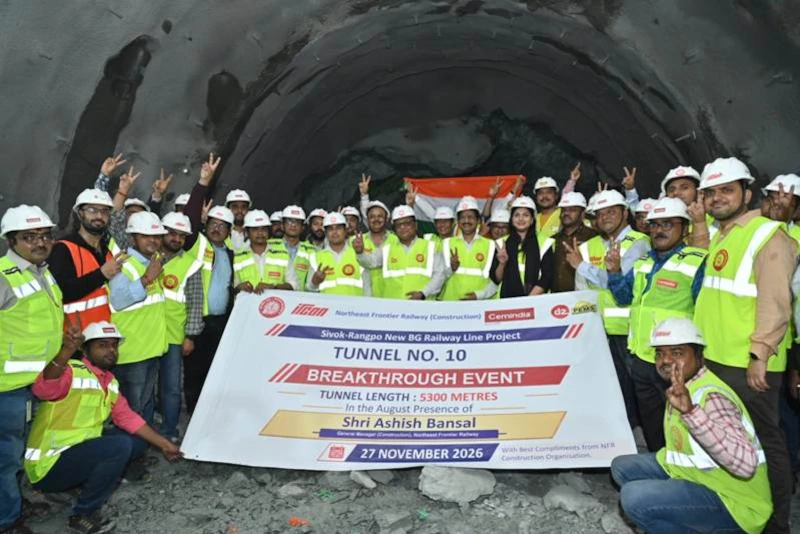
Indian Railways achieved a major engineering milestone on 27 November 2026 with the successful completion of excavation work in Tunnel No. 10 of the Sivok–Rangpo New Line Railway Project. Measuring 5.3 kilometres, it is the longest tunnel on the railway route connecting West Bengal with Sikkim. The breakthrough marks the completion of excavation across all 14 tunnels of the project, bringing Sikkim significantly closer to its first railway connectivity with India’s national railway network.
Engineering Breakthrough in the Eastern Himalayas
The excavation of Tunnel No. 10 was undertaken from both ends of the tunnel and through two additional access tunnels, enabling construction teams to work simultaneously from multiple locations. The successful joining of the excavation fronts represents a significant achievement in railway construction across the geographically challenging terrain of the Eastern Himalayas. With excavation completed, subsequent construction activities will focus on tunnel lining, track laying and the installation of essential railway safety systems.
The completion of excavation across all 14 tunnels represents an important transition in the project’s construction. Given that tunnels account for approximately 86 per cent of the entire railway alignment, underground construction constitutes one of the most significant engineering components of the project. The achievement establishes the foundation for advancing the remaining infrastructure and railway systems required to make the corridor operational.
A 45-Kilometre Railway Corridor Through Challenging Himalayan Terrain
The approximately 45-kilometre Sivok–Rangpo broad-gauge railway project passes through the Darjeeling and Kalimpong districts of West Bengal and the Pakyong district of Sikkim. The railway alignment incorporates 14 tunnels and 23 bridges, reflecting the complex geographical conditions of the region. Its development involves extensive underground construction and bridge infrastructure to establish railway connectivity across mountainous terrain.
The railway corridor will serve stations at Sivok, Riyang, Melli and Rangpo, along with an underground halt at Teesta Bazaar. At Sivok, the new railway line will connect with the existing New Jalpaiguri–Alipurduar railway route, integrating Sikkim with India’s extensive national railway network. This connectivity will enable the state to benefit from railway-based passenger and freight transportation once the project becomes operational.
Strengthening Sikkim’s Transportation Infrastructure
Sikkim currently depends heavily on road transportation, particularly National Highway 10, for connectivity with the rest of the country. The mountainous geography and vulnerability of road infrastructure to adverse weather conditions present recurring transportation challenges for residents, businesses and visitors. The Sivok–Rangpo railway line is expected to provide a safer, faster and more reliable transportation alternative upon completion.
The introduction of railway services will also diversify the state’s transportation infrastructure and reduce its dependence on a single major road corridor. Improved connectivity is expected to facilitate the movement of essential commodities, strengthen supply chains and enhance passenger mobility. The railway project will contribute towards building a more resilient transportation network in the Himalayan region.
Supporting Tourism, Trade and Regional Economic Development
The introduction of railway connectivity is expected to create new economic opportunities for Sikkim by improving access to markets and facilitating the movement of goods and passengers. Local businesses, agricultural producers and service industries could benefit from improved logistics and greater integration with economic centres across India. More reliable transportation infrastructure could also strengthen the availability and distribution of essential supplies within the state.
Tourism, one of Sikkim’s important economic sectors, is also expected to benefit from improved accessibility through the national railway network. The new railway corridor could make travel to the state more convenient while supporting opportunities in hospitality, local enterprises and associated services. These benefits will depend on the completion of the remaining construction works and the commencement of regular railway operations.
A Major Step Towards Sikkim’s First Railway Connectivity
The completion of excavation across all 14 tunnels of the Sivok–Rangpo railway project represents a significant achievement in India’s Himalayan infrastructure development. Although tunnel lining, track installation and railway safety systems remain to be completed, the latest breakthrough marks the successful completion of a major engineering phase. It demonstrates India’s growing capabilities in executing complex railway infrastructure projects across challenging geographical environments.
Once operational, the Sivok–Rangpo railway corridor will mark a historic transformation in Sikkim’s transportation landscape. By connecting the state with the national railway network, the project is expected to strengthen regional integration, improve economic opportunities and enhance the mobility of people and goods. The achievement represents another important step towards building a more connected, accessible and economically integrated Himalayan region.
You may also like
-
Ramnathapuram Mundu Chilli: Tamil Nadu’s Distinctive Round Chilli and Its Geographical Indication Heritage
-
Raise Financial Services Launches Indigenous AI-Powered TradingCharts Platform
-
UPI to Remain Free for Consumers as India Strengthens Digital Payment Infrastructure
-
Numaligarh Refinery and IIT Guwahati Partner to Develop Indigenous Levulinic Acid Technology
-
Hindustan Mag and Prozeal Green Energy Plan 600-Tonne Rare-Earth Magnet Facility in Gujarat
