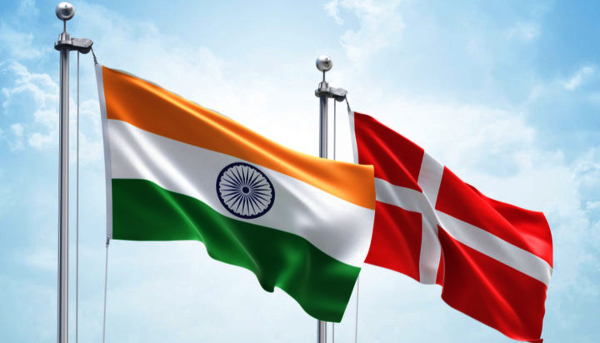
India and Denmark held the fifth India–Denmark Joint Commission Meeting in New Delhi on 28 November 2026, marking an important step towards expanding their bilateral strategic, economic and technological cooperation. The meeting was co-chaired by External Affairs Minister Dr S. Jaishankar and Danish Minister for Foreign Affairs Lars Løkke Rasmussen. Both countries adopted a new Joint Action Plan to guide the next phase of bilateral engagement, with particular emphasis on sustainable development, emerging technologies, renewable energy and economic cooperation.
Strengthening the Green Strategic Partnership
The India–Denmark Green Strategic Partnership continues to provide the foundation for bilateral cooperation between the two countries. Established in September 2020, the partnership brings together Denmark’s technological expertise and India’s extensive development requirements, industrial capabilities and growing domestic market. During the Joint Commission Meeting, both sides reviewed progress in several priority sectors, including water management, renewable energy, power infrastructure and environmentally sustainable shipping.
External Affairs Minister Dr S. Jaishankar highlighted Denmark’s importance as a development partner in India’s journey towards becoming a developed nation by 2047. The partnership provides opportunities to combine Danish expertise in sustainable technologies with India’s manufacturing ecosystem and infrastructure development programmes. Both countries are also looking towards elevating their bilateral relationship into a Comprehensive Green Strategic Partnership, with a formal announcement expected at the prime ministerial level at a later stage.
Expanding Cooperation in Defence and Emerging Technologies
India and Denmark explored opportunities to broaden their relationship beyond traditional areas of environmental and economic cooperation. Emerging technologies, innovation, space technology, quantum technology and defence have been identified as areas of potential collaboration. These sectors offer opportunities for institutional engagement, industrial partnerships and knowledge exchange between the two countries.
The inclusion of advanced technologies reflects the evolving nature of India–Denmark relations, particularly as both countries seek to strengthen their innovation ecosystems. Denmark’s research capabilities and specialised industrial expertise could complement India’s expanding technology sector and domestic manufacturing initiatives. The discussions represent an effort to develop additional avenues of cooperation, although specific projects and implementation arrangements will require further engagement.
Advancing Renewable Energy, Water Management and Green Shipping
Renewable energy remains a central component of India’s strategic engagement with Denmark, which possesses extensive experience in wind energy, energy efficiency and sustainable infrastructure. Continued bilateral cooperation could support India’s clean energy transition through technology exchange, industrial collaboration and the development of sustainable energy solutions. Water resource management and power infrastructure also remain important areas of engagement under the Green Strategic Partnership.industrial capabilities and growing domestic market. During the Joint Commission Meeting, both sides reviewed progress in several priority sectors, including water management, renewable energy,
Green shipping represents another significant opportunity for cooperation, particularly as the global maritime industry works towards reducing its environmental impact. Collaboration in sustainable maritime technologies could complement India’s efforts to modernise its ports, strengthen shipbuilding capabilities and develop environmentally responsible maritime infrastructure. These initiatives align with the broader sustainability objectives pursued by both countries.
Strengthening Trade, Investment and Industrial Partnerships
The Joint Commission Meeting also reviewed opportunities to expand bilateral trade and investment. Dr S. Jaishankar acknowledged the contribution of Danish companies operating in India and encouraged greater commercial engagement in both directions. The meeting highlighted the potential for expanding industrial partnerships across healthcare, agriculture, food processing, science and technology.
Denmark also reiterated its support for the early signing of the India–European Union Free Trade Agreement. A comprehensive trade agreement could create additional opportunities for Indian and Danish businesses by improving market access and strengthening commercial integration. The bilateral economic relationship is expected to benefit from continued engagement between government institutions, businesses and research organisations.
Cooperation in Education, Skills and Financial Services
The two countries also exchanged Memoranda of Understanding covering cultural exchange, skill development, vocational education, entrepreneurship and financial services. These agreements broaden the institutional framework of bilateral cooperation by extending engagement into human resource development, professional training and economic services. Collaboration in vocational education and entrepreneurship could support the development of specialised skills required by emerging industries.
During his visit to Bengaluru on 27 November 2026, the Danish Foreign Minister explored opportunities to strengthen technology partnerships with India and attract skilled Indian professionals to Denmark’s expanding technology sector. Such engagements could facilitate professional mobility, knowledge exchange and closer interaction between the innovation ecosystems of both countries. The initiatives also reflect the growing importance of skilled human resources in international technological and economic cooperation.
Denmark Reaffirms Support for India’s Permanent UNSC Membership
Denmark reiterated its support for India’s permanent membership of a reformed United Nations Security Council during the bilateral engagement. The position reflects continued diplomatic convergence on the need to make international institutions more representative of contemporary global realities. Support from Denmark complements India’s wider diplomatic engagement concerning the reform of multilateral governance institutions.
Beyond bilateral economic and technological cooperation, the Joint Commission provides an institutional platform for discussing international developments and matters of mutual strategic interest. Continued diplomatic engagement between India and Denmark could strengthen coordination within multilateral institutions while supporting cooperation on sustainable development and other shared international priorities.
Building a Comprehensive India–Denmark Strategic Relationship
The fifth India–Denmark Joint Commission Meeting represents an important stage in the evolution of bilateral relations from sustainability-focused cooperation towards a broader strategic and technological partnership. The adoption of a new Joint Action Plan establishes a framework for advancing cooperation across renewable energy, defence, emerging technologies, industrial development, education and trade. The proposed elevation of the Green Strategic Partnership further reflects the expanding scope of bilateral engagement.
By combining Denmark’s specialised technological capabilities with India’s industrial capacity, skilled workforce and growing market, both countries have opportunities to develop mutually beneficial partnerships. The implementation of the new framework could strengthen sustainable infrastructure, technological innovation and economic cooperation while contributing towards India’s long-term development objectives.
You may also like
-
India and Finland Explore Startup Cooperation in Satellite Technology and Gaming
-
India Strengthens Educational Infrastructure in Nepal’s Mustang District
-
India Hosts 25th IORA Ministerial Meeting, Strengthens Indian Ocean Cooperation
-
Colombo Security Conclave Adopts 2026–2027 Regional Security Roadmap
-
Five International Russophile Movement Chapters Begin Operations in Kerala
