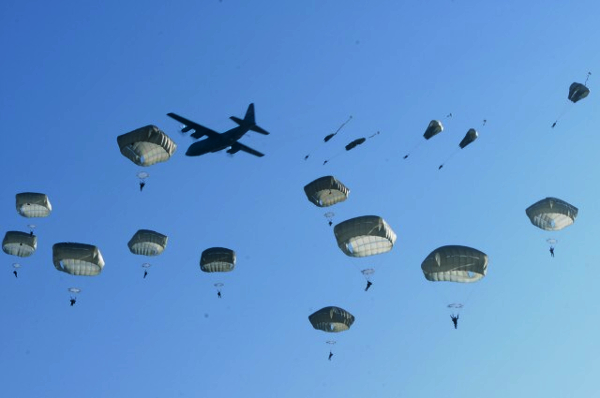
India has emerged as one of the world’s most active participants in bilateral and multinational military exercises, building an extensive network of defence partnerships across Asia, Europe, Africa, the Americas and the Indo-Pacific. From advanced air combat training with the United States, France and Japan to naval cooperation with Russia and military engagements across Central Asia, India’s expanding defence diplomacy reflects its growing operational capabilities and strategic autonomy.
By September 2026, the Indian Armed Forces had participated in numerous international exercises covering land warfare, maritime security, air combat, counter-terrorism, humanitarian assistance and emerging military technologies. These engagements demonstrate India’s ability to cooperate with countries belonging to different geopolitical groupings without becoming dependent on any single military alliance.
According to the Ministry of Defence’s Year End Review 2025, the Indian Army participated in 19 major international military exercises between January and November 2025. This figure does not include every international exercise involving the Indian Navy and Indian Air Force. The expansion continued during 2026, with major exercises such as MILAN, Dharma Guardian, Yudh Abhyas, PRAGATI, VARUNA and Tarang Shakti. Although India has an exceptionally broad network of defence engagements, no standardised global ranking establishes that it conducts more international military exercises than every other country.
India’s Major International Military Exercises Through September 2026
India’s military exercise network spans bilateral engagements with individual countries and multinational programmes involving several participating armed forces. These exercises help Indian personnel gain experience in different operational environments while improving coordination with foreign military organisations.
Major Exercises Conducted or Commenced in 2026
| Exercise | Partner countries | Period | Primary focus |
|---|---|---|---|
| MILAN 2026 | Multiple international navies | February | Maritime operations and naval interoperability |
| Dharma Guardian VII | Japan | 24 February–9 March | Joint military operations and tactical training |
| Lamitiye 2026 | Seychelles | 9–20 March | Peacekeeping and joint operations |
| PRAGATI 2026 | 12 friendly countries | May | Regional military cooperation |
| Yudh Abhyas 2026 | United States | September | Mountain warfare, drones and integrated operations |
| Veer Guardian 2026 | Japan | 9–22 September | Advanced air combat and interoperability |
| Nomadic Elephant 2026 | Mongolia | 21 September–3 October | Joint military operations |
| VARUNA 2026 | France | September | Naval interoperability and maritime cooperation |
| Tarang Shakti 2026 | Seven participating foreign countries | 26 September–12 October | Multinational air operations |
| KAZIND 2026 | Kazakhstan | 28 September–11 October | Counter-terrorism and counter-drone operations |
The list covers major exercises confirmed through Ministry of Defence announcements up to 30 September 2026. Exercises extending into October are included only where they had already commenced by the end of September.
India’s Established Military Exercise Partnerships Across the World
Beyond the exercises conducted during 2026, India maintains several recurring military training partnerships. These engagements extend across all three services and involve countries with different military doctrines, defence equipment and strategic priorities.
| Exercise | Partner country or countries | Principal service |
|---|---|---|
| Yudh Abhyas | United States | Army |
| Vajra Prahar | United States | Special Forces |
| Tiger Triumph | United States | Tri-service |
| MALABAR | United States, Japan, Australia | Navy |
| VARUNA | France | Navy |
| Shakti | France | Army |
| Garuda | France | Air Force |
| INDRA | Russia | Army/Navy engagements |
| Dharma Guardian | Japan | Army |
| Veer Guardian | Japan | Air Force |
| JAIMEX | Japan | Navy |
| AUSTRAHIND | Australia | Army |
| AUSINDEX | Australia | Navy |
| KONKAN | United Kingdom | Navy |
| Ajeya Warrior | United Kingdom | Army |
| SIMBEX | Singapore | Navy |
| Bold Kurukshetra | Singapore | Army |
| Mitra Shakti | Sri Lanka | Army |
| SLINEX | Sri Lanka | Navy |
| Surya Kiran | Nepal | Army |
| Ekuverin | Maldives | Army |
| Khanjar | Kyrgyzstan | Army |
| KAZIND | Kazakhstan | Army |
| Dustlik | Uzbekistan | Army |
| Nomadic Elephant | Mongolia | Army |
| Cyclone | Egypt | Special Forces |
| Maitree | Thailand | Army |
| VINBAX | Vietnam | Army |
| Lamitiye | Seychelles | Joint military training |
| IBSAMAR | Brazil and South Africa | Navy |
| Naseem Al Bahr | Oman | Navy |
The table identifies established exercise partnerships rather than claiming that every exercise was conducted during 2026. Their frequency and schedules vary between editions.
MILAN 2026 Demonstrates India’s Multinational Naval Capabilities
The Indian Navy demonstrated its ability to coordinate large multinational maritime operations through Exercise MILAN 2026, which concluded on 25 February off Visakhapatnam.
According to the Ministry of Defence, the exercise involved 42 ships and submarines and 29 aircraft, including 18 ships from friendly foreign countries. The closing ceremony took place aboard India’s indigenous aircraft carrier INS Vikrant, reflecting the expanding role of Indian-built naval platforms in international maritime cooperation.
MILAN provides participating navies with opportunities to improve coordination during complex maritime operations and exchange operational experience. The exercise also supports professional relationships among countries responsible for protecting important international shipping routes.
Tarang Shakti 2026 Expands India’s Air Force Diplomacy
The Indian Air Force commenced the second edition of Exercise Tarang Shakti at Jodhpur on 26 September 2026, with the operational phase beginning the following day.
The exercise brought together air forces from Australia, Bangladesh, France, Germany, Sri Lanka, the United Arab Emirates and the United States. Participating foreign aircraft included the F-35 Lightning II, Rafale, F-16 and several military transport and aerial refuelling platforms.
The programme provided opportunities for advanced air operations, mission planning and cooperation between air forces operating different aircraft and combat systems.
Tarang Shakti demonstrates India’s growing ability to host sophisticated multinational air exercises while strengthening professional relationships with several important international defence partners.
Yudh Abhyas and PRAGATI Strengthen India’s Land Warfare Partnerships
The Indian Army continued its international training engagements through Exercise Yudh Abhyas 2026 with the United States. The 22nd edition commenced on 15 September at Auli in Uttarakhand, with related training at the Mahajan Field Firing Ranges in Rajasthan.
The exercise involved 600 military personnel from each country and focused on integrated battle group operations in mountainous and semi-mountainous terrain. Training also incorporated drones, autonomous surveillance equipment and emerging military technologies.
Earlier in May, India hosted the multinational Exercise PRAGATI 2026 at Umroi in Meghalaya, bringing together military personnel from Bhutan, Cambodia, Indonesia, Laos, Malaysia, Maldives, Myanmar, Nepal, the Philippines, Seychelles, Sri Lanka and Vietnam.
PRAGATI strengthened India’s military engagement across South Asia, Southeast Asia and the Indian Ocean Region, providing a common platform for professional cooperation among 12 friendly countries.
India Maintains Military Cooperation with Both Western Countries and Russia
A distinguishing feature of India’s military diplomacy is its ability to maintain defence relationships across different geopolitical groupings.
India conducts advanced exercises with the United States, France, the United Kingdom, Japan and Australia while continuing established military cooperation with Russia.
The Indian Armed Forces participated in Russia’s Zapad exercise in September 2025 and have maintained cooperation through the INDRA exercise series.
At the same time, India’s defence relationships with European and Indo-Pacific partners have expanded through exercises covering maritime security, advanced aviation, mountain warfare and emerging technologies.
This approach allows India to exchange operational experience with countries using different military equipment and doctrines while preserving independent decision-making in defence and foreign policy.
Military Exercises Increasingly Focus on Drones and Advanced Technology
Modern military exercises increasingly incorporate unmanned systems, electronic surveillance, digital communications and autonomous technologies.
During Yudh Abhyas 2026, Indian and American personnel trained with drones and autonomous systems for surveillance and reconnaissance. Exercise KAZIND 2026, which commenced on 28 September, similarly incorporated unmanned aerial systems and counter-drone capabilities into joint training.
These developments reflect changing military requirements, where effective battlefield operations depend on the integration of sensors, communication networks, unmanned platforms and conventional military equipment.
For India, exposure to different technological approaches can support training and operational preparedness. International exercises also provide opportunities for understanding requirements relevant to domestically developed defence systems.
However, participation in such exercises does not automatically establish that a particular Indian-made system has undergone formal trials or received procurement approval.
Multinational Exercises Strengthen India’s Maritime Security and Regional Cooperation
India’s extensive coastline and geographical position make maritime cooperation an important component of its defence strategy.
The Indian Navy conducts exercises with countries across the Indian Ocean, Pacific and Atlantic regions, including France, Japan, Australia, Singapore, Oman, Brazil and South Africa.
These engagements cover maritime surveillance, anti-submarine warfare, air defence, anti-piracy operations, search and rescue, and humanitarian assistance.
They also strengthen relationships with countries located along important commercial shipping routes.
Through exercises such as MALABAR, VARUNA, SIMBEX, MILAN and IBSAMAR, India has established professional naval relationships extending beyond its immediate maritime neighbourhood.
These activities complement India’s efforts to promote cooperative maritime security under its MAHASAGAR vision.
International Exercises Support India’s Strategic Autonomy and Defence Preparedness
India’s expanding military exercise network reflects its preference for maintaining diverse defence partnerships instead of participating in an exclusive military alliance.
Regular exercises enable Indian personnel to operate in different geographical environments, exchange experience with foreign forces and develop a broader understanding of military technologies and operational procedures.
The exercises also support defence diplomacy by maintaining institutional relationships and encouraging cooperation in areas of shared security interest.
For the Indian defence industry, international military engagement provides opportunities to demonstrate indigenous platforms and interact with potential technology partners. However, defence exports and industrial agreements remain separate commercial and governmental processes.
India’s participation in exercises with countries across different strategic groupings illustrates how operational cooperation can coexist with independent foreign policy decisions.
India Strengthens Its Position as a Major Centre for International Military Cooperation
By September 2026, India had established an extensive network of international military exercises covering land, sea and air operations. Its partnerships extended from neighbouring South Asian countries to major defence powers in Europe, North America and the Indo-Pacific.
Exercises such as MILAN, Tarang Shakti, PRAGATI, Yudh Abhyas and VARUNA demonstrate the growing scale and diversity of India’s international military engagements.
The increasing inclusion of drones, autonomous systems and advanced surveillance technologies also shows how military cooperation is adapting to emerging operational requirements.
Although the available records do not establish India as the country conducting the world’s highest number of military exercises, they demonstrate its substantial role in multinational defence cooperation.
India’s expanding network of military exercises strengthens operational preparedness, supports strategic autonomy and builds defence relationships across geopolitical boundaries. By maintaining these diverse partnerships, India is reinforcing its position as a major contributor to international military cooperation and regional security.
References
- Ministry of Defence – Year End Review 2025. Official list of 19 major international Army exercises and military cooperation activities.
www.pib.gov.in/PressReleasePage.aspx?PRID=2210154 - Ministry of Defence – MILAN 2026 Concludes Successfully, 25 February 2026. Details of participating naval platforms and multinational cooperation.
www.pib.gov.in/PressReleasePage.aspx?PRID=2232853 - Ministry of Defence – India–Japan Exercise Dharma Guardian, 24 February 2026.
www.pib.gov.in/PressReleasePage.aspx?PRID=2232191 - Ministry of Defence – Exercise Lamitiye 2026, 9 March 2026. India–Seychelles joint military training.
www.pib.gov.in/PressReleasePage.aspx?PRID=2236791 - Ministry of Defence – Multilateral Exercise PRAGATI 2026, 20 May 2026. Participation by 12 friendly countries.
www.pib.gov.in/newsite/erelcontent.aspx?relid=289044 - Ministry of Defence – India–US Exercise Yudh Abhyas 2026, 15 September 2026.
www.pib.gov.in/PressReleasePage.aspx?PRID=2310476 - Ministry of Defence – Exercise VARUNA 2026, 24 September 2026.
www.pib.gov.in/PressReleasePage.aspx?PRID=2314333 - Ministry of Defence – Exercise Tarang Shakti 2026, 27 September 2026.
www.pib.gov.in/PressReleasePage.aspx?PRID=2315563 - Ministry of Defence – India–Kazakhstan Exercise KAZIND 2026, 28 September 2026.
www.pib.gov.in/PressReleseDetailm.aspx?PRID=2315856
You may also like
-
India, Brazil and South Africa Strengthen Maritime Security Cooperation Through IBSAMAR IX Naval Exercise
-
India and Canada Move to Strengthen Trade, Energy and Defence Cooperation as Foreign Minister Anita Anand Announces Visit
-
India Establishes First High-Altitude Health Research Centre in Himachal Pradesh
-
India’s Three-Part Russia–Ukraine Peace Proposal: A Practical Path to Ceasefire, Black Sea Security and Global Economic Stability
-
Bengaluru Startup Astrome Wins Indian Army iDEX Challenge to Develop Indigenous Portable Electronic Intelligence System
