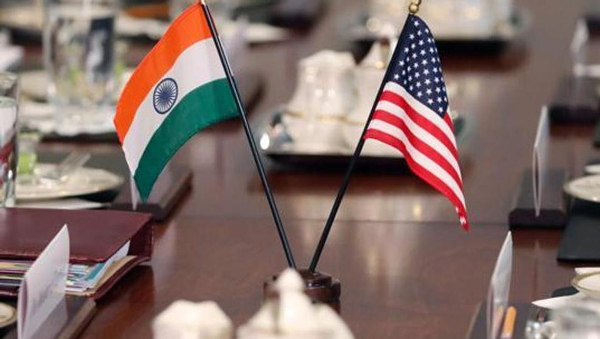
India and the United States have commenced the fifth edition of Exercise TIGER TRIUMPH 2026, a bilateral tri-service military exercise designed to strengthen coordination, joint operational planning and interoperability during large-scale humanitarian assistance and disaster relief operations. The opening ceremony was held at the Maritime Warfare Centre in Visakhapatnam on November 2, bringing together representatives from the armed forces of both countries for specialised discussions and operational planning.
The Ministry of Defence announced on November 3 that this year’s exercise is being conducted in a Tabletop Exercise (TTX) format, focusing on the coordination and decision-making processes required for complex multinational disaster response operations. Unlike field exercises involving extensive deployments of troops, ships and aircraft, the tabletop format allows military planners and operational specialists to examine simulated emergencies, evaluate response mechanisms and develop procedures for coordinating resources across different services and operational domains.
Senior Naval Commanders Inaugurate Bilateral Exercise
The opening ceremony was jointly presided over by Rear Admiral Vishal Bishnoi, Flag Officer Commanding Eastern Fleet of the Indian Navy, and Rear Admiral Joaquin J. Martinez de Pinillos, Vice Commander of the United States Pacific Fleet. Their participation reflects the importance both countries attach to developing practical military cooperation and improving their ability to respond collectively to humanitarian emergencies in the Indo-Pacific region.
Exercise TIGER TRIUMPH serves as a dedicated platform for strengthening cooperation among the land, maritime and air components of the Indian and American armed forces. The current edition places particular emphasis on coordinating military capabilities during major disasters, when effective communication, clearly defined responsibilities and rapid decision-making are essential for delivering assistance to affected populations.
The exercise also aims to facilitate Combined Joint All-Domain Operations, an approach that integrates capabilities from different military services and operational environments. Within the disaster relief framework, this involves improving coordination between maritime assets, ground forces, aircraft and specialised teams responsible for communications, medical assistance and other operational functions.
Indian Armed Forces and NDRF Participate in Joint Planning
The Indian contingent includes specialists representing different areas of maritime operations from the Indian Navy, ground forces from the Indian Army and personnel from various units of the Indian Air Force. Special Forces representatives from all three services are also participating, contributing their operational experience to the planning and coordination activities undertaken during the exercise.
A significant development in TIGER TRIUMPH 2026 is the participation of a team from the National Disaster Response Force (NDRF) for the first time. The inclusion of India’s specialised disaster response organisation expands the scope of the exercise beyond military-to-military coordination and introduces an important civil-military dimension to humanitarian assistance planning.
The NDRF plays a central role in India’s response to natural disasters and other major emergencies, including floods, cyclones, earthquakes and structural collapses. Its participation provides an opportunity to examine how specialised civilian disaster response capabilities can be coordinated with military resources during emergencies requiring extensive logistical support, transportation, communications and rescue operations.
The involvement of the NDRF is particularly relevant because large-scale humanitarian emergencies frequently demand cooperation between military formations, disaster management agencies and civilian authorities. Integrating these capabilities into joint planning exercises can help identify communication gaps, clarify institutional responsibilities and improve the efficiency of coordinated response mechanisms.
US Military Brings Multidomain Operational Expertise
The United States contingent comprises specialists from the US Navy, Army, Air Force and Marine Corps, together with personnel possessing expertise in space operations, cybersecurity, medical support and explosive ordnance disposal. This broad representation enables the exercise to consider the operational requirements of disaster relief missions extending beyond conventional land, sea and air activities.
The participation of specialists from multiple operational domains reflects the complexity of modern humanitarian response operations. Major disasters can disrupt communication networks, transportation systems, healthcare facilities and essential infrastructure, requiring military and civilian organisations to develop coordinated plans for restoring access and delivering emergency assistance.
Space-based capabilities can support disaster assessment, communications and situational awareness, while cybersecurity expertise is relevant to maintaining the reliability of information systems used during emergency operations. Medical specialists contribute knowledge concerning casualty management, emergency healthcare and the movement of affected populations, while explosive ordnance disposal personnel provide expertise relevant to hazardous environments.
By incorporating these specialisations into a common planning framework, the exercise seeks to improve the ability of participating organisations to coordinate their resources and respond to complex humanitarian contingencies. The tabletop format allows these issues to be examined through structured scenarios without requiring the large-scale physical deployment of the capabilities being discussed.
Strengthening Joint Humanitarian Assistance and Disaster Relief Capabilities
Humanitarian Assistance and Disaster Relief operations require military organisations to perform tasks that differ substantially from conventional combat missions. During major emergencies, armed forces may be called upon to transport relief supplies, evacuate civilians, establish temporary medical facilities, restore communications and support civilian authorities in areas where essential infrastructure has been damaged.
Naval forces can provide access to coastal regions through ships, helicopters and maritime logistics capabilities, while air forces can undertake rapid transportation and evacuation missions. Ground forces contribute personnel, engineering equipment, field communications and logistical support, enabling relief operations to reach communities affected by damaged transportation networks or difficult terrain.
The effectiveness of such missions depends heavily on advance planning and coordination. Differences in operational procedures, communication systems and organisational responsibilities can complicate multinational disaster response efforts, particularly when several military services and civilian agencies are operating simultaneously.
TIGER TRIUMPH 2026 addresses these challenges by providing a framework for examining joint planning arrangements and identifying the procedures required for coordinated action. Through simulated operational situations, participants can evaluate how different capabilities would be employed, determine appropriate command and coordination arrangements and strengthen their understanding of each other’s working methods.
TIGER TRIUMPH and India–US Defence Cooperation
Exercise TIGER TRIUMPH forms part of the expanding defence relationship between India and the United States, which encompasses military exercises, maritime security cooperation, defence technology engagement and professional exchanges between their armed forces. The exercise provides a specialised mechanism for improving interoperability while addressing humanitarian requirements that are particularly relevant to the Indo-Pacific region.
India and the United States have previously conducted TIGER TRIUMPH exercises involving coordinated participation by their military services. The series has provided opportunities to examine the employment of amphibious capabilities, logistics systems, medical support and military resources during humanitarian assistance operations.
The fifth edition continues this engagement while adopting a tabletop format that emphasises operational planning and institutional coordination. This approach allows participants to concentrate on the procedures required to integrate different military capabilities before they are employed in actual emergencies or larger field exercises.
The exercise is also significant within the broader context of India–US maritime cooperation. Both countries recognise the importance of maintaining effective disaster response capabilities in the Indo-Pacific, where coastal populations, island territories and major maritime routes can be affected by cyclones, tsunamis and other natural emergencies.
Strengthening coordination between their armed forces can contribute to more effective humanitarian operations when assistance is requested and deployed in accordance with the requirements of affected countries. Such cooperation also creates opportunities for improving professional understanding and developing practical arrangements for future joint missions.
Advancing Integrated Disaster Response Preparedness
The commencement of TIGER TRIUMPH 2026 highlights the growing importance of integrated planning in military-supported humanitarian operations. By bringing together specialists from the armed forces of India and the United States, alongside India’s National Disaster Response Force, the exercise provides a platform for examining how diverse operational capabilities can be coordinated during major emergencies.
The current edition places particular emphasis on decision-making, interoperability and the integration of expertise across land, maritime, air and specialised operational domains. These areas are essential to ensuring that participating organisations can exchange information, allocate responsibilities and coordinate their activities when responding to complex humanitarian situations.
The exercise also demonstrates the practical scope of bilateral defence cooperation beyond conventional military training. Its focus on humanitarian assistance and disaster relief provides an opportunity to develop procedures that can support civilian populations during emergencies while strengthening professional coordination between the two countries’ military institutions.
As TIGER TRIUMPH 2026 progresses, the tabletop activities will provide an opportunity for Indian and American personnel to refine their understanding of joint disaster response requirements and identify areas where greater operational coordination may be beneficial. The participation of the NDRF adds an important dimension to this effort, reinforcing the role of civil-military cooperation in building more effective disaster preparedness and response capabilities.
You may also like
-
GE Aerospace Delegation Visits LMW’s Coimbatore Facility to Explore Aerospace Manufacturing Collaboration
-
Indian and Indonesian Special Forces Begin GARUDA SHAKTI 2026 Validation Exercise in East Java
-
Indian and Sri Lankan Coast Guards Strengthen Maritime Security Cooperation at 9th High-Level Meeting
-
Indian Navy Rescues Hijacked Fishing Vessel Azini off Somalia, Secures All 20 Crew Members
-
Balu Forge Secures Quality Approval for Jet Engine Components, Expands Aerospace Manufacturing Capabilities
