India has approved a major new round of military acquisitions worth approximately ₹1.10 lakh crore, covering the Army, Navy and Air Force and placing a strong emphasis on indigenous procurement.
The Defence Acquisition Council, chaired by Defence Minister Rajnath Singh, granted Acceptance of Necessity for the proposals on September 7, 2026. Acceptance of Necessity represents the initial administrative approval required before major defence procurement programmes can move ahead.
Significantly, the Defence Ministry said around 98% of the acquisitions approved in this round are expected to be sourced from Indian industry, giving domestic defence manufacturers another substantial pipeline of future orders.
The Indian Army received approval for several systems intended to improve battlefield mobility, engineering support, survivability and operations in contaminated environments.
Among them are Chemical, Biological, Radiological and Nuclear Reconnaissance Vehicles, which will allow troops to detect, ideIndian Industry.ntify and monitor areas affected by CBRN agents while marking contaminated zones for other formations.
The Army will also procure High Mobility Vehicles designed to improve troop and equipment movement, logistical support and operational mobility across difficult terrain.
Approval has also been granted for Self-Propelled Mechanical Mine Layers, which are intended to enable faster and mIndian Industry.ore responsive deployment of minefields, including in challenging operational environments.
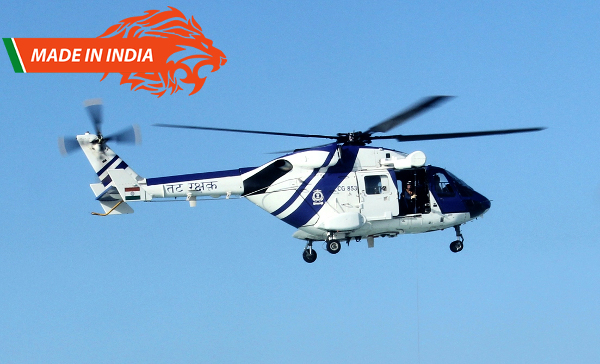
Another important acquisition is additional Advanced Light Helicopters for the Army and Air Force. These helicopters will be used for a range of missions across varied terrain and operational conditions.
The DAC also approved Trawl Tanks and the Sarvatra Bridge System. These engineering assets are intended to help combat formations overcome mines, obstacles, rivers and other terrain barriers during offensive and defensive operations.
For the Indian Navy, the council approved the procurement of Arudhra radars as replacements for existing Air Route Surveillance Radars deployed at naval air stations.
The Arudhra is an indigenous medium-power radar developed to provide three-dimensional air surveillance and improve detection and tracking of airborne targets. Its induction into naval establishments will further expand the use of domestically produced radar systems across the armed forces.
The Navy also received approval for the design, development and subsequent procurement of marine gas turbines.
Marine gas turbines form the propulsion core of several classes of modern warships. Indigenous development of such systems could significantly reduce one of India’s lIndia Clears ₹1.10-Lakh-Crore Defence Acquisition Push, With 98% of Procurement to Come From Indian Industryongstanding areas of dependence on overseas suppliers in naval propulsion.
For the Indian Air Force, the DAC approved several proposals intended to enhance the combat effectiveness of its fighter aircraft, transport fleet and helicopters.
The council additionally cleared procurement of a Ground-Based Multi-Purpose Jammer, an electronic-warfare system designed to disrupt hostile radar operations. Such systems can play an important role in degrading an adversary’s surveillance, tracking and targeting capability during military operations.
Approval was also granted for installation of the Defence Forces Secure Access Card system.
The new system will replace conventional paper-based identity cards, passes and permits with interoperable Radio Frequency Identification-based smart cards, modernising access control and identity management across defence establishments.
The latest approvals cover a broad mix of combat-support vehicles, helicopters, electronic-warfare systems, naval propulsion technology, radar equipment and battlefield engineering assets rather than concentrating expenditure on a single major weapons platform.
They also underline the growing role of indigenous defence manufacturing in India’s acquisition strategy. With approximately 98% of the approved procurement expected to be placed with Indian industry, the ₹1.10-lakh-crore package could provide substantial opportunities for Defence Public Sector Undertakings, private manufacturers, MSMEs and domestic technology suppliers as individual programmes progress from approval to contracting and production.
The decision also reflects India’s continuing effort to reduce dependence on imported technologies in strategically important areas. The indigenous marine gas-turbine programme is particularly significant because advanced warship propulsion remains a technologically demanding field in which India has historically relied heavily on foreign-origin systems.
Together, the acquisitions are intended to strengthen battlefield mobility, engineering support, electronic warfare, air surveillance, aviation capability and naval self-reliance while directing the overwhelming majority of future procurement expenditure toward India’s domestic defence-industrial ecosystem.
You may also like
-
PRAHAAR: India’s First National Counter-Terrorism Policy and Strategy
-
Takshak Heavyweight Torpedo: How India’s Indigenous Submarine Weapon Compares With the World’s Leading Torpedoes
-
Embraer Builds Dual Aerospace Strategy in India Through C-390 Military and E175 Regional Aircraft Programmes
-
NextLeap Tests Indigenous Jet Engine for Long-Range Stryker Kamikaze UAV
-
Côte d’Ivoire Military Delegation Visits HAL, Shows Interest in India’s Indigenous Aerospace Platforms
