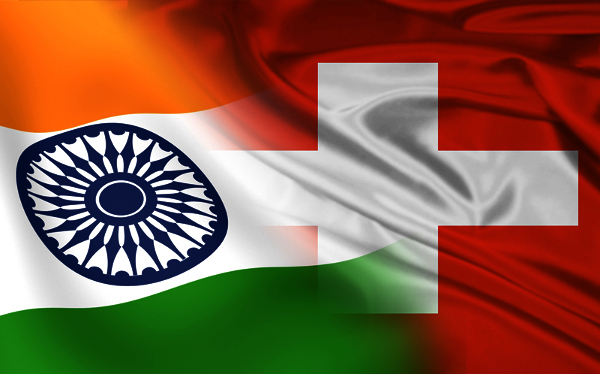
India and Switzerland have agreed to deepen their long-standing cooperation in science, technology, research and innovation, with both sides seeking to move the partnership from individual projects towards a more structured and long-term institutional framework.
Union Minister of State for Science and Technology Dr. Jitendra Singh held talks with Swiss President Guy Parmelin in New Delhi on October 6, 2026. The discussions covered emerging technologies, research collaboration, innovation ecosystems and mechanisms for sustained bilateral engagement.
Switzerland Earmarks CHF 45 Million for Research Cooperation
President Parmelin said Switzerland has earmarked an additional CHF 45 million to strengthen the Indo-Swiss research partnership.
He described India as a rapidly emerging global research and development power and said Switzerland wants to position itself as a preferred long-term partner in education, research and innovation.
The Swiss side also expressed the expectation of a corresponding Indian commitment to help consolidate the joint research framework and expand institutional cooperation.
Indo-Swiss Research Framework Gains Momentum
Both sides reviewed progress on the proposed Indo-Swiss Research Framework and the Indo-Swiss Joint Scientific Board, which are intended to provide a more durable institutional structure for bilateral cooperation.
The framework is expected to shift the relationship beyond a project-by-project model towards longer-term scientific collaboration involving mobility, knowledge exchange, joint research programmes and sustained engagement between institutions.
Dr. Jitendra Singh also welcomed a Letter of Intent between the Swiss National Science Foundation and India’s Department of Science and Technology, along with an implementation agreement between the Zurich University of Applied Sciences and DST.
These mechanisms are expected to create stronger links between researchers, universities and innovation institutions in both countries.
AI, Quantum, Biotechnology and Space Identified as Priority Areas
India highlighted its growing mission-mode approach to science and technology, with national programmes increasingly bringing together multiple disciplines and government departments.
Dr. Jitendra Singh said Artificial Intelligence should be treated as an enabling technology across sectors rather than as an isolated field.
The discussions also covered quantum technologies, biotechnology, vaccine development, genome sequencing, space research, deep ocean exploration, clean technologies, renewable energy and advanced materials.
These areas align closely with several national missions that India is currently expanding and offer opportunities for joint research, technology development and scientific exchange.
Blue Economy and Deep Ocean Research Open New Areas of Cooperation
Ocean research and the blue economy formed another important part of the discussions.
India has been expanding its capabilities in deep ocean exploration, marine science and ocean-based economic activity. Switzerland, despite being landlocked, has strong capabilities in instrumentation, engineering, environmental science and advanced research systems that could support collaborative programmes.
The bilateral framework could therefore extend beyond conventional laboratory research into complex multidisciplinary areas involving climate science, marine technology and advanced sensing.
AI Cooperation Could Extend to Global South
The two sides also discussed the wider implications of Artificial Intelligence.
President Parmelin stressed the importance of ensuring that AI technologies benefit countries across the Global South and invited Indian participation in the forthcoming Geneva AI Summit.
This opens another dimension to the partnership, combining bilateral technology cooperation with wider international discussions on responsible and inclusive use of emerging technologies.
More Than Two Decades of Scientific Cooperation
India and Switzerland have maintained formal science and technology cooperation since the signing of an Inter-Governmental Agreement in 2003.
That relationship later expanded through the Indo-Swiss Joint Research Programme, supporting collaboration across multiple scientific fields.
Over time, bilateral research has broadened into areas such as quantum technology, AI, clean energy, biomedical research, pharmaceuticals, pandemic preparedness, space technologies and advanced materials.
The latest discussions indicate that both governments now want to build a more strategic architecture around this accumulated experience.
Building a Long-Term Innovation Partnership
Dr. Jitendra Singh called for a regular working arrangement that would ensure sustained engagement and follow-up on agreed priorities.
Such a mechanism could help move projects faster from policy discussion to implementation while creating stronger links between government departments, universities, research institutions and industry.
The evolving Indo-Swiss partnership is therefore becoming broader than conventional academic cooperation. It is increasingly positioned around high-technology research, innovation networks and institutional continuity.
With Switzerland committing additional funding and India expanding mission-driven programmes in frontier technologies, the relationship is moving towards a deeper science and innovation partnership with potential relevance across research, industry and global technology governance.
References
- Press Information Bureau, Government of India, “India, Switzerland Strengthen Strategic Science & Technology Partnership; Dr. Jitendra Singh Holds Bilateral Meeting with Swiss President Guy Parmelin”, October 6, 2026.
You may also like
-
India Hosts 12th BRICS Parliamentary Forum in New Delhi
-
India Strengthens Trade Ties with Netherlands as Piyush Goyal Visits Port of Rotterdam
-
India to Train 600 Nigerian Army Soldiers in Specialised Jungle and Mountain Warfare
-
India and Russia Strengthen Parliamentary Diplomacy as Om Birla Meets State Duma Chairman Vyacheslav Volodin
-
India Seeks South Korean Shipbuilding Partnerships as Sarbananda Sonowal Begins Four-Day Visit to Busan
