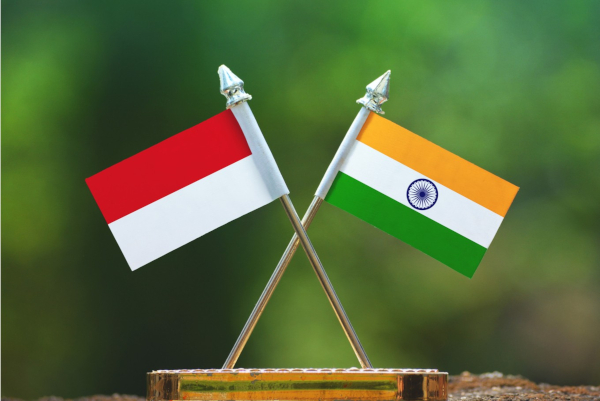
India and Indonesia have reviewed bilateral trade, investment opportunities and economic cooperation during the second meeting of the India-Indonesia Working Group on Trade and Investment (WGTI), held at Vanijya Bhawan in New Delhi on November 19, 2026. The discussions focused on resolving market access barriers, expanding Indian exports, strengthening financial connectivity and promoting cooperation in emerging sectors, including critical minerals, renewable energy and digital services.
Indonesia is India’s second-largest trading partner within the Association of Southeast Asian Nations (ASEAN), with bilateral trade reaching USD 24.78 billion during the financial year 2025–26. The country accounted for approximately 19.30 per cent of India’s total trade with ASEAN, highlighting its importance in India’s economic engagement with Southeast Asia.
The meeting was co-chaired by Amit Verma, Joint Secretary in the Department of Commerce, Ministry of Commerce and Industry, and Basaria Tiara Desika L. Gaol, Director of Bilateral Negotiation in Indonesia’s Ministry of Trade. Representatives from relevant ministries, departments and organisations of both countries participated in the discussions, which were conducted in hybrid mode.
Strengthening Bilateral Trade and Addressing Trade Imbalances
India and Indonesia share extensive commercial relations across energy, agricultural commodities, manufacturing, pharmaceuticals, engineering goods and industrial materials. Their bilateral trade relationship has expanded considerably over the years, making Indonesia one of India’s important economic partners in the Indo-Pacific region.
According to Indian government trade data, bilateral trade during FY 2025–26 amounted to approximately USD 24.78 billion. India’s exports to Indonesia were valued at approximately USD 4.49 billion, while imports from Indonesia stood at around USD 20.29 billion.
The trade figures indicate a substantial imbalance in favour of Indonesia, reflecting India’s significant imports of commodities such as coal, vegetable oils, iron and steel, and other industrial materials. Indian exports include engineering goods, chemicals, pharmaceuticals, agricultural products and manufactured goods.
During the meeting, India emphasised the importance of developing a more balanced and diversified trade relationship by expanding market opportunities for Indian products.
The Indian delegation identified pharmaceuticals, vaccines, medical devices, automobiles, automotive components, machinery, dairy products, rice, spices, electronics, solar equipment and energy-related products as sectors offering considerable export potential.
Greater access to Indonesia’s domestic market in these sectors could support Indian manufacturers and exporters while contributing to a more diversified bilateral trading relationship.
India Seeks Improved Market Access for Agricultural and Marine Products
Market access restrictions affecting Indian agricultural and animal products formed an important part of the discussions.
India raised issues concerning the export of peanuts, horticultural products, buffalo meat and frozen shrimp to Indonesia. The discussions also covered regulatory approvals for establishments involved in producing and processing agricultural and animal-origin products intended for export.
Such approvals are particularly important for food and agricultural exporters because importing countries generally require compliance with sanitary, phytosanitary, inspection and certification requirements.
India sought progress in addressing these regulatory issues to improve the ability of Indian producers and exporters to access the Indonesian market.
The discussions also covered halal certification requirements, which are particularly relevant for manufacturers exporting food products and other regulated goods to Indonesia.
To facilitate the resolution of outstanding trade issues, India proposed the designation of contact points within the relevant government agencies of both countries. These designated officials would help coordinate discussions and facilitate time-bound responses to concerns raised by exporters.
The proposal is intended to strengthen institutional coordination and reduce delays in addressing market access difficulties.
Pharmaceuticals, Automobiles and Electronics Emerge as Priority Sectors
The two delegations reviewed several regulatory requirements affecting trade in manufactured goods and healthcare products.
India raised concerns relating to standards and certification procedures for tyres and automobiles, registration requirements for pharmaceuticals and Ayush products, and local content regulations affecting the electronics industry.
Indonesia represents a significant potential market for Indian pharmaceutical manufacturers, particularly in generic medicines, healthcare products and medical technologies.
However, pharmaceutical exports require compliance with the importing country’s registration, safety, quality and regulatory approval procedures. Addressing these requirements through bilateral engagement could help Indian manufacturers improve their access to the Indonesian healthcare market.
Similarly, discussions on automotive standards and certification are relevant to India’s expanding automobile and automotive component manufacturing industries.
Local content requirements affecting electronics were also reviewed, reflecting the increasing importance of electronics manufacturing and supply-chain integration in bilateral economic relations.
Indonesia raised its own concerns regarding market access for agricultural products and India’s Quality Control Orders, which establish mandatory standards for specified products entering or being sold in the Indian market.
Both delegations examined these issues as part of their efforts to facilitate trade while maintaining applicable domestic regulatory requirements.
Expanding Cooperation in Services and Professional Mobility
Beyond merchandise trade, India and Indonesia explored opportunities to strengthen cooperation in the services sector.
The discussions covered mutual recognition of professional qualifications, mobility of skilled professionals, social security arrangements, digital services, healthcare, education and tourism.
Mutual recognition of professional qualifications can facilitate cross-border employment by establishing mechanisms through which qualifications obtained in one country may be recognised by the other, subject to applicable professional and regulatory requirements.
India’s established capabilities in information technology, digital services, healthcare delivery and education provide opportunities for expanding services cooperation with Indonesia.
The discussions on professional mobility and social security arrangements are also relevant to businesses employing professionals across both countries, particularly in sectors requiring specialised technical and managerial skills.
Although these areas were discussed, the meeting did not announce the conclusion of new mutual recognition or social security agreements.
India Calls for Early Conclusion of ASEAN-India Trade Agreement Review
India reiterated the importance of concluding the ongoing review of the ASEAN-India Trade in Goods Agreement (AITIGA).
The agreement provides an important framework for merchandise trade between India and ASEAN member countries, including Indonesia.
The review seeks to improve the functioning of the existing trade arrangement and address concerns relating to market access, trade facilitation and the balance of commercial benefits.
India has consistently emphasised the need for a more balanced and mutually beneficial agreement that supports domestic manufacturing while improving opportunities for Indian exporters.
The review remained under negotiation in October 2026, when the 15th AITIGA Joint Committee meeting was held in Jakarta from October 6 to 9. Commerce.gov.in
An improved agreement could support greater regional economic integration and facilitate the expansion of trade between India and Southeast Asian economies.
Critical Minerals and Mining Cooperation Receive Attention
Critical minerals and mining were among the strategic economic sectors discussed during the meeting.
Indonesia possesses important mineral resources and has developed a significant position in international mineral processing and industrial supply chains.
India, meanwhile, is expanding its domestic capabilities in advanced manufacturing, renewable energy, electric mobility and other industries requiring reliable access to critical raw materials.
Cooperation in mineral exploration, processing technologies, industrial investment and supply-chain development could therefore benefit both economies.
The discussions also followed commitments made during Prime Minister Narendra Modi’s state visit to Indonesia in July 2026, when the two countries highlighted the importance of strengthening critical mineral and rare-earth supply chains.
During that visit, both sides welcomed cooperation involving India’s Non-Ferrous Materials Technology Development Centre and Indonesian partners, along with an initiative involving the Steel Authority of India Limited and Indonesia’s PT Krakatau Steel to explore a stainless-steel slab manufacturing facility in Indonesia.
The latest working group discussions provided an opportunity to review progress and identify areas for further industrial cooperation.
UPI–QRIS Linkage and Local Currency Settlement Discussed
Financial connectivity formed another important component of the bilateral discussions.
The two countries reviewed cooperation relating to local currency settlement, banking, insurance and the potential linkage of India’s Unified Payments Interface (UPI) with Indonesia’s Quick Response Code Indonesian Standard (QRIS).
UPI and QRIS are established digital payment systems in their respective countries. Linking the systems could eventually enable more convenient cross-border retail payments, particularly for tourists, business travellers and other eligible users.
Such connectivity would require the completion of necessary technical integration, regulatory arrangements and operational procedures.
The working group also discussed local currency settlement arrangements intended to facilitate bilateral transactions using national currencies.
During the July 2026 summit, the leaders of both countries welcomed progress towards operationalising guidelines on local currency transactions between the Reserve Bank of India and Bank Indonesia.
The November meeting continued discussions on these financial cooperation mechanisms without announcing the operational launch of the proposed UPI–QRIS linkage.
Renewable Energy, Green Hydrogen and Biofuels Identified for Cooperation
India and Indonesia also reviewed opportunities for cooperation in the energy sector, particularly renewable energy, green hydrogen and biofuels.
Both countries are working to expand their energy infrastructure while developing technologies and industrial capabilities that support long-term energy security.
India’s expanding renewable energy manufacturing capabilities and Indonesia’s energy resources and industrial base provide potential areas for technological collaboration, investment and industrial partnerships.
Green hydrogen production, biofuel development and renewable energy infrastructure were among the subjects considered during the working group discussions.
The two sides also examined cooperation in fertilisers, recognising the importance of agricultural inputs and reliable supply chains for their respective economies.
These discussions were exploratory, and the meeting did not announce specific new investment commitments or project approvals in these sectors.
Improving Maritime, Aviation and Customs Connectivity
Trade facilitation and transport connectivity were also reviewed during the meeting.
India and Indonesia discussed customs cooperation, port connectivity and air connectivity as part of efforts to improve the movement of goods and people between the two countries.
Improved customs coordination can help reduce procedural difficulties and facilitate the movement of merchandise through established trade channels.
Port connectivity is particularly important because maritime transportation accounts for a substantial share of international merchandise trade between the two countries.
Enhanced aviation connectivity can also support tourism, business travel, educational exchanges and commercial engagement.
The discussions reflected the importance of strengthening the physical and administrative infrastructure supporting bilateral trade.
First Working Group Meeting Since August 2021
The November 2026 meeting marked the first session of the India-Indonesia Working Group on Trade and Investment since its inaugural meeting in August 2021.
The second meeting was convened following commitments made during Prime Minister Narendra Modi’s state visit to Indonesia from July 6 to 8, 2026.
During the visit, Prime Minister Modi and Indonesian President Prabowo Subianto emphasised the importance of fully utilising existing bilateral economic mechanisms and strengthening cooperation across trade, investment, industry, finance and supply chains.
The leaders specifically called for the second meeting of the Working Group on Trade and Investment to be convened during 2026, with an emphasis on achieving practical and business-oriented outcomes. Press Information Bureau
The New Delhi meeting represented an important institutional follow-up to those commitments.
Both countries also reviewed the implementation of agreements and memoranda of understanding signed during the July 2026 visit.
India and Indonesia Agree to Sustain Economic Engagement
The second Working Group on Trade and Investment reaffirmed the commitment of India and Indonesia to strengthening their Comprehensive Strategic Partnership through closer economic cooperation.
India proposed that the working group meet regularly to maintain progress on trade facilitation, market access issues and emerging areas of economic collaboration.
The two sides confirmed that the next meeting would be held in Indonesia, although a specific date was not announced.
Regular meetings would provide both governments with an established mechanism to review outstanding concerns, monitor progress and coordinate initiatives involving businesses, regulatory authorities and relevant institutions.
Strengthening India’s Economic Partnership with Southeast Asia
The India-Indonesia Working Group meeting highlights the growing importance of bilateral economic cooperation within the broader India-ASEAN relationship.
With annual bilateral trade approaching USD 25 billion, the two countries have substantial opportunities to expand commercial engagement through greater market access, diversified exports, industrial collaboration and improved financial connectivity.
The discussions on pharmaceuticals, agricultural products, automobiles, electronics, critical minerals, renewable energy and digital payments reflect the increasingly diversified nature of their economic relationship.
By strengthening institutional coordination and addressing practical challenges faced by exporters and investors, India and Indonesia can create a stronger foundation for mutually beneficial trade and investment.
The successful convening of the working group after five years provides renewed momentum to bilateral economic engagement and reinforces the role of the India-Indonesia Comprehensive Strategic Partnership in supporting greater economic integration across the Indo-Pacific region.
Official Sources: Press Information Bureau, Ministry of Commerce and Industry, Government of India, November 19, 2026; Prime Minister’s Office, India-Indonesia Joint Statement, July 7, 2026; Department of Commerce, Government of India, October 2026; Embassy of India, Jakarta, Economic and Commercial Brief, October 2026.
You may also like
-
Ṣāḍguṇya: The Six Measures of Foreign Policy in Kauṭilya’s Arthaśāstra
-
Rāvaṇa’s Council of Ministers: The Failure of Collective Decision-Making Before War
-
India–Malaysia Joint Military Exercise Harimau Shakti–VI Begins in Malaysia with Focus on Counter-Terrorism and Drone Warfare
-
India and Japan Strengthen Strategic Partnership with Focus on Defence, Semiconductors and Critical Minerals
-
The Saptāṅga Theory: Why Kauṭilya Considered the State a System of Seven Interdependent Elements
