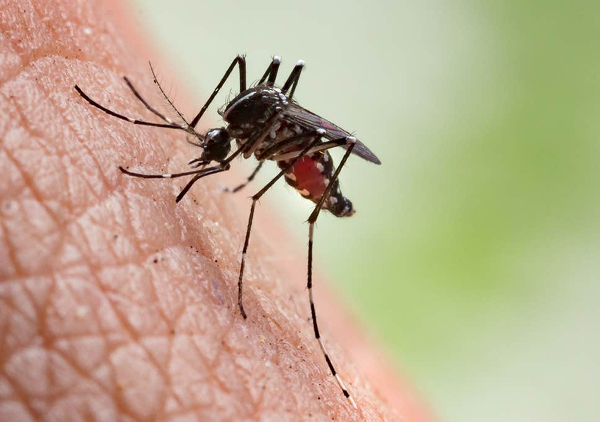
India has recorded a decline of nearly 80% in malaria cases and deaths between 2015 and 2025, marking significant progress in the country’s efforts to control one of its longstanding public health challenges. The achievement was highlighted by President Droupadi Murmu during the inauguration of the Golden Jubilee celebrations of the Indian Council of Medical Research–National Institute of Malaria Research (ICMR–NIMR) in New Delhi on 17 November 2026.
The President noted that the number of districts classified as having a high malaria burden had declined from 155 to 33. Additionally, 160 districts reported zero indigenous malaria cases during the 2022–2025 period, reflecting progress in controlling local transmission of the disease.
The reduction has been supported by improvements in healthcare services, early diagnosis, effective treatment, mosquito-control programmes, scientific research and community participation. These interventions have been particularly important in rural, tribal and geographically remote regions where malaria has historically imposed a substantial health and economic burden.
India’s progress has also received international recognition. In 2024, the country moved out of the World Health Organization’s High Burden to High Impact category, reflecting the sustained reduction in malaria transmission and mortality.
High-Burden Malaria Districts Decline from 155 to 33
One of the most significant indicators of India’s progress is the reduction in the number of districts experiencing a high malaria burden.
According to the Ministry of Health and Family Welfare, the number of such districts has decreased from 155 to 33, indicating that malaria control programmes have substantially reduced the geographical concentration of the disease.
President Murmu also highlighted that 160 districts reported zero indigenous malaria cases during the period from 2022 to 2025. Indigenous malaria cases refer to infections acquired through local transmission rather than infections contracted outside the reporting area.
These developments demonstrate the importance of targeted public health interventions, particularly in regions where environmental conditions and local mosquito populations have historically supported malaria transmission.
The declining number of high-burden districts also reflects the contribution of improved disease surveillance, timely treatment and sustained mosquito-control activities.
India Accounts for Less Than 1% of Global Malaria Cases
Union Minister of Health and Family Welfare Jagat Prakash Nadda highlighted India’s contribution to global malaria control during the Golden Jubilee celebrations.
He stated that India, which accounts for approximately 16% of the world’s population, contributes around 0.7% of global malaria cases and 0.6% of malaria-related deaths.
The figures illustrate the progress achieved through India’s disease prevention and treatment programmes over the past decade.
The Health Minister attributed the reduction in malaria transmission to a comprehensive approach combining research on mosquito behaviour and malaria parasites, effective preventive measures, early diagnosis, appropriate treatment and community involvement.
He also emphasised the importance of maintaining the momentum of malaria-control efforts as India works towards its national elimination targets.
ICMR–National Institute of Malaria Research Completes Five Decades
The Golden Jubilee celebrations recognised the contributions of ICMR–NIMR to malaria research, disease surveillance and public health over five decades.
Established in 1977, the institute has developed into one of India’s principal research institutions dedicated to malaria and other vector-borne diseases.
Its research activities include studying malaria parasites, mosquito biology, disease transmission, insecticide resistance, diagnostic techniques and vector-control strategies.
Scientific studies conducted by the institute have contributed to the development of evidence-based approaches for malaria prevention and treatment.
President Murmu acknowledged the contributions of scientists, researchers and healthcare workers associated with the institution, highlighting the importance of sustained scientific research in addressing public health challenges.
She also emphasised that the benefits of medical research must reach villages and communities where healthcare interventions are most urgently needed.
Odisha Malaria Project Demonstrates Importance of Early Diagnosis
During the celebrations, Dr Rajiv Bahl, Secretary of the Department of Health Research and Director General of ICMR, highlighted the Comprehensive Case Management Project implemented in Odisha in collaboration with the state government.
The project demonstrated the effectiveness of improving access to malaria testing, ensuring complete treatment and strengthening disease surveillance in remote communities.
The programme focused on identifying infections promptly and improving access to appropriate treatment, thereby reducing opportunities for continued transmission.
The Odisha experience illustrates the importance of adapting malaria-control strategies to local conditions, particularly in difficult terrain and communities facing limitations in healthcare accessibility.
Such approaches are relevant to other regions where geographical isolation and environmental conditions make malaria surveillance and treatment more challenging.
Indigenous Malaria Vaccine Development Receives Attention
President Murmu also highlighted ICMR–NIMR’s contribution to the development of an indigenous malaria vaccine in Bhubaneswar.
The research initiative represents an important component of India’s efforts to develop additional scientific tools for preventing malaria.
Malaria is caused by parasites of the genus Plasmodium, which are transmitted to humans through the bites of infected female Anopheles mosquitoes.
The complexity of the parasite’s life cycle makes vaccine development scientifically challenging, requiring detailed understanding of parasite biology and the human immune response.
Research into malaria vaccines therefore complements existing interventions such as mosquito control, preventive measures, diagnostic testing and effective treatment.
The indigenous vaccine project remains under development and should be distinguished from an approved vaccine available for routine public health deployment.
Climate Change and Insecticide Resistance Present New Challenges
Despite the substantial reduction in malaria cases and deaths, President Murmu emphasised the importance of continued vigilance against emerging public health challenges.
She identified climate change, unplanned urbanisation and increasing insecticide resistance among mosquitoes as factors that could complicate future malaria-control efforts.
Changes in rainfall patterns, temperature and environmental conditions can influence mosquito breeding habitats and alter the geographical distribution of vector-borne diseases.
Unplanned urban development and inadequate drainage can create conditions favourable for mosquito breeding, particularly where stagnant water accumulates.
Resistance to insecticides also presents a challenge because it can reduce the effectiveness of commonly used mosquito-control measures.
The President called for stronger environmental management, prevention of water stagnation, elimination of mosquito breeding sites and continued research into effective disease-control technologies.
She also emphasised that healthcare workers and public health institutions must be supported through active community participation.
Strengthening Research on Dengue and Other Infectious Diseases
The President highlighted the broader role of ICMR in addressing infectious diseases beyond malaria.
She acknowledged the institution’s contributions to research involving tuberculosis, leprosy, kala-azar and COVID-19, including its role in establishing a nationwide diagnostic testing network during the pandemic.
The President also drew attention to dengue as an emerging public health challenge requiring effective research, surveillance and diagnostic interventions.
The Ministry of Health and Family Welfare highlighted ICMR’s work in developing ELISA-based molecular diagnostics for diseases including dengue, chikungunya and Japanese encephalitis.
These research activities demonstrate the importance of strengthening domestic capabilities in infectious disease diagnostics and medical technology development.
President Murmu also appreciated the National One Health Mission, which seeks to strengthen India’s capacity to identify and address health risks involving interactions between humans, animals and the environment.
Such integrated approaches are increasingly important for understanding infectious disease transmission and improving preparedness against emerging health threats.
India Targets Zero Indigenous Malaria Cases by 2027
India’s malaria elimination programme is guided by the National Framework for Malaria Elimination 2016–2030 and the National Strategic Plan for Malaria Elimination 2023–2027.
The national programme has established the objective of achieving zero indigenous malaria cases by 2027, followed by malaria elimination by 2030.
These targets require sustained efforts to identify infections, prevent local transmission and maintain effective surveillance systems.
Dr Rajiv Bahl emphasised that continued progress would depend on interdisciplinary research, stronger partnerships and the ability to address emerging challenges involving climate change, changing mosquito vectors and drug resistance.
The Health Minister also called for intensified efforts to achieve malaria elimination by 2030 through appropriate policy interventions and strengthened implementation.
Maintaining surveillance in districts reporting low or zero malaria cases will remain important for detecting new infections and preventing the re-establishment of local transmission.
Scientific Research and Community Participation Drive Progress
India’s experience in malaria control highlights the importance of combining scientific research with public health implementation and community involvement.
Improved diagnostic technologies, effective medicines, mosquito-control measures and stronger surveillance have contributed to reducing the burden of malaria across the country.
The progress also demonstrates the contribution of institutions such as ICMR–NIMR in translating scientific research into practical disease-control strategies.
President Murmu emphasised that the objectives of Viksit Bharat 2047 require stronger collaboration among research institutions, centres of higher education, technical institutions and industry.
Such partnerships can support the development of indigenous healthcare technologies, improve disease surveillance and expand access to affordable medical interventions.
The nearly 80% reduction in malaria cases and deaths over a decade represents an important public health achievement for India. With continued scientific research, effective surveillance, community participation and targeted interventions, the country has established a strong foundation for advancing towards its national malaria elimination goals.
You may also like
-
Ayurveda and Neck Pain in the Smartphone Era
-
Glenmark Pharmaceuticals Launches Generic Kidney Cancer Medicine Axitinib in US Market
-
Ayurveda and Joint Health: Daily Movement, Oil Massage and Food Habits
-
India’s Government Healthcare Spending Triples to ₹4.14 Lakh Crore, Household Medical Expenditure Share Declines
-
Lupin’s Ranluspec Biosimilar Launched Across Europe Through Sandoz Partnership
