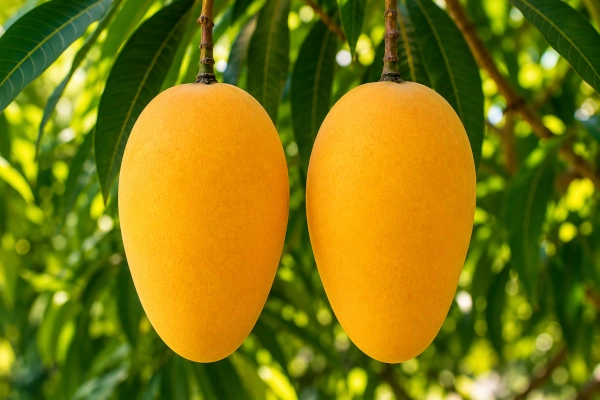
India has achieved an important breakthrough in fresh fruit exports after 12.5 tonnes of Dashehari and Langra mangoes from Amroha, Uttar Pradesh, were successfully transported to Dubai by sea in a refrigerated container.
The shipment used a specialised sea-route export protocol jointly developed by the ICAR–Central Institute for Subtropical Horticulture in Lucknow and the Agricultural and Processed Food Products Export Development Authority. It marked the first successful commercial maritime shipment of these mango varieties from Uttar Pradesh involving an extended 25-day period between harvesting and arrival in the destination market.
The consignment was exported by Shehnaz Export of Amroha in association with Attashi Global and supplied to Lulu Group in the United Arab Emirates. ICAR-CISH provided technical guidance, while APEDA supported the export initiative.
Scientific Post-Harvest Management
The mangoes were harvested on June 22, 2026, and handled according to recommended scientific post-harvest practices. The fruits were treated with METWASH, a formulation developed by ICAR-CISH to improve shelf life during storage and transportation.
After treatment, the mangoes were scientifically graded, packed at the Amroha Pack House and loaded into a 40-foot refrigerated container. The consignment was then transported to Dubai through a continuous temperature-controlled cold chain.
The shipment reached the destination on July 17, 2026. Weather-related disruptions associated with a Western Disturbance extended the journey to 25 days. Despite the longer transit period, nearly 90 per cent of the mangoes remained in good marketable condition upon arrival.
The outcome demonstrated that Dashehari and Langra mangoes, known for their distinctive flavour, aroma and relatively delicate texture, can withstand extended maritime transportation when supported by appropriate treatment, grading, packaging and refrigeration.
Lower Logistics Costs and Better Farmer Returns
Fresh mango exports have traditionally relied heavily on air freight because of the fruit’s limited shelf life. Air transportation is faster, although its higher cost restricts shipment volumes and affects export competitiveness.
Sea freight offers a more economical alternative and allows exporters to move larger quantities in refrigerated containers. The lower transportation cost enabled exporters involved in the Amroha shipment to pay farmers approximately ₹15–20 more per kilogram than under conventional export channels.
Higher procurement prices can improve farm profitability while encouraging growers to adopt better harvesting, grading and handling practices. The model can also promote investment in pack houses, refrigerated transport, cold-storage facilities and organised mango export clusters.
Expanding India’s Mango Export Market
Dubai and the wider Gulf region represent important markets for Indian mangoes because of strong consumer demand, established retail networks and the presence of a large Indian-origin population.
The successful delivery to Lulu Group demonstrates the commercial potential of supplying premium Indian mangoes through maritime routes. Wider adoption of the protocol could enable exporters to send larger and more frequent consignments to the Gulf while keeping retail prices competitive.
The technology may also be adapted for mango-growing regions beyond Uttar Pradesh, depending on the characteristics of individual varieties and local supply-chain conditions. Similar systems could eventually support exports to other international markets requiring longer transit periods.
A Model for Technology-Driven Agricultural Exports
The achievement highlights the importance of cooperation between agricultural research institutions, export agencies, farmers, pack-house operators, private exporters, shipping companies and overseas retailers.
ICAR-CISH contributed expertise in post-harvest management, while APEDA helped connect the technology with the export ecosystem. The Amroha Pack House supported grading and packaging, and refrigerated shipping ensured temperature-controlled movement to the destination.
The success of the 25-day shipment provides commercial validation for the sea-route protocol and creates a scalable pathway for expanding India’s fresh mango exports. It can help reduce logistics costs, increase export volumes, strengthen the international presence of Dashehari and Langra mangoes and improve incomes for growers in Uttar Pradesh.
The initiative also demonstrates how scientific innovation and modern cold-chain infrastructure can connect traditional Indian horticultural regions with major international markets.
Reference
Press Information Bureau Ministry of Agriculture & Farmers Welfare ICAR-CISH–APEDA Sea Route Protocol Enables Successful Export of 12.5 Tonnes of Dashehari and Langra Mangoes to Dubai Published: 22 July 2026 Release ID: 2287909 https://www.pib.gov.in/PressReleasePage.aspx?PRID=2287909®=48&lang=1
You may also like
-
India’s First Port-Based e-Methanol Plant at Kandla to Supply Green Fuel to Global Shipping
-
India’s Recent Oil and Gas Discoveries: New Finds, Offshore Frontiers and How Much Crude India Produces at Home
-
India’s Hidden Gold Mountain: How Households Came to Own an Estimated 31,000 Tonnes of Gold
-
India–Afghanistan Air Cargo Corridor Returns to Focus as Both Sides Push for Stronger Trade Connectivity
-
India’s Defence Shipyards Build Common Indigenous Supply Chain for Specialised Naval Cables
